



Bundibugyo Ebola outbreak continues in DR Congo, with additional cases reported in Uganda
People walk , after Uganda closed its borders with the Democratic Republic of Congo, as authorities intensify efforts to contain a new Ebola outbreak caused by the Bundibugyo virus strain, at the Mpondwe border post, in Kasese district, Uganda, May 28, 2026. REUTERS
The World Health Organisation (WHO) said on Friday that there were 906 suspected cases of Ebola in the Democratic Republic of Congo (DRC), including 223 suspected deaths that were being investigated.
An outbreak of the Bundibugyo strain of Ebola is ongoing in the DRC, with cases also reported in Uganda.

There have been 125 confirmed cases of Ebola in the DRC, including 17 confirmed deaths in Ituri, North Kivu and South Kivu. There have also been seven confirmed cases of Ebola in Uganda, three of which were imported from the DRC, and one death. However, no community transmission has been reported, the WHO said.

Read More: ‘Breakneck’ Ebola epidemic in Congo outpaces world’s response
The Ebola outbreak in eastern Democratic Republic of Congo likely started two months ago, the WHO said in early May. The outbreak of the rare Bundibugyo strain, for which there is no vaccine, was declared by the WHO a public health emergency of international concern. It has alarmed experts because of how long it went undetected while spreading across a densely populated area, making it difficult to trace and isolate the contacts of infected individuals.

High death rate
The rate of people who died among those confirmed to have the infection is between 30% and 50%, said Anais Legand from the High Threat Pathogens Team, which is part of the WHO Health Emergencies Programme.
“It’s huge. It means that up to five out of 10 people are likely to die,” Legand said, adding that the data is preliminary and requires further investigation. Early care could help drive down fatality rates, Legand said.
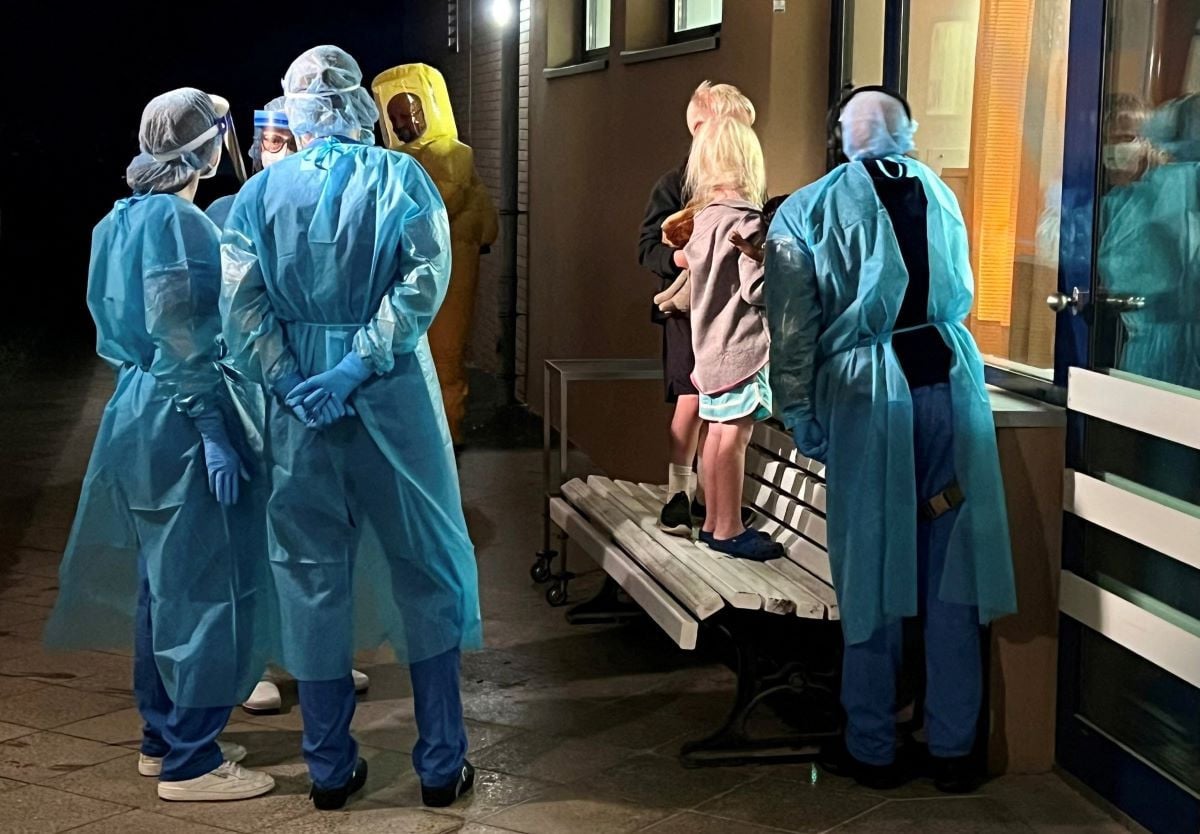
Two children of an American Ebola patient look through a window at their father in the isolation ward at the Charite hospital in Berlin, Germany, May 21, 2026. Charite/Handout via REUTERS
The first recovered patient was discharged from a health centre in the DRC after receiving two negative tests, Legand said, adding she hoped many more would recover and stressing the importance of access to early care.
The WHO said testing capacity is being improved and that it was hopeful that most of the backlog of test samples from suspected cases will be processed in the coming days.
The number of suspected cases is likely to go up, Legand said, but added it was a sign that surveillance is working.
“As for whether the peak has passed, investigations are still ongoing. I don’t think we can say that at this stage,” she said.
