



PUBLISHED
July 19, 2026
Global governance, in its current form, is facing a crisis of legitimacy and confidence. The United Nations, while not obsolete, is increasingly seen as little more than a talk-shop — with its reins in the hands of powerful states. The post-World War II global order, founded on sovereign equality and collective security, appears to be losing credibility as wars, geopolitical rivalries, and institutional paralysis cast shadows on its relevance in the 21st century.
More than eight decades ago, the United Nations was established to prevent conflict, ensure justice, and provide a platform where all nations — big and small — could be heard. But today, the organisation is struggling to live up to its founding ideals. In practice, it appears to be a forum where all members are equal, but some are clearly more equal than others.

The P5 problem

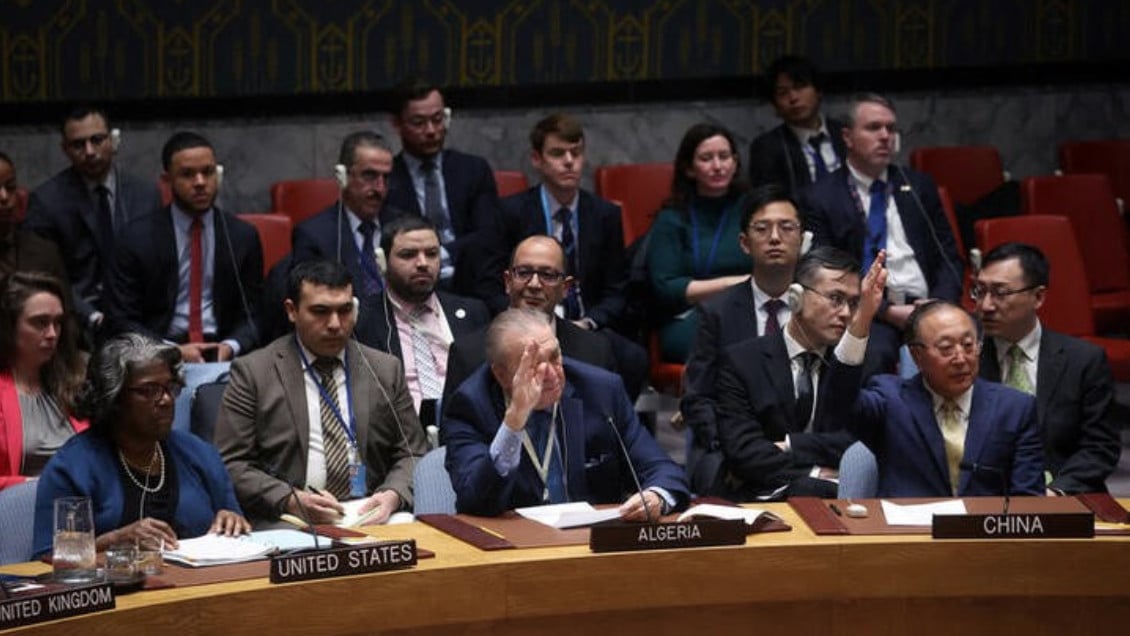
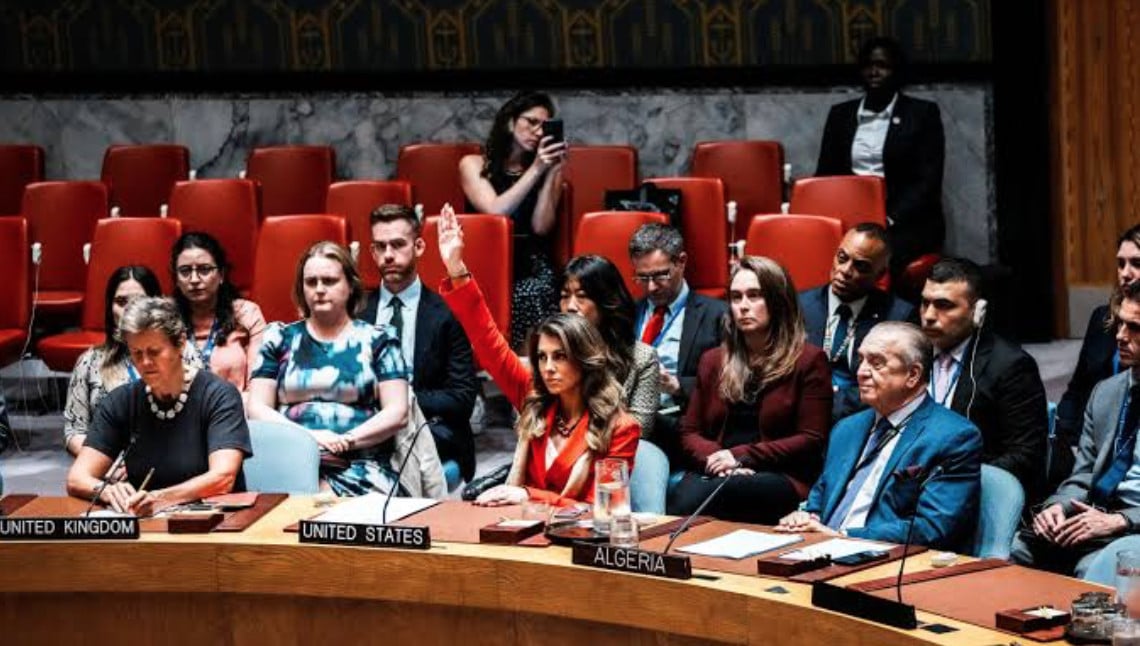
Nowhere is this imbalance more evident than in the UN Security Council. The five veto-wielding powers (P5) decide outcomes, often based on their competing geopolitical interests. While the UN Charter promises sovereign equality, decision-making remains concentrated among the P5, which frequently leads to deadlock at critical moments.
“The United Nations was established to promote multilateralism, yet its principles are increasingly being sidelined by unilateral actions in global conflicts,” says former ambassador Masood Khalid. “The international order shaped after World War II — and reinforced in the post-Cold War era — is now visibly fragmenting, a reality widely recognised in contemporary geopolitics,” he adds.

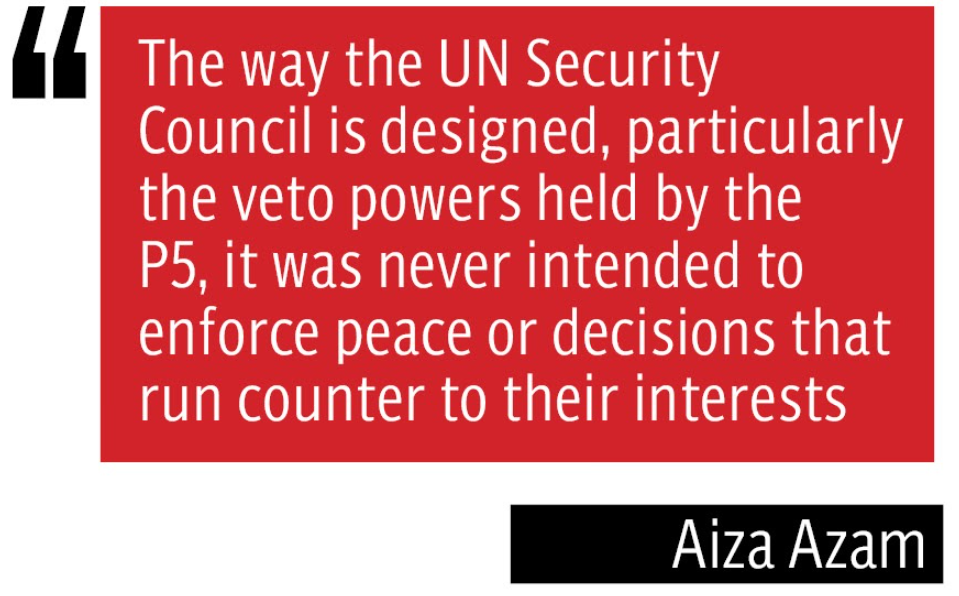
Aiza Azam, Director Strategic Affairs at StrafAsia, offers a more critical view. She argues that the United Nations was structured in a way that ultimately serves the interests of major powers.
“The way the UN Security Council is designed, particularly the veto powers held by the P5, it was never intended to enforce peace or decisions that run counter to their interests,” she says. “In that sense, the P5 countries have, since the organisation’sinception, consistently advanced agendas aligned with their own strategic priorities.”
Global law, selective application
Ongoing conflicts have further exposed the UN’s diminishing authority. In Gaza, Israel faces allegations of war crimes and crimes against humanity, carried out in full global view. The International Criminal Court has issued arrest warrants for Prime Minister Benjamin Netanyahu and his former defence minister Yoav Gallant, obligating its 125 member states to detain them if they enter their jurisdictions — yet compliance remains elusive.
“The United States has repeatedly used its veto in support of Israel during the Gaza conflict, illustrating how the veto power continues to shape, and constrain, the functioning of the Security Council,” says Khalid, a career diplomat with four decades of service in the Foreign Service.
As of late 2025, the US had used its veto power at least six times to block draft resolutions calling for immediate and unconditional ceasefires, hostage releases, and unhindered humanitarian aid in Gaza. This is the latest example of how the UN’s erosion is directly linked to the indiscriminate use of veto power by the P5 to protect their geostrategic and geopolitical interests.
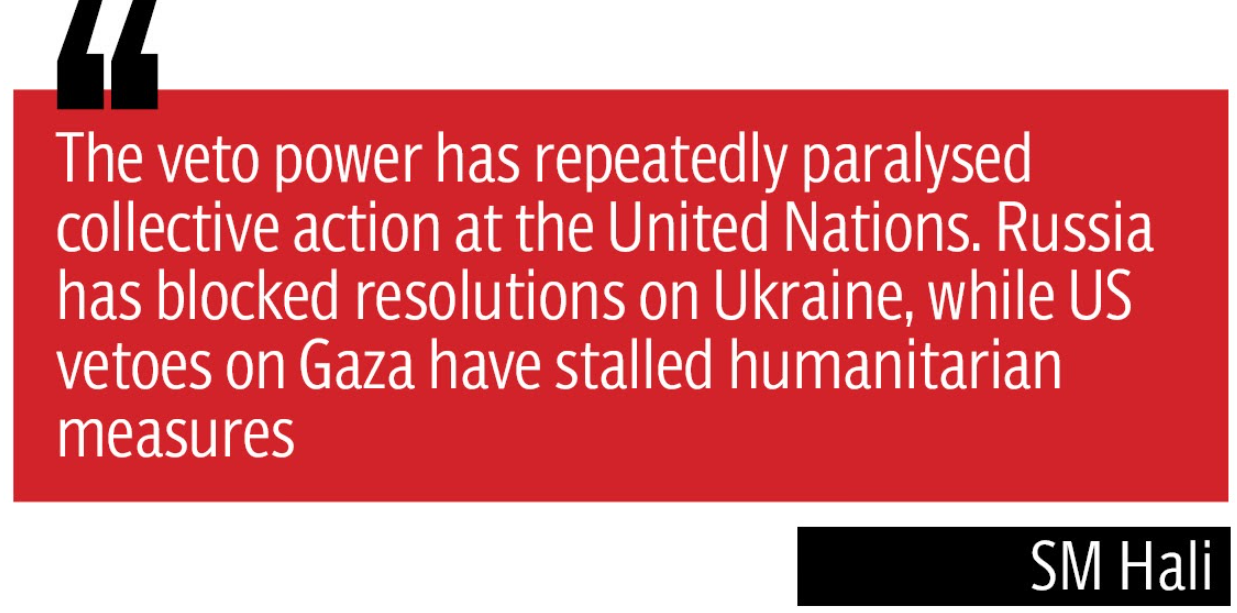
“The veto power has repeatedly paralysed collective action at the United Nations. Russia has blocked resolutions on Ukraine, while US vetoes on Gaza have stalled humanitarian measures,” says defence analyst and author Sultan Mehmood Hali.
“These cases show how the will of over 190 member states can be overridden by a single permanent member, creating a hierarchy of sovereignty where a few states wield disproportionate influence over global decision-making,” he adds.
Circumventing the system
With the United Nations struggling to assert itself on Gaza, US President Donald Trump introduced his own 20-point plan to end the conflict. Although initially negotiated with Arab partners and endorsed by the UN Security Council, the body is now being managed by a US-led “Board of Peace,” which analysts say bypasses the UN.
Meanwhile, the Ukraine war, which started four years ago, has reshaped geopolitical alignments, with unilateral sanctions, financial restrictions and economic tools increasingly used by the Collective West as instruments of power. Analysts say these developments show a broader shift in how global influence is exercised — often outside traditional multilateral frameworks.
“The frequency with which states bypass UN platforms has increased, evident in conflicts such as Ukraine and the Middle East,” says Aiza. “For many, especially great and middle powers, it is often easier to operate through alternative coalitions and multilateral groupings that offer greater flexibility and allow them to pursue their own strategic interests,” she adds.
The return of power politics
If anything, the ongoing conflict in the Persian Gulf has laid bare the fragility of the existing international order. The US-Israel unilateral aggression against Iran — widely viewed as a clear violation of international law — has highlighted the inability of global institutions to rein in powerful nations as the world edges closer to a “law of the jungle” dynamic. UN deliberations once again resulted in stalemate, reinforcing perceptions of institutional paralysis.
“The United Nations was created to promote multilateralism, but today we are witnessing open and flagrant violations of that principle. Instead, there is an increasing resort to unilateralism in different conflicts and wars, with the principles of the United Nations being set aside,” says ambassador Khalid.
The ripple effects of these conflicts have been felt worldwide. Energy markets have fluctuated sharply and economic uncertainty has deepened. For many, these developments mark a turning point, suggesting that the global governance system is no longer quietly struggling but facing an overt crisis of credibility.
“The current international system leaves little incentive for meaningful reform — something even their own leaders acknowledge. While political will can drive incremental improvements, national interests ultimately prevail over broader collective gains,” says Aiza. “Looking ahead, minilateralism is likely to gain traction, offering states of all sizes greater flexibility to advance their interests,” she adds.
Reimagining global governance
Amid this backdrop, alternative frameworks and proposals are gaining ground. At the 2025 Shanghai Cooperation Organisation (SCO) summit in Tianjin, China’s President Xi Jinping unveiled the Global Governance Initiative (GGI), aimed at reforming the international governance system to make it more equitable, inclusive, and representative of developing nations.
At the centre of this initiative is a call to return to foundational principles such as sovereign equality, arguing that all nations should have an equal voice in global decision-making. In sharp contrast to the American approach that “if you’re not at the table, you’re on the menu,” the GGI proposes that “all nations should have a seat at the table.” It also calls for an end to selective application of international law, challenging what proponents describe as double standards in the current system.
“The Global Governance Initiative (GGI) proposes five core principles: sovereign equality, adherence to international law, multilateralism, a people-centered approach, and practical action,” says Hali, who has written extensively on China’s rise. “While the initiative continues to evolve, it places the United Nations at the centre of global governance and emphasises respect for the UN’s role.”
Back to first principles
Contrary to claims by some Western critics, the GGI does not seek to dismantle or replace the existing system. Rather, it presents itself as an effort to reform and strengthen it. “At a rhetorical level, the Global Governance Initiative closely mirrors the United Nations in its emphasis on sovereignty, respect for international law, and cooperation for mutual benefit. In many ways, its principles align with the broader aspirations of the existing international system,” says Aiza.
Rather than signalling a decisive shift in global power, it reflects the aspirations of many countries, particularly in the Global South and among smaller powers, seeking a more equitable framework to assert their rights and safeguard their interests within the international community, she adds.
The GGI’s emphasis on “genuine multilateralism”— advocating cooperation over bloc politics and coercion — may prove appealing to many states, as it envisions a more inclusive global order where participation is universal rather than shaped by alliances or entrenched power structures.
And moving forward, experts believe the world is likely to see an increase in these forms of multilateral cooperation, with regions across the world increasingly recognising the value of working together while relying less on extra-regional actors.
GGI – part of larger framework
The GGI is not alone. It connects with a larger framework proposed by President Xi that includes Belt and Road Initiative (BRI), Global Development Initiative (GDI), Global Security Initiative (GSI), and Global Civilisation Initiative (GCI). Together, these initiatives form a comprehensive blueprint for a more balanced and cooperative international system.
China has introduced these initiatives as an alternative model to adapt to new realities and make adjustments to the international political and financial architecture.
“The GDI promotes sustainable development aligned with the UN SDGs. The GSI upholds indivisible security — every country’s sovereign right to self-security, free from foreign interference. And the GGI seeks to reform the post-WWII international financial and political order, which no longer reflects current global realities,” says ambassadorKhalid, who is known as one of the longest serving diplomats in Pakistan’s Foreign Service.
Similarly, through the BRI, China has supported institutions such as the Asian Infrastructure Investment Bank (AIIB). “However, AIIB is not intended to replace the World Bank or the International Monetary Fund but to complement them, reflecting China’s view that the existing Bretton Woods system requires additional support and reform,” adds Hali, the author of ‘The Road to Leadership: Xi Jinping.’
Supporters and skeptics
Critics have described these initiatives as ambitious, interpreting them as a strategic attempt to reshape global order. Others argue that the existing system — despite its flaws — is still a vital platform for dialogue and conflict resolution.
Supporters, however, say that the current model is increasingly untenable, pointing to repeated failures in addressing major conflicts and enforcing international norms as evidence of its eroding legitimacy and the need for reform.
Ambassador Khalid doesn’t agree that President Xi’s initiatives seek to upend or replace the current global order with a China-led alternative. “In fact, elements of these initiatives have been echoed in UN policy frameworks,” he says.
He argues that China also has the capacity to translate these ideas into reality. “China is the largest trading partner for over 145 countries, including a majority of UN member states, and around 150 countries are part of BRI. Many — Pakistan among them, through the China-Pakistan Economic Corridor (CPEC) — have benefited from its development projects,” says ambassador Khalid, who is known as a key architect of CPEC.
Aiza, meanwhile, believes that amid rising unilateralism by the US and growing calls for multilateralism, particularly from the Global South, President Xi’s initiatives are likely to find a more receptive global audience. “I think there is greater international receptivity to initiatives such as the Global Governance Initiative because much of it aligns with the public image that China represents at the current moment, particularly when compared with countries such as the United States,” she adds.
At a crossroads
As crises increasingly spill across borders and institutions struggle to keep pace, the debate over the future of global governance has gathered new urgency. The convergence of geopolitical tensions, economic uncertainty and institutional gridlock suggests that the world may be entering a period of transition.
The question, experts argue, is no longer whether change is necessary, but how it will unfold — and who will shape it. Whether through reform of existing institutions or the emergence of new frameworks, the direction of global governance will have far-reaching implications for international stability and cooperation.
The UN headquarters, once a symbol of a defining global order, now stands at a crossroads: whether its founding principles can be renewed, or yield to emerging new visions like President Xi’s GGI in an increasingly fragmented world.
