



• Selection turns politically sensitive as opposition alliance plans protest movement
• IHC administration forwards three names for vacant positions
• Islamabad lawyers demand vacancies be filled from capital’s legal fraternity
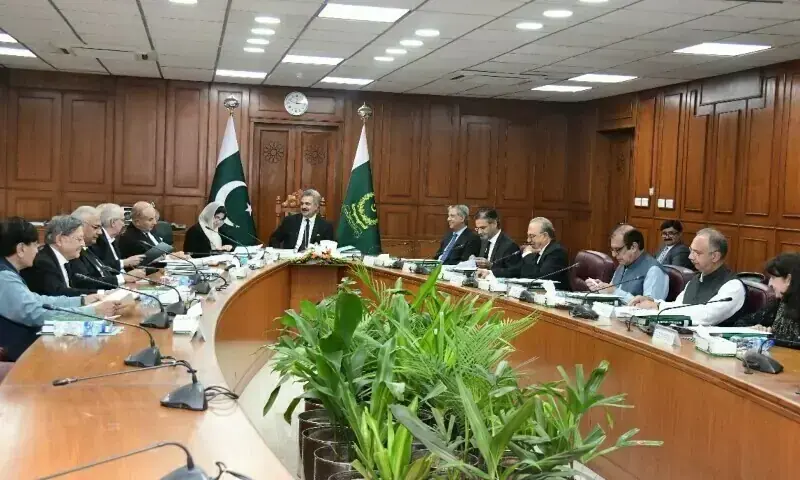
ISLAMABAD: The Judicial Commission of Pakistan (JCP) is set to convene on July 20 to select three judges for the Islamabad High Court (IHC), a task that has evolved from a routine administrative matter into a politically sensitive decision.
The contest for the vacant seats is expected to be intense, as stakeholders are reportedly keen to avoid alienating the federal capital’s legal fraternity on the eve of a major opposition campaign.
The IHC administration, led by Chief Justice Muhammad Sarfraz Dogar, has forwarded three names to the JCP for the vacant positions. The official nominees are District and Sessions Judge Shahrukh Arjumand, former advocate general Islamabad Ayyaz Shaukat, who currently serves as chairman of the Social Media Protection and Regulatory Authority, and advocate Umair Majeed Malik.

The finalisation of these names came after the JCP, in its June 19 meeting chaired by Chief Justice of Pakistan Yahya Afridi, approved new rules and set July 4 as the deadline for nominations. Under the newly approved framework, a seven-member interview panel has been established to vet candidates.

However, the selection process became more complex after representatives of the Pakistan Bar Council and the Islamabad Bar Council in the JCP recommended the name of incumbent Islamabad High Court Bar Association resident, Syed Wajid Ali Gillani, for a judgeship.
The IBC also proposed lawyer Wajid Mughal’s name. Senator Farooq H. Naek, a JCP member, recommended the names of Syed Qamar Hussain Sabzwari and Syed Intikhab Hussain Shah for consideration.

This lobbying effort reflects a sustained campaign by Islamabad’s legal fraternity, which has been demanding that vacancies in the high court be filled by lawyers belonging to the federal capital.
During a joint press conference last month, representatives of various bar associations argued that judges in provincial high courts are generally appointed from within their respective provinces and the same principle should apply to the federal capital.
Sources familiar with the matter told Dawn that local representative bodies, including the District Bar Association of Islamabad, the IHCBA and the IBC, are of the view that the nominees forwarded by the IHC chief justice do not have the backing of lawyers’ representative bodies.
This lack of consensus is reportedly causing concern among some JCP members, who are arguing for the appointment of a “strong candidate” from the local lawyers’ pool.
Their argument is apparently influenced by the political climate. The opposition alliance Tehreek-i-Tahaffuz Ayeen-i-Pakistan (TTAP) has announced a nationwide protest movement from Aug 5, marking three years since the conviction of former prime minister Imran Khan.
The TTAP, a coalition of opposition parties, has made several demands, including the immediate resignation of the Balochistan government, the release of all political prisoners and the postponement of elections in Azad Jammu and Kashmir.
The alliance has stated that its movement will include public meetings, demonstrations and strikes across the country.
Sources warned that the IHCBA, located on the strategically significant Constitution Avenue, could play a pivotal role in the upcoming protests. They said that if local lawyers felt alienated by the judges’ selection process, they could extend support to the opposition movement, making it easier to assemble 1,000 to 2,000 lawyers on Constitution Avenue and giving a boost to the protests.
Given this scenario, the government and other stakeholders may consider appointing a candidate acceptable to the local bar to calm the lawyers’ representative bodies of the federal capital and mitigate the risk of their active participation in the opposition’s campaign.
The candidates nominated for the IHC positions are scheduled to be interviewed on July 13 as part of the formal scrutiny process.
The JCP has set up a seven-member interview committee for the IHC and Lahore High Court, chaired by Federal Constitutional Court Judge Syed Hassan Azhar Rizvi.
The committee includes IHC Chief Justice Muhammad Sarfraz Dogar, LHC Chief Justice Aalia Neelum, Attorney General Mansoor Usman Awan, Senators Farooq H. Naek and Syed Ali Zafar, and SCBA representative Muhammad Ahsan Bhoon.
After the interviews, the JCP is likely to hold sessions from July 20 to 23 to finalise selections for high courts across the country.
Published in Dawn, July 12th, 2026
