



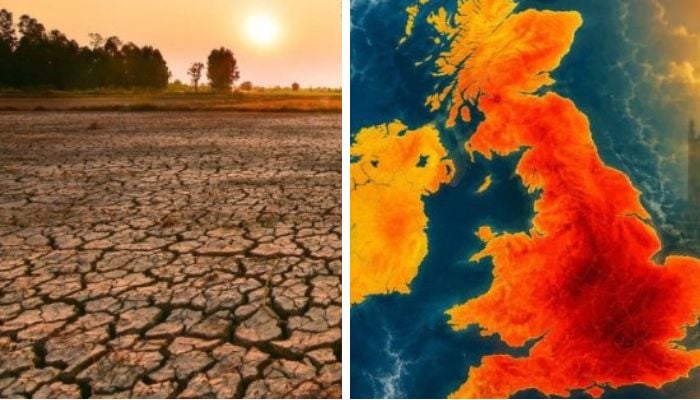
Scientists warn recent major climate changes like ‘Super ‘El Niño’ could have a high impact on inflation and food price surge amid economic crises.
The warnings from economists and climate scientists highlight a compounding crisis. A “Super” El Niño cycle the 2026–2027 event is colliding with severe geopolitical friction, specifically the war in Iran, dealing a massive “double shock” to global food supply chains.
According to financial institutions like Goldman Sachs and UniCredit, the economic aftershocks of this weather anomaly could take until the second half of 2028 to be fully realized.
The major price shock revolves around the “lag effect” which means that crop production relies on highly staggered, seasonal planting, growing, and harvesting schedules.

The extreme weather droughts and flooding occurring now disrupts the current growing cycles, but the resulting scarcity takes many months to filter through wholesale markets, processing networks, and finally onto supermarket shelves.

This comes as Global supply chains are experiencing “teleconnections”—a phenomenon where a single climate event triggers simultaneous crop failures across multiple continents.
Because the modern food system relies heavily on just a handful of staple crops, even minor supply disruptions are translating into disproportionately large, multi-year price shocks for consumers worldwide.

Informally described as a “super” or “Godzilla” El Niño, the US National Oceanic and Atmospheric Administration (NOAA) confirmed last month warming conditions were taking hold in the Pacific andthat there was a 63% chance of sea surface temperatures exceeding 2C above normal later this year.
At a time when households around the world are already feeling the pinch from soaring living costs, experts say an extreme El Niño could add further to the pressure. The prospect of a renewed inflation shock is also rattling central banks, adding to concern that interest rates could be kept at elevated levels.
“El Niño puts ‘climateflation’ back on the agenda,” analysts at the Italian bank UniCredit wrote in a research note. “Europe’s recent heatwaves are a reminder that the climate baseline is already shifting. El Niño could add a new layer of pressure later this year, as it amplifies the effects of global warming.”
The naturally occurring phenomenon has a history of affecting harvests and the food supply network.
More than a century ago, an El Niño that would probably have been the most severe on record prompted catastrophic droughts across China, southern Africa, Brazil, Egypt and India.
Causing famine conditions in a situation worsened by colonial rule, millions were killed, including more than 6 million people in India in 1876-78.
Notably, El Niño events in 1981-82, 1996-97, 2015-16 and 2023-24 have been some of the strongest on record.
However, NOAA projections indicate the 2026-27 cycle could be even more severe-elevating the risk of droughts and flooding hitting harvests, and food supply worldwide.
