

Airlines, automakers and other companies face higher costs, supply disruptions, and operational changes
Vessels in the Strait of Hormuz, Musandam, Oman, May 18, 2026. REUTERS
The US-Israeli war with Iran has already cost companies around the world at least $25 billion, and the bill is climbing, according to a Reuters analysis.
A review of corporate statements since the start of the conflict by companies listed in the United States, Europe and Asia shows businesses grappling with soaring energy prices, fractured supply chains, and trade routes disrupted by Iran’s chokehold on the Strait of Hormuz.

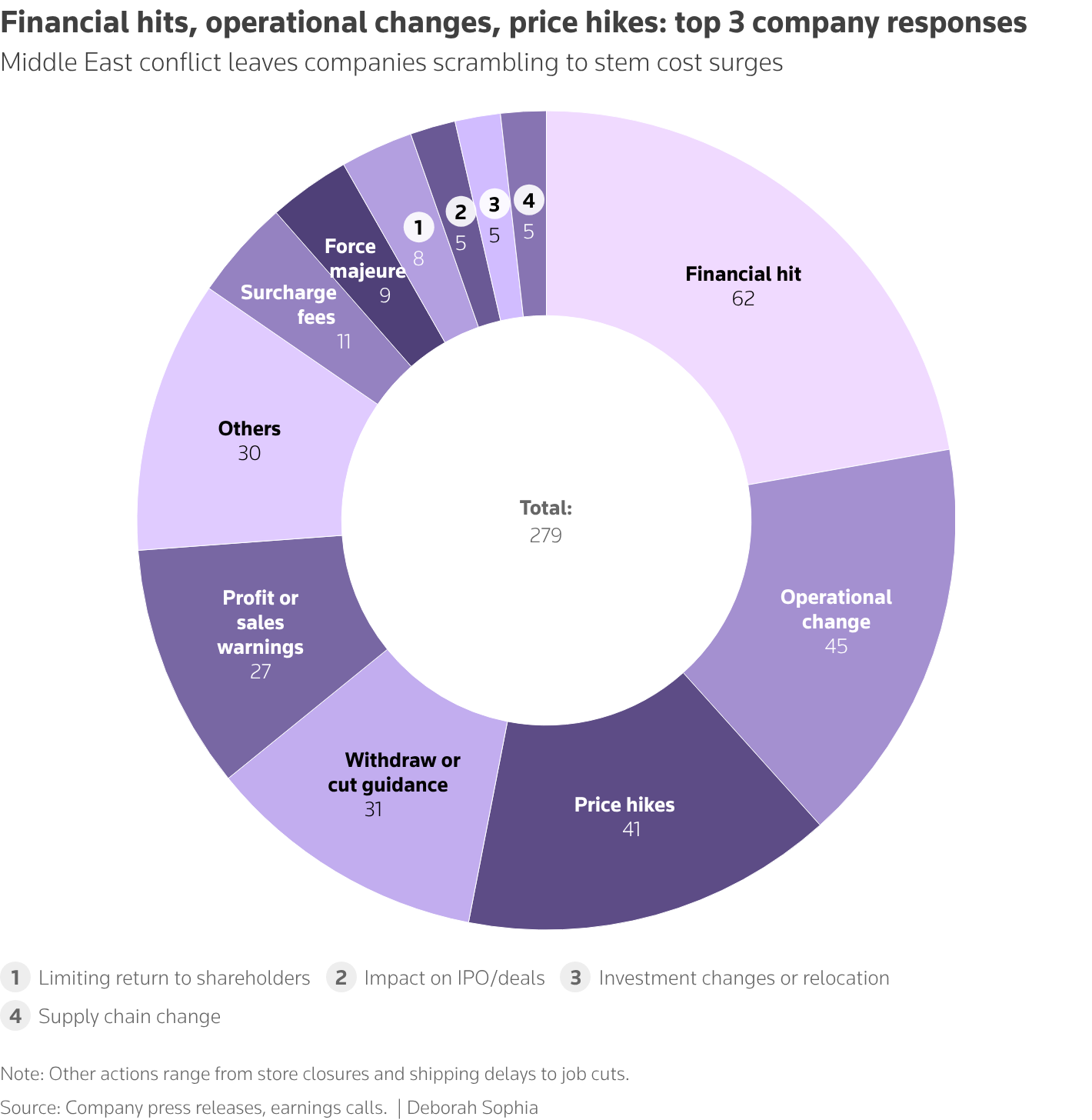
At least 279 companies have cited the war as a trigger for defensive actions to blunt the financial hit, including price increases and production cuts, the analysis shows. Others have suspended dividends or buybacks, furloughed staff, added fuel surcharges, or sought emergency government assistance.

Iran War Costs Global Firms $25B
The U.S. Israeli war with Iran has already cost global companies at least $25 billion, according to a Reuters analysis.

Businesses across the United States, Europe and Asia are facing rising energy costs, supply chain disruptions and trade route… pic.twitter.com/IPgVhgUuHm
— BSCN (@BSCNews) May 18, 2026
The upheaval — following the COVID-19 pandemic and Russia’s invasion of Ukraine — is tempering expectations for the rest of the year, with little sign of an imminent end to the conflict.
“This level of industry decline is similar to what we have observed during the global financial crisis and even higher than during other recessionary periods,” Whirlpool CEO Marc Bitzer said after the company slashed its full-year forecast and suspended its dividend.
As growth slows, pricing power is weakening and fixed costs are becoming harder to absorb, analysts say, threatening profit margins in the second quarter and beyond. Sustained price hikes are also likely to fuel inflation and hurt consumer confidence.
Also Read: Israel built 2 secret military bases in Iraq for operations against Iran: report
“Consumers are holding back on replacing products and are rather repairing them,” Bitzer said.
Rising costs for many supplies
Companies, including Procter & Gamble, Karex, and Toyota, have warned of mounting costs as the conflict enters its third month.
Iran’s blockade of the Strait of Hormuz — the world’s most critical energy chokepoint — has pushed oil prices above $100 a barrel, more than 50% higher than before the war. The closure has increased shipping costs, squeezed raw material supplies, and disrupted trade routes. Inputs such as fertilisers, helium, aluminium and polyethylene have been hit.
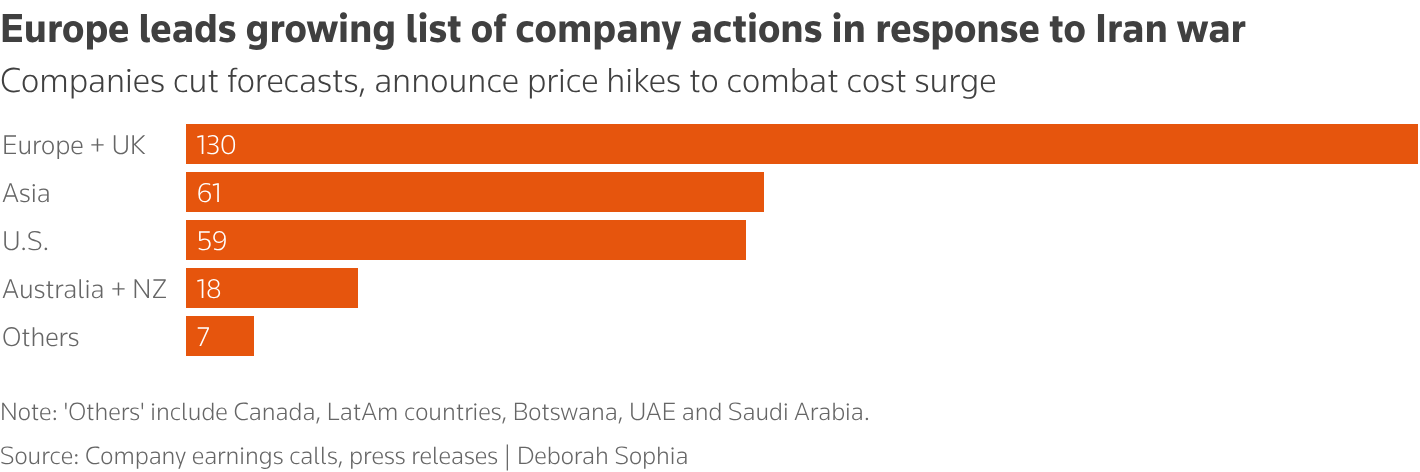
One-fifth of companies reviewed flagged a financial impact due to the war. A majority were based in the UK and Europe, while nearly a third were in Asia.
Almost the same as tariff hit
By comparison, more than $35b in costs were flagged last year from S tariffs.
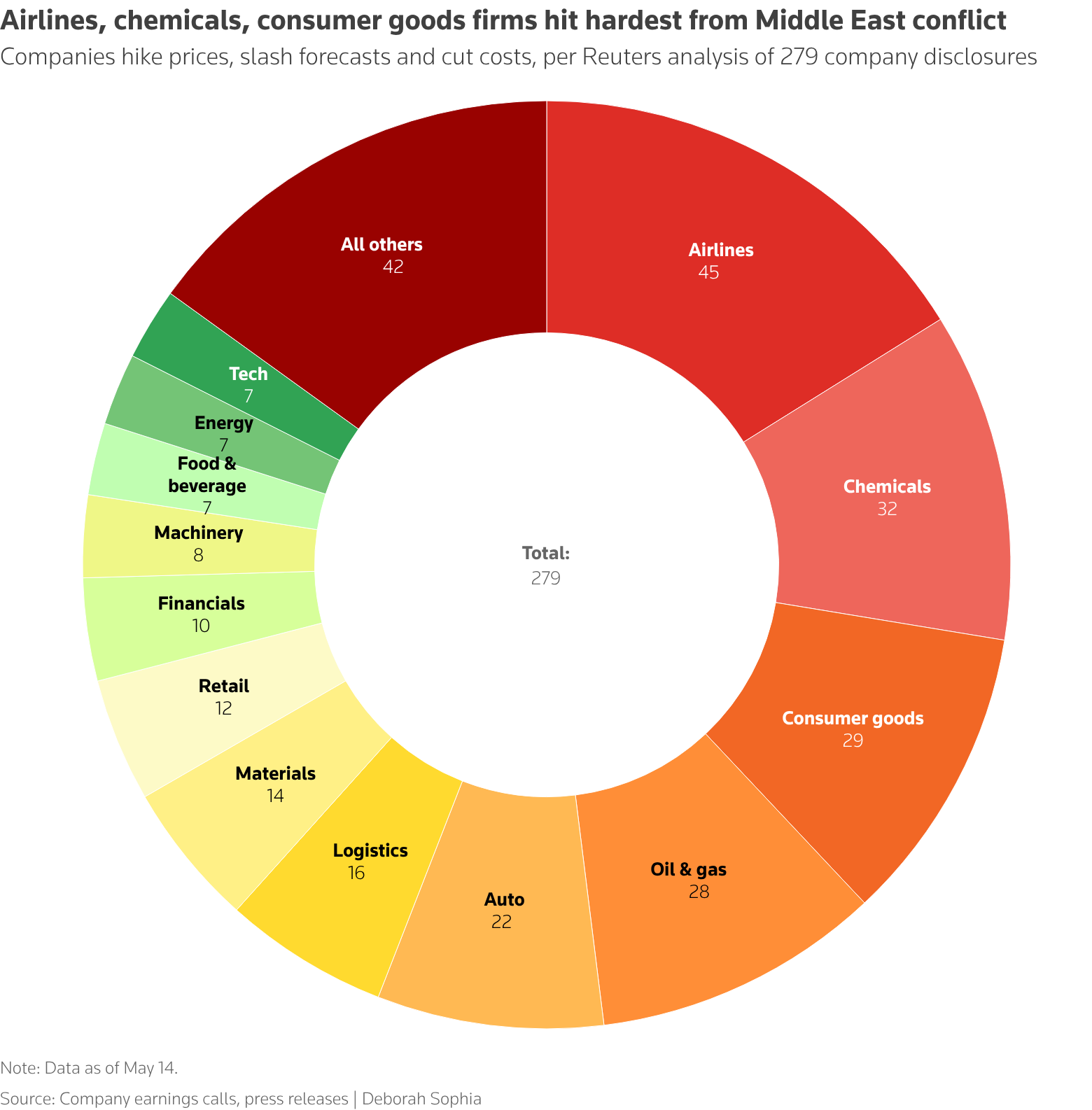
Airlines account for the largest share of quantified war-related costs, nearly $15b, due to surging jet fuel prices. Toyota warned of a $4.3b hit, while Procter & Gamble estimated a $1b post-tax profit impact.
McDonald’s said it expects higher long-term cost inflation due to ongoing supply chain disruptions.
CEO Chris Kempczinski said elevated gas prices are weakening consumer demand.
Oil price sensitivity
Nearly 40 companies in industrials, chemicals, and materials plan to raise prices due to exposure to Middle Eastern petrochemical supply.
Read More: Revised Iranian proposal to end war shared with US, Pakistani source says
Newell Brands said every $5 rise in oil prices adds about $5 million in costs. Continental expects at least a €100m hit due to rising raw material prices.
Executives say the full impact will likely hit earnings in the second half of the year.
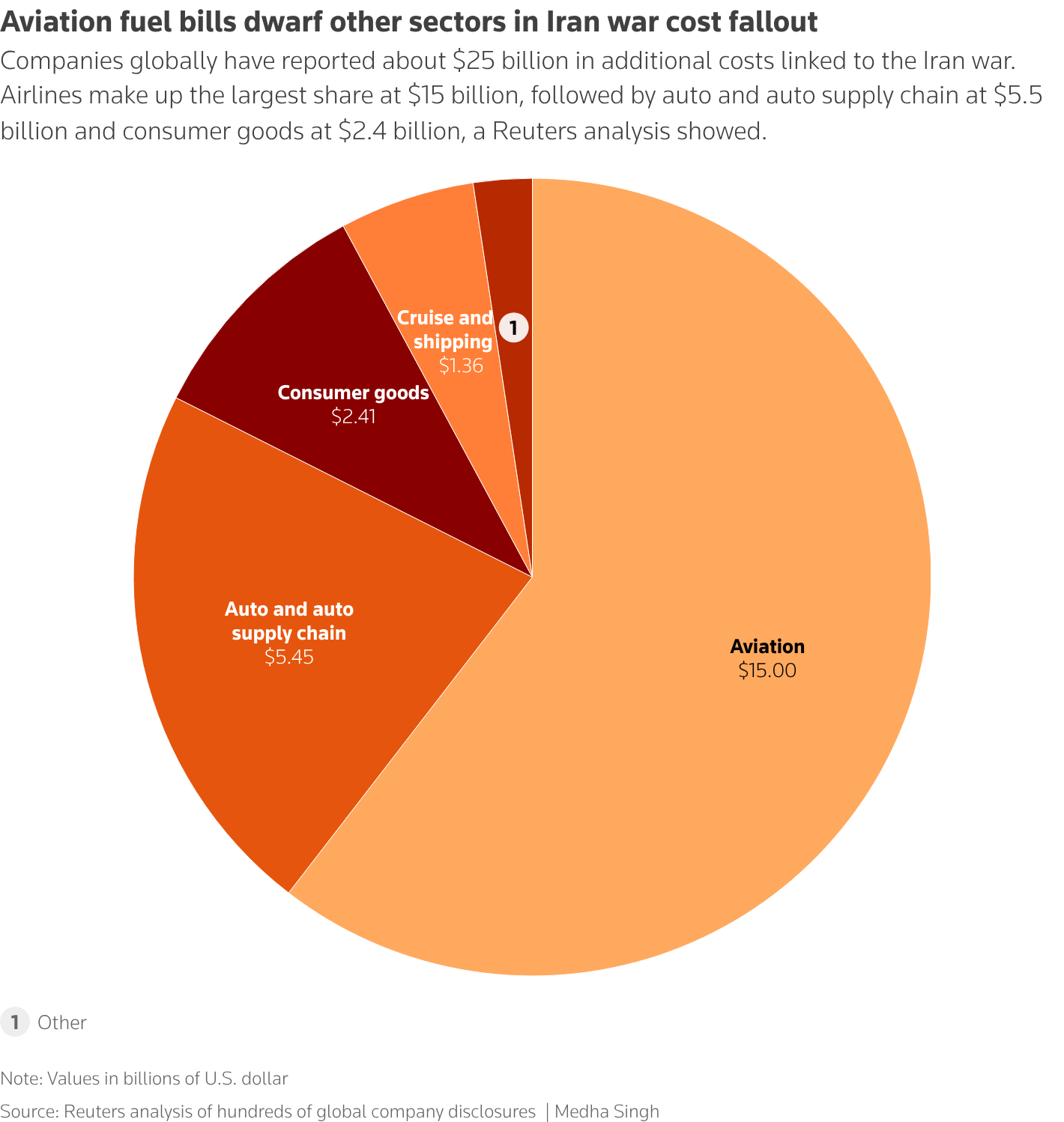
Airlines have flagged $15b in extra fuel costs from the Iran war, three times more than automakers and consumer goods firms combined.
Hit not yet showing in earnings
Corporate profits remained strong in Q1, helping major indices reach new highs.
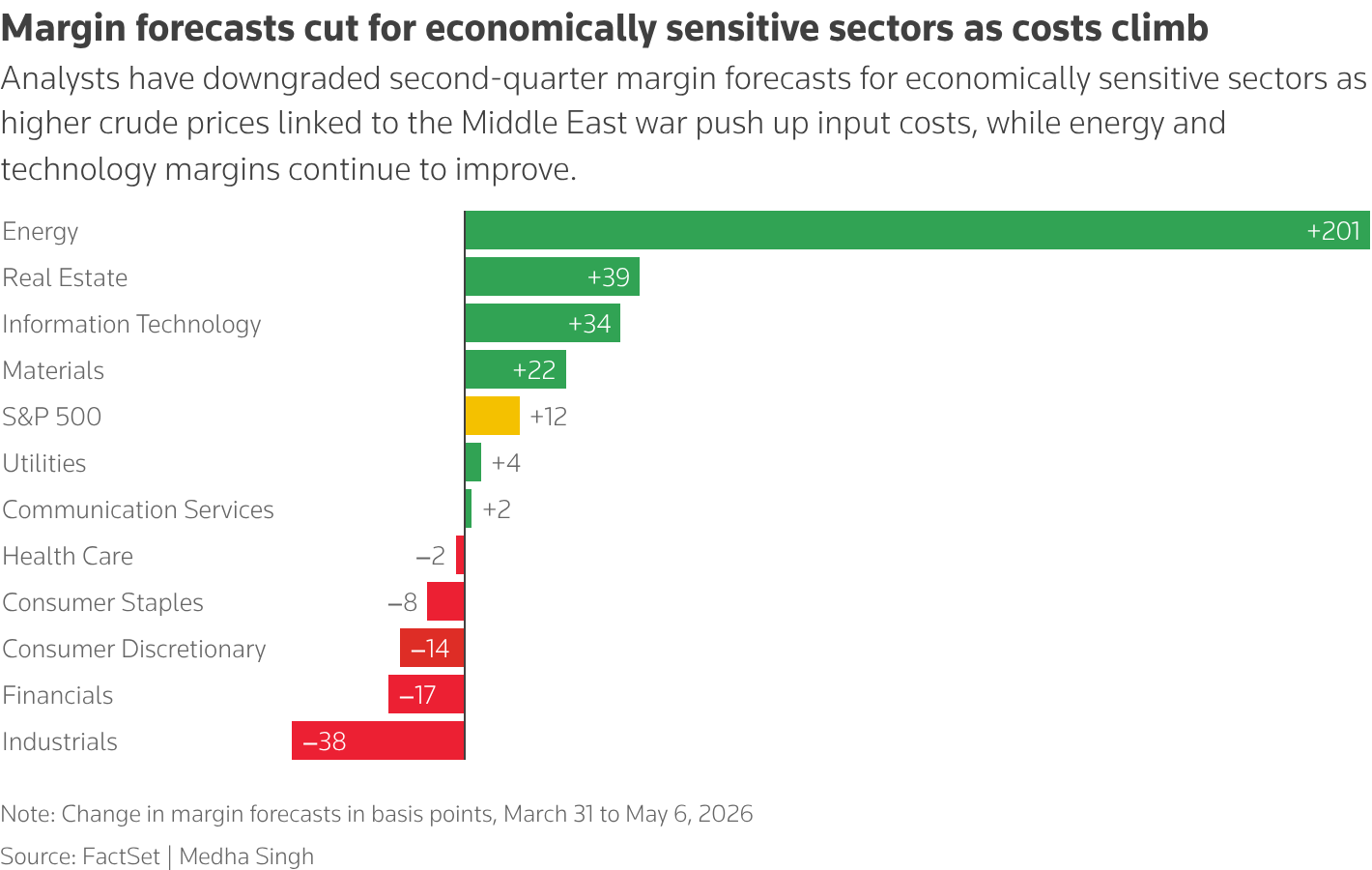
However, S&P 500 profit margins have already been revised downward for Q2. Analysts expect further pressure in Europe and Japan as cost pass-through weakens.
Consumer-facing sectors such as autos, telecoms, and household products are seeing notable earnings downgrades.
“The true earnings hit has not yet materialised in most companies’ results,” said Rami Sarafa, CEO of Cordoba Advisory Partners.