

Iran reviewing US response to 14-point plan; Trump says Washington having 'very positive' discussions with Tehran



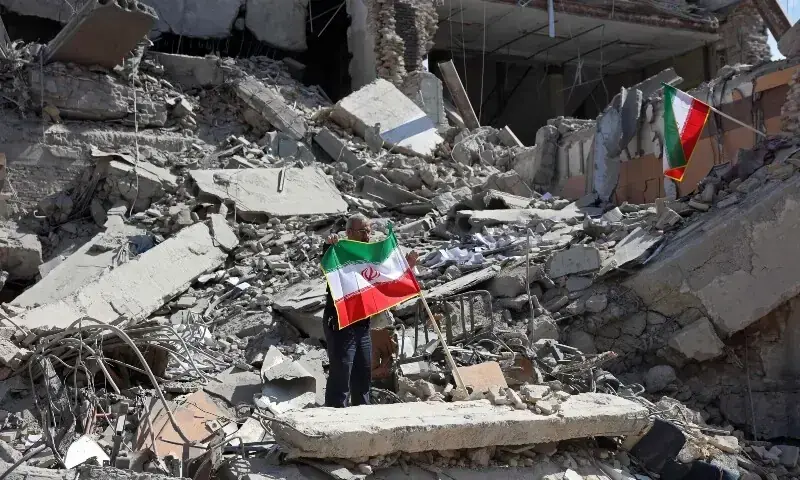
US President Donald Trump said on Monday that his representatives were having “very positive discussions” with Iran that could “lead to something very positive for all”.
He made these remarks in a Truth Social Post, also announcing an initiative to guide vessels stuck in the Strait of Hormuz out of the waterway, hours after Tehran said on Sunday that the United States had responded to its 14-point proposal via Pakistan.
Iranian state media quoted a foreign ministry spokesperson as saying that Tehran was reviewing the response, and “at this stage, we do not have nuclear negotiations”.
Earlier, Iran’s Revolutionary Guards said Washington faced a choice between an “impossible” military operation or a “bad deal” with Tehran, after US President Donald Trump disparaged Iran’s latest peace proposal.
Negotiations between the two countries have been deadlocked since a ceasefire, brokered by Pakistan, came into effect on April 8, with only one round of direct peace talks held in Islamabad so far.

Iran’s Tasnim and Fars news agencies reported that Tehran had submitted a 14-point proposal to mediator Pakistan, but Trump was quick to cast doubt on it.
“I will soon be reviewing the plan that Iran has just sent to us, but can’t imagine that it would be acceptable in that they have not yet paid a big enough price for what they have done to Humanity, and the World, over the last 47 years,” Trump said on his Truth Social platform.

US news website Axios reported, citing two sources briefed on the proposal, that it set “a one-month deadline for negotiations on a deal to reopen the Strait of Hormuz, end the US naval blockade and permanently end the war in Iran and in Lebanon”.
Separately, Al Jazeera reported, citing sources, that the proposal envisaged three main stages, aiming to “transform the ceasefire into an end to the war within 30 days”.
According to the report, the proposal “envisions a pledge of nonaggression, including from Israel, to ensure there’s no return to war and an end to fighting throughout the Middle East”.
It said the proposal suggested the gradual reopening of the Strait of Hormuz in the first phase, as well as lifting of the US blockade of Iranian ports.
Under the proposed plan, Tehran would take charge of dealing with sea mines, the report said.
It added that the second phase was proposed to include “Iran’s return to uranium enrichment after the time limit at 3.6 per cent in accordance with the ‘zero-storage principle’“.
Moreover, the plan includes the US and Israel refraining from attacking Iran and its allies in exchange for Iran refraining from launching strikes, the report said, adding that Iran had also rejected “dismantling nuclear infrastructure or destroying Iran’s facilities”.
“Lifting sanctions includes the gradual release of frozen funds,” it said.
In the third phase, Tehran proposed to enter “into a strategic dialogue with Arab neighbours and building a security system that includes the entire Middle East”, the report stated.
‘Impossible operation’
In a statement on Sunday, the Revolutionary Guards sought to put the onus back on Trump, saying he must choose between “an impossible operation or a bad deal with the Islamic Republic of Iran”.
“The room for US decision-making has narrowed,” they said.
The day before, Deputy Foreign Minister Kazem Gharibabadi told diplomats in Tehran that “the ball is in the United States’ court to choose the path of diplomacy or the continuation of a confrontational approach”.
Iran, he said, was “prepared for both paths”.
‘If they misbehave’
In a brief interview with reporters in West Palm Beach, Florida, on Saturday, the US president declined to specify what could trigger new American military action.
“If they misbehave, if they do something bad, but right now, we’ll see,” he said. “But it’s a possibility that could happen, certainly.”
Mohsen Rezaei, a military adviser to Iran’s Supreme Leader Mojtaba Khamenei, said Iranian forces would sink US ships.
“The US is the only pirate in the world that possesses aircraft carriers. Our ability to confront pirates is no less than our ability to sink warships. Prepare to face a graveyard of your carriers and forces,” he posted on X.
His remarks came after Trump, while addressing a rally in Florida, compared the US action in the sea to that of pirates. “We’re like pirates” as he described an earlier helicopter raid on an oil tanker under the US blockade of Iranian ports.
“We … landed on top of it, and we took over the ship. We took over the cargo, took over the oil. It’s a very profitable business,” he remarked.
Axios reported earlier in the week that Trump’s envoy Steve Witkoff had asked for Tehran’s nuclear programme to be put back on the negotiating table.
But Iran’s mission to the UN pointed to the massive US nuclear arsenal, accusing Washington on Saturday of “hypocritical behaviour” towards Iran’s own atomic ambitions.
On Sunday, Iran’s envoy to Pakistan, Reza Amiri Moghadam also said that the continuation of talks between Tehran and Washington depended on the latter’s behaviour.
He expressed these views while speaking to Iranian official news agency IRNA.
The envoy said Iran had shared a comprehensive plan with the US, but “progress hinges on the US’s sincerity and willingness to resolve issues through genuine diplomatic efforts”.
He reiterated Iran’s commitment to safeguarding its national interests and defending its rights.
Moghadam also appreciated Pakistan for its efforts in facilitating dialogue between the US and Iran, and criticised US behavior, describing it as “unpredictable and aggressive”.
