


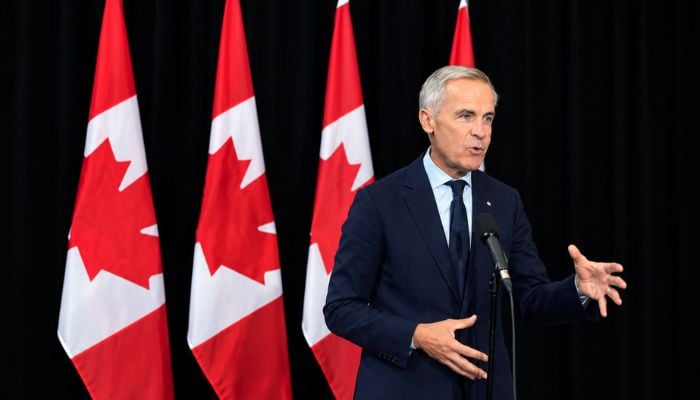
Canadian president Mark Carney expressed his intention to seek “unique alliance” with the European Union bloc in the midst of escalating trade war with the United States.
Speaking to the reporters on Sunday in Toronto, Carney revealed the desire of seeking alliance with the EU does not involve the membership of the bloc.
“What we are looking for – and will begin discussions for – [is] a unique alliance with the European Union,” Carney said.
“We share the same values, we have the same priorities and we have very complementary strengths,” he added.

Earlier, the bloc was quite inflexible about membership rules. Now it is planning to grant Canada a yet-to-be-created status of associate membership.

Carney’s remarks come as he is hosting the Canada Investment Summit at the Four Seasons in Toronto, bringing together about 300 CEOs and senior executives from elite global investment firms.
The summit aims to attract billions in new capital and reduce Canada’s economic reliance on the United States by highlighting its critical minerals, energy resources, educated workforce, and global trade agreements.

Moreover, the PM office also confirmed that Carney will travel to Britain and France next week. His plans include his address to the European Parliament in Strasbourg along with attending EU President Ursula von der Leyen’s State of the European Union address.
However, some reports indicate that the EU, not Canada, is primarily interested in granting the country membership title. The bloc did not comment on these reports.
These developments indicate that Canada is trying to reduce its dependence on the US amid escalating trade war following the collapse of trade talks.
Consequently President Donald Trump imposed 50 percent tariffs on Canadian goods, subsequent retaliatory tariffs, and US bans on certain Canadian imports and government contracts.
On Sunday, Trump slammed Canada and called it the “worst country to deal with.”
Against the backdrop of trade tensions, Carney is positioning Canada as a stable, predictable and rules-based alternative to the US.
