



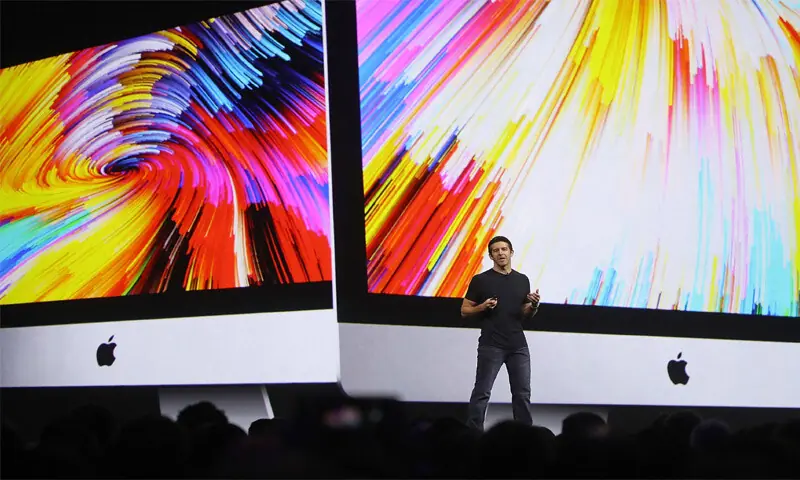
AS APPLE enters a new era, the company announced Tim Cook will become executive chairman of its board, while John Ternus, currently senior vice president of hardware engineering, will take over as its CEO on Sept 1, BBC News reported.
Cook will remain CEO through the summer, working closely with Ternus on a smooth transition before shifting his focus to broader responsibilities, including “engaging with policymakers worldwide”.
The move follows months of speculation about succession at Apple, which recently celebrated its 50th anniversary. Cook, reflecting on his tenure, called the role “the greatest privilege of my life.”
In endorsing his successor, Cook struck a deeply personal tone, describing Ternus as a “visionary” with “the mind of an engineer, the soul of an innovator and the heart to lead with integrity and honour,” adding: “He is without question the right person to lead Apple into the future.” Ternus, in his own statement, called Cook his “mentor,” saying: “I am filled with optimism about what we can achieve in the years to come.”

Unclear whether change of guard at pivotal juncture will prove boon or bane for the company

This transition is more than a reshuffle; it’s a signal about what Apple thinks it needs next.
Cook, who took over from Steve Jobs in 2011, was never cast in the same mould as his predecessor. With a background at IBM and Compaq, he was an operations specialist; a leader who excelled at efficiency, logistics and scaling a global empire. Ken Segall, who worked closely with Jobs, told the BBC: “I don’t think Tim ever really shook the operations guy vibe. I think when people talk about the difference between Steve and Tim, that was basically it — Steve the visionary, Tim the operations guy who took over.”

Ternus, by contrast, is steeped in Apple’s product DNA. Since joining the company in 2001, he has had a hand in nearly every major device Apple has released—from iPhones and iPads to AirPods and Apple Watch. He also led one of Apple’s most critical technical shifts: moving Mac computers away from Intel chips to Apple’s own silicon, tightening control over performance and efficiency. If Cook was the architect of Apple’s scale, Ternus may be the one tasked with reigniting its spark.
At a time when artificial intelligence is reshaping the tech landscape, appointing a hardware specialist might seem counterintuitive. But Apple has never played by Silicon Valley’s usual rules.
As noted by CNN, the company’s edge lies in how tightly it integrates hardware with software and services. Its custom chips don’t just power devices, they define what those devices can do. That could make Ternus’s expertise crucial as AI becomes more deeply embedded in everyday products.
According to Bloomberg, Apple is already exploring new AI-driven hardware, from Siri-enabled smart glasses to wearable devices like pendants and even AirPods equipped with cameras.
The stakes for Ternus could hardly be higher. Apple faces growing criticism for its cautious approach to AI, especially as rivals like Google, Microsoft and Meta pour vast resources into the technology. Instead, Apple has often relied on partnerships, integrating tools from companies like Google and OpenAI into its ecosystem.
That restraint has long been part of Apple’s identity, but it may not hold in an era that rewards speed and experimentation.
Cook’s move upstairs ensures continuity. But Ternus’s rise suggests change — perhaps even a return to a more product-obsessed Apple. The question now is whether that shift can deliver.
Published in Dawn, April 22nd, 2026
