

SBP caps bank charges on digital sales of petroleum products to minimise burden on fuel stations



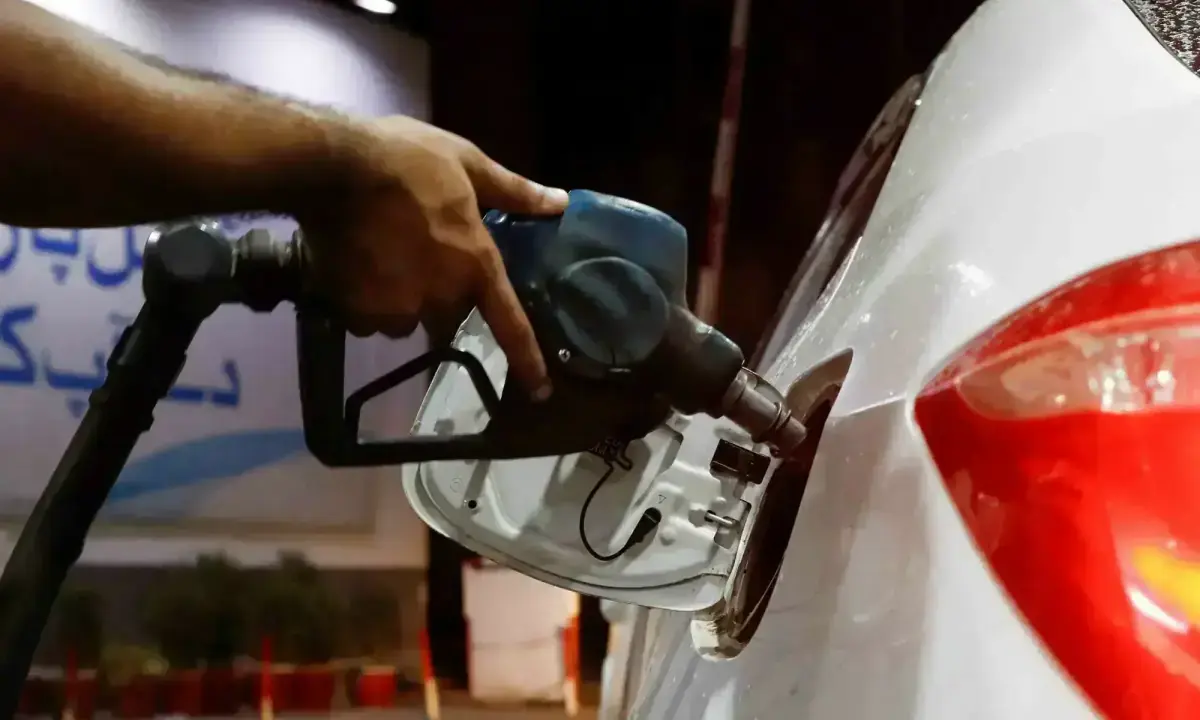
ISLAMABAD: Following demands from petroleum dealers, the State Bank of Pakistan (SBP) has capped bank charges on sales of petroleum products through digital payment methods — including debit and credit cards and online transfers — to minimise the financial burden on fuel stations and promote digital inclusion.
Under the decision, merchant discount rates (MDR) for card-based petroleum transactions have been capped at a maximum of Re1 per litre, while charges on online transactions conducted through QR codes and Raast have been capped at 20 paisas per litre.
Earlier, banks charged these transaction fees at their discretion, with rates varying from bank to bank and customer to customer. The charges ranged between 0.7pc and 1.5pc, resulting in a transaction cost of Rs3-4 per litre.
“This was too high compared to the fixed and regulated dealer commission of Rs8.64 per litre. After adding the 12pc withholding tax and other fixed charges, dealers were left with little option but to adopt dishonest means to survive,” explained Hassan Shah, spokesperson for the All Pakistan Petroleum Dealers Association (APPDA).
He told Dawn that the situation had been aggravated after the introduction of the daily pricing mechanism, as the lead time between the booking and delivery of petroleum products was around 48 hours, while prices were now changing on a 24-hour basis.

“We were not only suffering losses but always remained confused,” he said, adding that this was one of the demands in the charter of demand presented to the government a few days ago.
“Merchant Discount Rate (MDR) for all card-present transactions conducted at fuel stations for the purchase of fuel and related products shall be capped at Rs1.00 per litre,” the SBP said in a notification adding that the interchange reimbursement fee (IRF) for such transactions would be capped at Rs0.20 per litre.

The SBP said the decision had been taken to facilitate the acceptance of digital payments at fuel stations and accelerate the deployment of interoperable Raast QR-based payment acceptance. These rates will remain in place till January 31, 2027 for all payment cards issued in Pakistan.
The central bank has asked all banks and all other regulated entities to actively engage with their respective merchants (fuel stations) during this six-month period “to ensure the enablement and availability of Raast QR-based payment acceptance, for the purchase of fuel and related products”.
The SBP will revisit these instructions on or around January 31 next year in light of the market response to this pricing mechanism.
APPDA cautiously welcomed the notification, saying it was a positive step towards expanding digital payments across the country, but warned that even the revised rates were “higher than economically justified”.
It said a modern point-of-sale (POS) terminal costs around Rs30,000 as a one-time investment, while monthly operating and maintenance expenses generally do not exceed Rs5,000. Given the transaction volumes handled by fuel stations, these costs could be easily recovered without imposing such a significant per-litre charge, it added.
Petrol pump dealers currently earn a commission of only Rs8.64 per litre. From this commission, a substantial withholding tax is deducted at source, while the remaining margin has to cover salaries, electricity, rent, financing costs, compliance expenses and other operating overheads. Under these circumstances, even a charge of Re1 per litre represents a significant reduction in an already thin margin.
Shah said fuel was not a luxury product but an essential commodity that powered the entire economy. “If the objective is to accelerate financial inclusion and digital payments, then digital transactions for fuel should carry the lowest possible acceptance cost. Lower transaction charges will encourage both merchants and consumers to adopt digital payments on a much wider scale,” he said.
On Raast QR payments, APPDA said that from the perspective of fuel station operators, the greatest incentive to promote Raast QR payments was lower transaction costs: “If QR payments remain cheaper than conventional card payments, dealers will naturally encourage customers to use them.”
However, adoption can be accelerated further through several practical measures. It demanded that Raast QR transactions should carry either zero MDR or a significantly lower fee than card transactions, while customer payment should be instant, reliable, and seamlessly integrated with fuel station operations to avoid delays during peak hours.
Therefore, it said, banks and payment service providers should offer free QR onboarding, staff training and technical support, particularly for smaller dealers. Consumers should also be encouraged through cashback, reward points or promotional incentives, creating demand on both sides of the transaction.
Finally, uninterrupted system availability and quick dispute resolution would be key, as fuel stations operate around the clock and any payment failure can directly affect customer service and business continuity.
“If Raast QR payments prove to be faster, more reliable and more economical than traditional card payments, fuel station operators will willingly promote them because they benefit both merchants and consumers,” the association said.


