



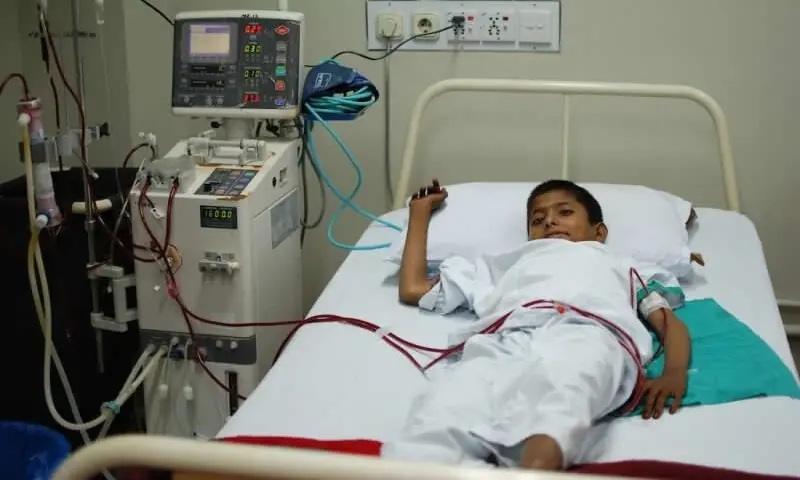
ISLAMABAD: Four in 10 children aged 12-36 months living in high-risk areas of seven cities in Pakistan were found to have lead metal in their blood, according to a new study by the Ministry of National Health Services, Regulations and Coordination and Unicef.
Lead exposure can stunt growth, cause anaemia, and weaken the immune system, while also lowering IQ, reducing attention span, and impairing memory, raising the risk of learning difficulties and behavioural problems, Unicef announced on Friday.
The study sampled over 2,100 children living in high-risk industrial areas in Haripur, Islamabad, Karachi, Lahore, Peshawar, Quetta, and Rawalpindi, and found wide differences between locations. Children in Hattar, Haripur, were the most affected, where 88 per cent had high levels of lead in their blood, compared to 1pc of children in Islamabad.
“Protecting children from lead exposure is a national public health priority. The evidence highlights the urgent need for coordinated action across health, environment, and regulatory systems. The government is committed to strengthening surveillance, improving enforcement of standards, and integrating prevention into child health programmes nationwide,” stated Secretary Health, Ministry of National Health Services, Regulations and Coordination, Muhammad Aslam Ghauri.

Heavy metal exposure can stunt growth, weaken immune system: joint Unicef-NHS ministry study

The study identified multiple sources of potential lead exposure based on global evidence, including industrial emissions, informal battery recycling, lead-based paints, contaminated spices and food, and traditional cosmetics. Lead exposure risks persist due to gaps in regulatory enforcement, monitoring, and public awareness.
Global estimates suggest that the burden may be far higher, with up to 8 in 10 children in in the country potentially affected — among the highest rates globally. Lead exposure is linked to reduced learning ability and long-term economic losses, estimated at 6pc to 8pc of GDP in the country ($25-$35 billion annually).

Absorption rate five times high
“Children can absorb up to five times more lead than adults, making them especially vulnerable. Lead affects every system in the body, but its impact on developing brains can be devastating and lifelong. There is no safe level of exposure to lead for children whose harmful effects are irreversible. Unicef is committed to strengthening evidence, advancing environmental health, and driving multi-sectoral action to protect children from this toxic threat,” said Pernille Ironside, Unicef Representative in Pakistan.
The high-level event brought together key stakeholders to review findings and agree on priority actions, highlighting the need for sustained coordination.
Published in Dawn, May 2nd, 2026
