




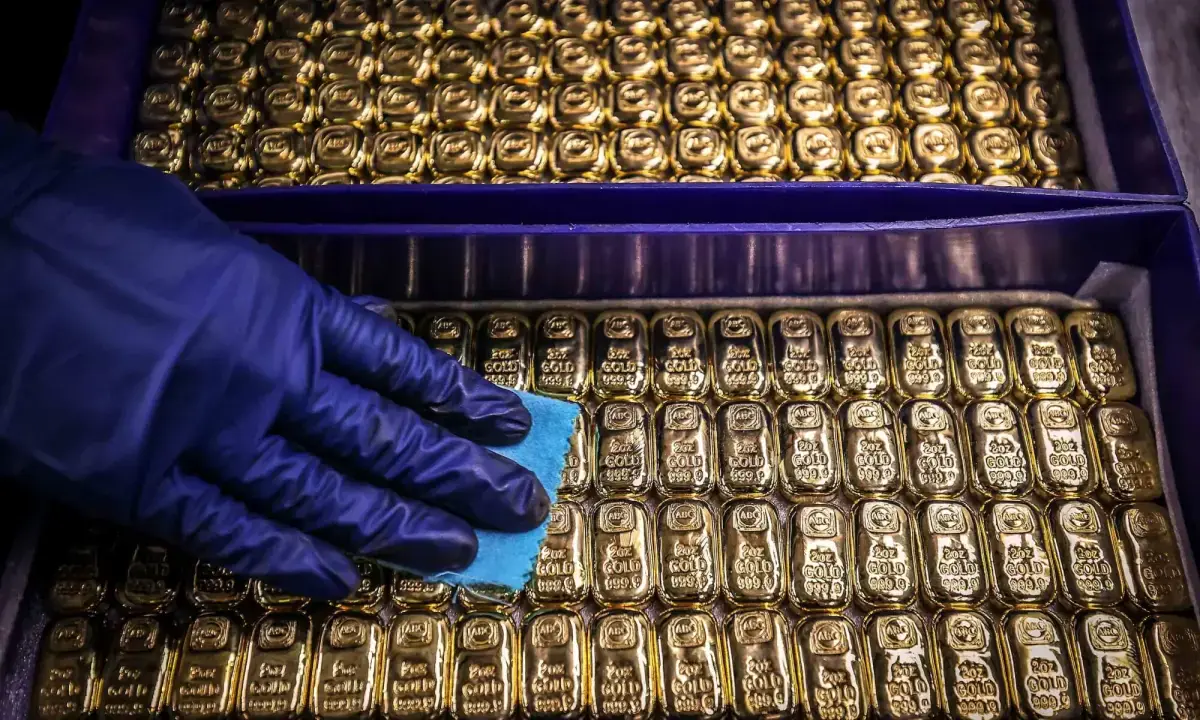
Despite gold’s reputation as a safe-haven asset, its price has plunged since the outbreak of the Middle East war, erasing almost all its 2026 gains after reaching record highs.
Here’s why the price of gold has fallen as global economic uncertainty rises.
Urgent need for cash
Uncertainty around the Middle East conflict has prompted investors to rapidly sell off assets to raise cash and offset losses elsewhere.
They have turned first to selling gold, “given the size of the rally seen over the course of the past year”, said Joshua Mahony, chief market analyst at Scope Markets.

By liquidating gold and sister metal silver, investors gain access to dollars — the currency used to trade oil and other energy products.

Oil prices have soared owing to the closure of the crucial Strait of Hormuz and strikes on Gulf energy infrastructure.
Gold is trading at around $4,550 an ounce, after reaching highs above $5,500 earlier in the year on mounting geopolitical tensions — from US President Donald Trump’s tariff onslaught to wars in Ukraine and Gaza.

Investors rushed to the precious metal thanks also to worries about elevated public debt in major economies and the risk of a bubble in the artificial intelligence sector.
Silver, currently trading at around $73 an ounce, had peaked above $120 two months ago.
Rate hikes ahead
Fears that soaring energy prices will fuel inflation are expected to push the US Federal Reserve and other major central banks to raise interest rates.
Higher rates would make the dollar and US government bonds more attractive as safe-haven assets than precious metals.
“Gold has no yield and is less attractive in an environment where cash might soon offer higher returns,” said Russ Mould, an analyst at AJ Bell.
Concerns over a global growth slowdown, which could weaken industrial demand, have hit silver — used in solar panels, electronics, and to build data centres for artificial intelligence alongside jewellery.
Transit blocked
The ongoing war has disrupted air transport of gold and silver to and from Dubai — a key hub that handles 20 per cent of global metal flows, notably to India, the World Gold Council (WGC) told AFP.
The “physical market” has “temporarily short-circuited”, said Stephen Innes, an analyst at SPI Asset Management.
“The traditional flow of gold from London into Asia has hit a bottleneck, with key transit hubs disrupted and regional buyers sidelined,” he added.
The Middle East accounted for nearly 10pc of global private demand last year, with individuals buying 270 tonnes in jewellery, bars and coins — more than buyers in the United States or Europe, according to AFP calculations based on WGC figures.
Even if demand has just been “delayed”, prices tend to adjust downward in the short term, said Innes.
Investors had already taken profits on gold and silver in January, briefly weighing on prices.
“A second episode of sharp price falls within two months arguably undermines gold’s reputation as a safe haven asset,” said Hamad Hussain, an economist at Capital Economics.


