





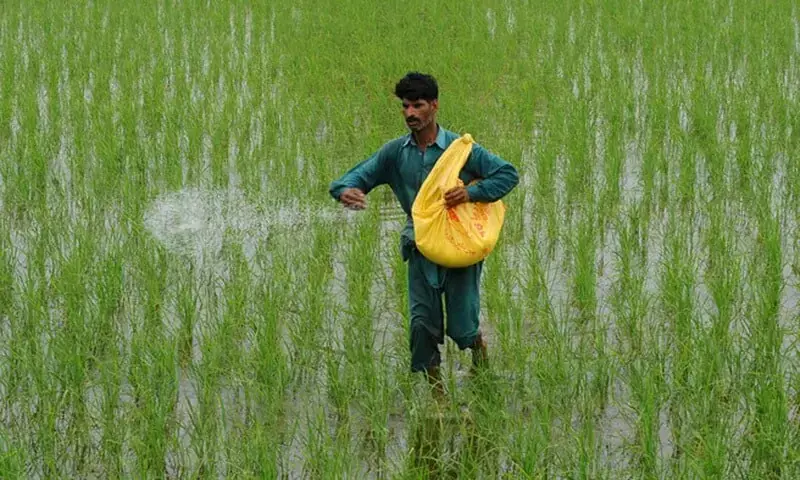
The ongoing war in Iran has disrupted global oil and gas supplies, particularly through the Strait of Hormuz. Consequently, global oil and gas prices have risen sharply. These shocks have cascaded into the fertiliser sector, where natural gas is used as feedstock and as an energy source for producing nitrogen-based fertilisers.
A significant share of global nitrogen-based fertiliser production, particularly urea — the world’s most widely used fertiliser — is concentrated in the Middle East, where Saudi Arabia, Qatar, Oman, the United Arab Emirates, and Iran stand out as major producers and exporters.
Given the geographic location of these countries, the ongoing war is currently constraining fertiliser production, maritime logistics, and availability to farmers, particularly in the countries that rely heavily on imported fertilisers.
Furthermore, the situation has forced the shutdown of many urea plants in the countries that depend on imported LNG. As a result, urea export prices have climbed from around $470 per tonne before the war to over $700 per tonne currently, in line with the rise in gas prices.

Even if RLNG-based plants were to shut down, existing urea stocks, along with ongoing local production, are likely sufficient for the upcoming Kharif season

With this context, one important question arises: what impact will these global developments have on Pakistan’s fertiliser market, particularly in terms of supply and pricing?
In Pakistan, urea and diammonium phosphate (DAP) are the two leading fertilisers that account for around 60–65 per cent and 15–18pc respectively of total fertiliser consumption by volume — exactly why their uninterrupted availability is crucial for national food security. While urea is a nitrogenous fertiliser, DAP is primarily a phosphate fertiliser that also contains about 18pc nitrogen, making its production partly dependent on natural gas.

Currently, the country has 10 operational urea plants with a combined annual production capacity of approximately 6.6 million tonnes, which is sufficient to meet the domestic demand of around 6.3m tonnes. Importantly, only two plants — Agritech Fertiliser (Mianwali), and Fatimafert Limited (Sheikhupura) — rely on imported regasified liquefied natural gas (RLNG), while the rest operate on domestically produced gas that enables Pakistan to withstand global market shocks.
As of the last week of March 2026, urea inventories in the country stand at approximately 900,000 tonnes. Given current consumption patterns, even if RLNG-based plants were to shut down, the existing stocks together with ongoing production from the remaining plants, are likely sufficient to meet the requirements of the upcoming Kharif season. However, shortages may arise at the onset of the Rabi season, particularly during the wheat sowing period in November.
On the positive side, urea production costs in the country have so far largely remained stable, except for a marginal increase in transportation costs due to higher diesel prices. As a result, urea continues to retail at around Rs4,400 per 50kg.
However, the situation is different for DAP, where Pakistan is partly import-dependent. Its total demand is hovering around 1.35m tonnes. The country has only one production facility — FFC Port Qasim — which produces roughly 800,000 tonnes annually, while the remainder is met through imports.
Notably, the Port Qasim plant has long-term import contracts for phosphoric acid — a key raw material — from Morocco. If its operations continue uninterrupted, existing stocks of around 260,000 tonnes, combined with ongoing production, are expected to remain adequate over the next six months. Fortunately, global DAP prices have not increased as sharply as those of urea in the wake of the war.
On a positive note, urea production costs in the country have so far largely remained stable, except for a marginal increase in transportation costs due to higher diesel prices
Against this backdrop, most fertiliser sector experts do not foresee any shortage of urea and DAP or any significant price hike in the domestic market over the next six months. However, the evolving situation calls for proactive policy responses and administrative measures from the government.
First, the government must prioritise the allocation of domestic gas to fertiliser plants over competing uses, such as power generation, to safeguard the country’s food security. In Pakistan, fertilisers account for 30–40pc of input costs for producing key grains such as wheat, rice, maize, barley, and millet. Even then, according to World Bank data, Pakistan currently lags in fertiliser use in the region with application rates of only 160.3 kg per hectare, compared to China (394 kg/ha), India (199 kg/ha), and Bangladesh (392 kg/ha).
Relatively higher fertiliser prices in Pakistan compared to other countries in the region remain the underlying reason for this low application. Since farmers are highly price sensitive, any disruption in fertiliser supply — whether due to price hikes or shortages — would likely further reduce its application, which would adversely affect crop yields.
DAP sales have already declined by 23pc during October–January of the current Rabi season due to its high price of around Rs14,000 per 50kg — and unviable farm economics from a farmer’s perspective. If this trend continues, agricultural production could fall sharply, increasing the risk of a food crisis in the country.
Second, provincial agriculture departments must ensure strict market monitoring to prevent fertiliser hoarding and black marketing. Experience shows that unscrupulous elements always exploit such situations. Recently, farmers faced black marketing and overcharging of maize seed during the peak planting season, yet the agriculture department stepped in only when the season was nearly over in many maize-growing areas.
Third, the government should closely monitor global markets and facilitate the private sector in importing DAP in a timely manner to prevent shortages in the next Rabi season.
In conclusion, Pakistan’s food security continues to remain fragile, with the country ranked 106th out of 123 in the 2025 Global Hunger Index. Inflation due to rising fuel costs is further worsening the plight of millions already facing food insecurity, particularly in rural Balochistan, Sindh, and Khyber Pakhtunkhwa. In these circumstances, the government must treat food security as a national priority above all else.
Khalid Wattoo is a development professional and a farmer, Dr Waqar Ahmad is a former associate professor at the University of Agriculture, Faisalabad.
Published in Dawn, The Business and Finance Weekly, March 30th, 2026


