





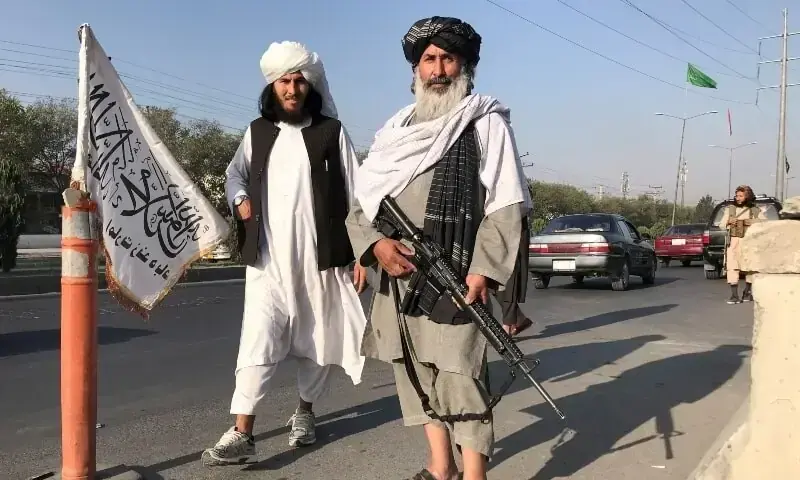
The UN Security Council on Thursday unanimously adopted a resolution extending by one year the mandate of the Monitoring Team that supports the 1988 Afghanistan Sanctions Committee, which oversees sanctions imposed on the Taliban.
All 15 council members voted in favor of the US-drafted resolution, renewing the Monitoring Team’s mandate until February 17, 2027. The extension comes amid mounting international concern over Afghanistan’s deteriorating security situation, the growing influence of multiple terrorist groups, and the potential for regional destabilisation.
Pakistan, which supported the resolution, stressed the ongoing threat posed by Tehreek-i-Taliban Pakistan (TTP), the Baloch Liberation Army (BLA), ISIL-Khorasan (ISIL-K), Majeed Brigade, and Al-Qaeda.
Ambassador Asim Iftikhar Ahmad, Pakistan’s Permanent Representative to the UN, said these groups “have been responsible for some of the most heinous terrorist attacks against Pakistan,” citing recent attacks that killed 80 people this month alone.

“Once again, Afghan soil was used by these groups to plan and orchestrate attacks against neighbouring countries,” he said, urging the Taliban to prevent the use of Afghan territory for terrorist operations.


“It is for the Taliban to decide what path they wish to choose for Afghanistan: whether the path to isolation or the path to peace and prosperity as a responsible member of the international community,“ he said.
The ambassador also highlighted the council’s concerns over the wider humanitarian situation in Afghanistan. “The resolution rightly emphasises the dire human rights conditions, particularly for women and girls, economic collapse, political exclusion, and the challenges posed by drug trafficking,” he said.
“Through this resolution, the council has sent a clear message that Afghan territory should not serve as a safe haven for terrorists and that all member states must prevent ransom payments or political concessions benefiting hostage-takers or terrorist groups.”
The UN Monitoring Team’s 37th report, released this week, paints a grim picture of Afghanistan as a base for multiple terrorist organisations. It noted that the de facto Afghan authorities continue to provide a “permissive environment” for groups, particularly TTP.
The report cited rising regional anxiety over cross-border attacks, the radicalisation of vulnerable communities, and the exploitation of commercial satellite communications and artificial intelligence by militant groups.
While Afghan authorities insist no terrorist groups are present in the country, the Monitoring Team stated that “no UN member state supported that assessment.”
Although the authorities have taken action against ISIL-K and control some external activities of other groups, TTP has enjoyed greater freedom, resulting in an escalation of attacks against Pakistan and heightened regional tensions.
On Al-Qaeda, the report said the group’s intent and capability for external operations remain unchanged. It continues to serve as a training and advisory hub, particularly for TTP, and “favors spectacular attacks aimed at attracting global media attention,” highlighting the continued threat beyond the immediate region.
Al-Qaeda in the Indian Subcontinent (AQIS), not listed under UN sanctions, remains active in southeastern Afghanistan, especially in areas influenced by the Haqqani Network. The report indicated AQIS leaders Osama Mahmoud and deputy Yahya Ghauri are believed to be in Kabul, with the group’s media cell operating from Herat.
Member states warned that AQIS increasingly focuses on deniable external operations, possibly under cover groups such as Ittihad-ul-Mujahideen Pakistan, likely to avoid causing difficulties for the Taliban.
TTP, one of the largest terrorist groups operating from Afghanistan, has intensified attacks on Pakistani security forces and state institutions. A November 11 attack on an Islamabad courthouse killed 12 people, marking the first such strike in the capital in several years. Despite operational setbacks, including the killing of deputy emir Mufti Muzahim in October, the group remains a serious threat.
The Monitoring Team warned that TTP could deepen cooperation with Al-Qaeda-aligned groups, potentially expanding the threat beyond the region.
ISIL-K, though under pressure from Taliban actions and regional security operations, retains significant combat capability, particularly in northern Afghanistan near Badakhshan and along the Pakistani border. The group continues to replenish its ranks through online recruitment and seeks alliances with other armed factions.
Other groups of concern include the East Turkistan Islamic Movement (ETIM/TIP), which reportedly enjoys Afghan patronage, including identity documents, and raises funds through poppy cultivation and mining. Approximately 250 ETIM/TIP members joined Taliban police forces in 2025, and some have called for fighters in Syria and neighboring countries to relocate to Afghanistan in preparation for operations in China’s Xinjiang region.
The Baloch Liberation Army (BLA), which is not listed under UN sanctions, has carried out attacks against Pakistani security forces and China-Pakistan Economic Corridor (CPEC) projects, including a September 16 ambush that killed 32 soldiers. While Pakistani counter-terrorism operations have constrained the group’s activities, it remains operational, with some member states reporting coordination between BLA, TTP, and ISIL-K through shared training and resources.
The Monitoring Team’s findings are expected to shape further deliberations at the Security Council on Afghanistan’s security trajectory and the effectiveness of the existing sanctions regime.
Pakistan and other member states have emphasised that the resolution underscores the need for the Taliban to take “sustained and verifiable” action against terrorist groups, prevent Afghan territory from being used for external attacks, and uphold commitments to international peace and security.


