


From the harvest of the previous wheat crop in March–April 2025 to the sowing of the current one in November 2025, key office bearers of Pakistan’s major farmers’ associations consistently criticised the government’s wheat policy.
Their criticism, through press conferences, television talk shows, and public forums, centred particularly on two major policy shifts in the wheat sector: the withdrawal of the wheat support price, and the abolition of the decades-old practice of direct procurement from farmers. They warned that farmers were likely to reduce the wheat-sown area in the upcoming season in protest, as most had received prices ranging between Rs1,800 and 2,200 per 40kg — far less than their production costs and the import parity price.
Several independent experts also predicted a decline in wheat acreage, particularly in Punjab, where the government imposed district-specific wheat ceiling prices of around Rs2,800 per 40kg once prices began to rebound after a period of oversupply during harvest season. This artificial price suppression through administrative measures — quite contrary to the principles of deregulation and free market economy — hurts farmers who managed to hold their stocks for better prices.
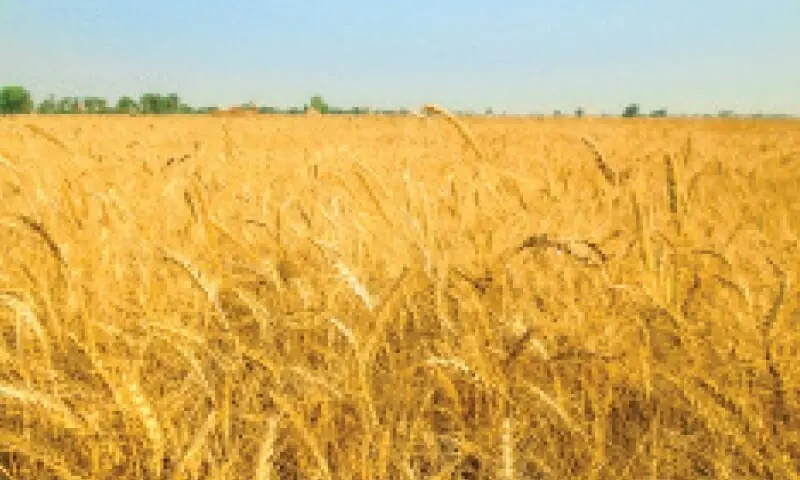
Surprisingly, in contrast to earlier predictions, the first estimate of the 2025-26 wheat crop prepared by the Crop Reporting Service (Government of the Punjab) indicates that in Punjab — which produces 76 per cent of the country’s wheat — the crop has been sown over 16.41 million acres compared to 16.25m acres in 2024–25. This reflects an increase of 159,000 acres.

Historically, farmers have preferred wheat because most alternative crops require higher upfront investments, provide lower or uncertain financial returns, or lack developed marketing channels
The Punjab government has taken credit for this expansion, attributing it to the timely announcement of an indicative price (not a support price) of Rs3,500 per 40kg, a reduction in the price of certified wheat seeds, and an effective sowing campaign.
If the integrity of this data holds up, this raises a critical question: what is the ground reality? Have farmers once again been drawn in by government assurances — particularly the Rs3,500 indicative price — or do they simply have limited viable alternatives to wheat? There is a possibility that many farmers opted to sow wheat, anticipating that a reduction in total wheat acreage would reduce supply and lead to higher market prices this year.

In part, the answer lies in the timely announcement of an indicative price, which helped revive farmers’ confidence. However, the deeper reality is that Pakistan grows a very limited number of Kharif and Rabi crops — excluding vegetables, which have a wide range, but cannot be cultivated on a large scale due to limited domestic consumption and constrained export opportunities.
For wheat growers, alternative cropping options vary across various regions of Pakistan. For example, in the Sahiwal division, farmers can shift from wheat to potatoes, garlic, canola, mustard, and spring maize. Likewise, farmers in the Sargodha division may opt for sugarcane (a year-long crop), chickpeas, lentils, maize, and oilseeds. Similarly, in some regions, sunflowers and tobacco can replace wheat.
Historically, farmers have preferred wheat because most alternative crops require higher upfront investments due to costly seeds and fertilisers, provide lower or uncertain financial returns compared to wheat, or lack well-developed marketing channels, particularly when grown outside their established production clusters.
In contrast, wheat requires relatively few and simple agricultural operations. It can be grown under both irrigated/rain-fed or water-scarce conditions, which makes it suitable across a wide range of agro-ecological zones. Wheat is less susceptible to pest and disease infestations and relatively more resilient to climatic variability than many alternative crops. Moreover, it is traded even in the smallest local grain markets, so farmers face minimal marketing constraints. Additionally, smallholders who rear livestock are compelled to grow wheat, as wheat straw serves as an essential fodder source.
These attributes make wheat particularly attractive to risk-averse farmers who seek ease, stability, and predictability. As such, wheat has historically remained the preferred choice for absentee landlords.
An analysis of wheat acreage trends over the past 25 years further reinforces this pattern. With the exception of the last year, the maximum year-on-year decline in wheat area was limited to 3.3pc, recorded in 2000–01 compared with 1999–2000. In contrast, during 2024–25, wheat acreage declined sharply by 5.5pc, largely due to the import of 3.6m tonnes of wheat in early 2024, coupled with the Punjab government’s abrupt refusal to procure the 2024 harvest from farmers.
In conclusion, given the limited crop alternatives available to Pakistani farmers, wheat is likely to remain the country’s dominant crop, with the risk of no more than a 5.5pc reduction in cultivated area in any given year. However, every farmer has an economic threshold, beyond which sustained losses compel a shift to alternative crops.
In light of the past two years, the government must ensure — through appropriate policy interventions and administrative measures — that the new wheat crop trades at the promised rate of Rs3,500 per 40kg, a level that covers production costs and allows at least a bare minimum margin for farmers.
Failure to honour this commitment would further erode government credibility — already weakened by unmet assurances over the last two years. On the other hand, for the country, even a 5pc reduction in wheat acreage could necessitate the import of approximately 1.5m tonnes, which requires massive foreign exchange.
Khalid Wattoo is a development
professional and a farmer,
Dr Waqar Ahmad is a former
associate professor at the University of Agriculture, Faisalabad.
Published in Dawn, The Business and Finance Weekly, January 26th, 2026


