



The common assumption that a popular politician is naturally a powerful one reflects a persistent misunderstanding of how contemporary political systems function. High poll numbers, large rallies and dominant social media metrics are frequently misinterpreted as a mandate that allows a leader to govern as they please.
Political science demonstrates that this is often an illusion. Being liked by the public is what political theorists call a “soft asset”, because it frequently fails when it collides with the realities of how government actually operates.
As the American political scientist Robert Dahl argued in 1990, the idea of a heavy mandate is often a “pseudo-concept.” It rarely functions as a practical tool for making laws. In reality, a leader’s power is not a blank cheque signed by the voters. It is a limited currency that must be spent within a complex web of rules and competing interests.
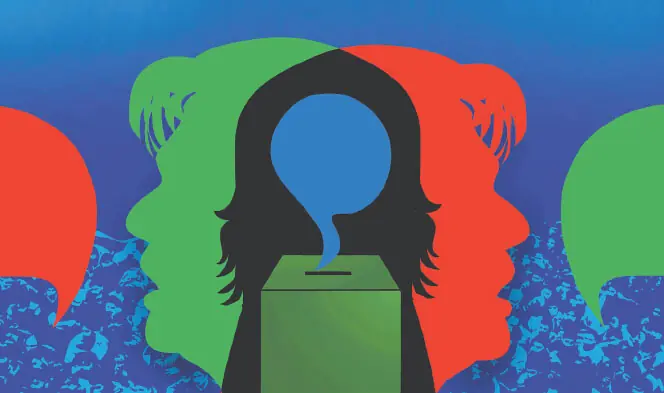
The American political theorist Richard Neustadt observed that a leader’s true power is not the power to command but the power to persuade other officials.

A president or prime minister may have millions of admirers in the streets, but if the PM or president cannot persuade the bureaucracy, the legislature and the judiciary to cooperate, they usually struggle to achieve their goals. Neustadt maintained that actual change requires navigating institutional friction and laws. This is a reality that cannot be addressed by public applause alone.

From Barack Obama to Imran Khan, political history shows that mass appeal rarely translates into effective governance because public approval is a fragile asset, often neutralised by institutional constraints and perception gaps
The presidency of Barack Obama between 2009 and 2015 serves as a case in point regarding the tension between popularity and institutional power. When Obama assumed office, he carried an impressive mandate, having won the popular vote by a significant margin and holding a rare majority in the Senate alongside approval ratings of over 60 percent.

This reflected a level of power that many believed would allow him to bypass traditional political tussles. However, as the theories of Dahl and Neustadt suggested, public adoration did not translate into a frictionless path. Obama’s high approval ratings proved to be more of Dahl’s “pseudo-concept” than a practical tool for passing laws. Despite Obama’s fame, he faced deep institutional pushback that made passing key bills nearly impossible, rendering popularity rather useless in the face of lobbyists and the opposition.
According to the German political philosopher Jan-Werner Müller, political leaders often fall into the trap of claiming they alone represent the ‘real people’ because they are ‘popular’. This creates a democratic paradox, where popularity becomes a tool to bypass friction by delegitimising the opposition and state institutions.
This observation is reinforced by the fate of various 21st century populists. Despite enjoying an impassioned support base, Donald Trump saw major policy goals stalled by congressional gridlock and judicial blocks during his first term (2016-2020). He is again likely to face more of the same during his remaining second term, more so as he tries to wriggle his way out of the Iran war.
Similarly, former UK prime minister Boris Johnson’s 2019 heavy mandate failed to prevent internal party revolts, proving that public applause cannot replace institutional cooperation. In Brazil, the populist Jair Bolsonaro was forced to make constant concessions to centrist and progressive legislative blocs, despite having a fervent support base among the electorate.
Then there is also the question of how one measures political popularity. It is a complex exercise. American political scientist John Zaller’s Receive-Accept-Sample (RAS) model suggests that voters do not hold fixed opinions but (during surveys) construct “preference statements” based on whichever political cues are most recently salient in the media.
This contributes to a “perception gap” within a polity. This term was first used in a 2019 study by academics S. Hawkins, Daniel Yudkin, M. Juan-Torres and Tim Dixon. A perception gap emerges when individuals are heavily influenced by media framing, leading to a distorted understanding of political reality. A leader’s standing can be manufactured by a narrative regardless of the broader factual reality. A politician seen as ‘one of us’ can maintain high support while failing to pass any significant laws.
The public often values the image of relatability over actual achievement. This is something that the current ‘hybrid regime’ in Pakistan is experiencing vis-à-vis its conflict with the party of former populist prime minister Imran Khan. The perception of Khan’s ‘widespread’ popularity is largely an outcome of a perception gap rather than a reflection of overall electoral dominance.
While his personal appeal is impressive, its scale is frequently exaggerated through the digital ‘echo chamber effect.’ As noted in the 2025 study ‘Echo Chambers on Social Media and its Role in Political Polarisation’, digital platforms produce a “reinforcement effect”, where users outrightly disregard information that does not fit their existing beliefs, no matter how authentic the information.
Khan’s identity was always, and continues to be, constructed through a populist lens that emphasises his role as a singular ‘saviour’, a process the Pakistani linguist Muqadas Fakhar describes as “employing a linguistic and rhetorical process to create polarised mass opinions that mask a more divided reality on the ground.”
In Pakistan, surveys have consistently shown a deeply polarised public rather than a monolithic support base. Just before the February 2024 elections, surveys by firms such as Institute for Public Opinion Research (IPOR) and Gallup Pakistan showed Khan’s national support hovering between 31 percent and 40 percent, with rivals such as Pakistan Muslim League-Nawaz (PML-N) and the Pakistan Peoples Party (PPP) leading in key battlegrounds in Central Punjab and Sindh.
During the elections, while candidates backed by Khan’s party secured the most seats of any single group, they won approximately 31.17 per cent of the popular vote. Indeed, this represents a notable following, but it falls quite short of the ‘unanimous support’ often projected by Khan’s social media apparatus.
According to the French political scientist Christophe Jaffrelot, Khan’s rise between 2011 and 2018 was facilitated by “managed political conditions”, where institutional support helped marginalise traditional rivals. This suggests that his perceived ‘invincibility’ was a product of strategic engineering rather than a purely organic revolution.
After Khan lost power in 2022, claims of his ‘popularity’ continue to be exaggerated. This serves as a case study for Zaller’s RAS model, where a constant flow of partisan social, mainstream and print media cues leads to the belief of him commanding a ‘large mandate’ even from jail. But the perceptions in this regard ignore the structural friction and fractured electoral loyalties that still define Pakistan’s political terrain and reality.
Published in Dawn, EOS, April 12th, 2026