





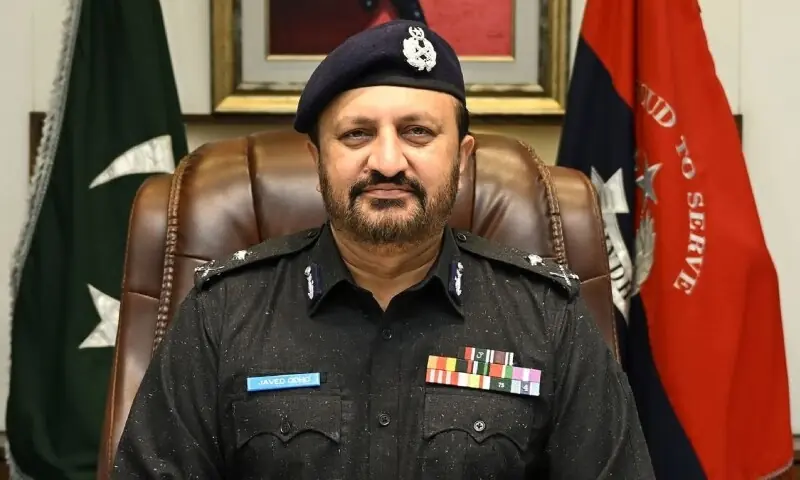
KARACHI: Sindh Inspector General of Police Javed Alam Odho said on Friday that, on the directives of the provincial government, an operation was launched against riverine bandits last month.
Speaking at a press conference at the Central Police Office, the provincial police chief said since the launch of the operation, 113 encounters had taken place with criminals in which 27 kidnappers were gunned down, 82 others were injured, and 77 were arrested.
Flanked by Sindh Additional Inspector General of Police Iqbal Dara, the Odho said 123 bandits had also surrendered before law enforcers as part of the government’s policy.
“These were not ordinary criminals,” he said. He further said that 15 people who had been kidnapped had been recovered safely. He lamented that some of the citizens rescued were in the custody of the bandits for up to three years.

Way forward

In an oblique reference to past operations against riverine bandits that which failed to deliver desirable results, Odho said a comprehensive plan has been chalked out in which socio-economic aspects were also included as part of the government’s policy.
He vowed to continue the operation until the “total annihilation” of crime in riverine areas. The Sindh police chief said the riverine areas where military-grade weapons were available would be de-weaponised.

He said that under the plan tribal feuds — which had remained nurseries for bandits in terms of provision of manpower and weapons — would be ended.
He said that these tribal feuds were the outcome of “egos, attempts to occupy government lands and petty issues”.
Some tribal chiefs had cooperated with the law enforcers for eliminating the criminals, he noted, adding that those who refused to do so would be taken to task.
He further said that there would be “permanent presence” of police to prevent the reemergence of the criminals. He declared that a “riverine police unit” would be set up for this purpose.
He claimed that recently hard-to-reach areas like Bagarji and Ranwati had been cleared of bandits, adding that notorious gangs were eliminated.
He further said that there would be a “socio-economic development plan” for riverine areas. He hoped that with the completion of the Ghotki-Kandhkot bridge on the Indus River, law enforcers would get easy access to riverine areas. He hoped that this proposed bridge would help to eliminate criminals.
Odho also said that roads, dispensaries and schools would be set up in these areas. For this purpose, certain non-governmental organisations in Karachi had pledged to help set up educational institutes in the riverine areas, he said.
He said that with the help of oil and gas companies, socio-economic uplift projects were launched in Ghotki district in 2003. He noted that these projects benefited local communities and helped in eliminating criminals, particularly from the Chachar community.
The police chief said that the riverine area was spread over 450 kilometres in the province. He said that out of this, 50-60km was whether bandits had established their hideouts.
The police faced two challenges there, he said. “The presence of a significant quantity of water with fertile lands and islands, and the area’s proximity to border areas of other provinces like Punjab,” Odho added.
Referring to his recent talk with the newly-appointed Punjab Punjab police chief, who also belongs to Nawabshah, Odho said, the two had decided to further strengthen cooperation and joint operations in bordering areas.
“An air surveillance unit would also be set up for surveillance of the areas with the help of drones,” he added.
In response to a question about the alleged political patronisation of the bandits in areas, Odho said that certain individuals may support criminals due to caste, kinship, or land disputes in their individual capacity. However, he said that the government had given law enforcers a free hand, adding that they were not facing any pressure.
Odho maintained that with the launch of recent operations in Balochistan and the “improvement of the situation in the province”, he hoped that the “flow of sophisticated weapons” to riverine areas would end.
“The leakages in de-weaponising the areas will be addressed with the help of the federal government,” he said.
The Sindh IG said around 150,000 people were living in riverine areas, adding that the Sindh government had decided to “rehabilitate them”. He further said that if needed, they would be provided state land to sustain their livelihoods.
Crime in Karachi
During the press talk, the Sindh police chief said that another major challenge for the law enforcers was street crime in Karachi.
He said that there was a time when organised crime and terrorism prevailed in the metropolis, saying there were “no-go areas” and police did not even “dare to go there”.
“Peace was restored in the provincial capital following the sacrifices of over 1,100 police officials,” he said.
He noted that crime had not been eliminated from Karachi, but said that the “numbers have declined”. He vowed to further improve the situation in the metropolis.


