



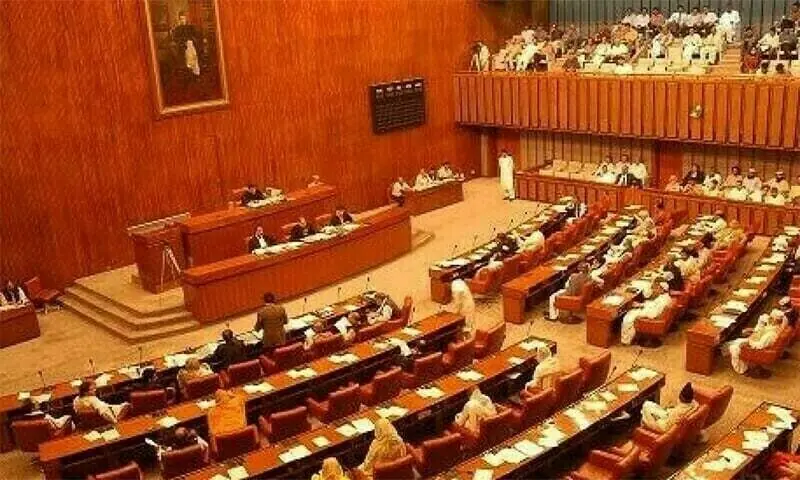
ISLAMABAD: In a move billed by its sponsors as reaffirming parliament’s supremacy, a process has been initiated to amend a Senate rule to limit the scope for high courts to intervene in parliamentary affairs.
Amid opposition from the Ministry of Parliamentary Affairs, the Senate Standing Committee on Rules of Procedure and Privileges has approved an amendment to Rule 166(5) of the Rules of Procedure and Conduct of Business in the Senate. Backers say the change will leave no legal room for the judiciary to interfere in parliamentary matters by relying on the rule in its present form.
The proposed amendment, spearheaded by former deputy chairman Saleem Mandviwalla and signed by around three dozen lawmakers, expands the definition of public petitions that can be taken up by Senate committees.
It states that a public petition, submitted by a citizen or a group of citizens in the prescribed form under Rule 277, may be presented on “any matter of public importance”, including grievances arising from disputes where circumstances disclose an element of public interest, systemic concern, regulatory oversight and/or the protection of rights.

Proposed rule change seeks to shield upper house committees from stay orders
It further provides that, after consideration, the committee may issue: (a) observations or recommendations for systemic or regulatory improvements; and (b) facilitative guidance for resolution of the grievance and take necessary steps for disposal of the matter in accordance with relevant law.
A proviso proposed to be added to the rule gives the Senate chairman broad discretion over whether a petition proceeds. It reads: “Provided that, notwithstanding anything contained in this rule, the Chairman Senate may, at his sole discretion, review, admit, pend, dispense with or decline to proceed with any petition, if in his opinion such action is necessary in the interest of propriety, parliamentary discipline, or to prevent frivolous, vexatious or otherwise inappropriate proceedings.”

Rule 166(5) in its current form states: “Public petitions may be presented on any matter connected with the business pending before the House or a Committee, or any matter of general public interest which is primarily the concern of the Government, provided that it is not one which falls within the cognisance of a court of law or tribunal, and it shall not directly relate to a matter pending before any court or other authority performing judicial or quasi-judicial functions.”
The ministry proposed retaining the latter portion of the original rule as a second proviso, but the committee rejected the suggestion.
During the meeting, held with Senator Syed Waqar Mehdi in the chair, Mr Mandviwalla raised concerns over what he described as judicial interference in committee proceedings. He emphasised courts had no authority to interfere in parliamentary affairs and noted that the Supreme Court had repeatedly directed that parliamentary proceedings should not be obstructed.
He recommended that the Senate should not compromise the authority of its committees and, while exercising the powers of the House as representatives of the public and as oversight bodies, must remain fully empowered to take up matters of public importance.
Mr Mehdi reiterated that parliament was the supreme institution and said its organs must be empowered to address issues affecting individuals and groups of citizens. However, he cautioned that committees must strictly refrain from taking up or discussing sub judice matters.
Senator Saadia Abbasi opposed the proposed amendment, saying every institution should operate within its constitutional domain and avoid interfering in the functions of others.
The meeting was attended by Senators Saadia Abbasi, Dost Ali Jeesar, Asad Qasim, Jan Muhammad and Palwasha Khan. Senators Mandviwalla, Shahadat Awan and Syed Masroor Ahsan also attended as movers, while Senator Bilal Khan Mandokhail attended as a special invitee.
Talking to Dawn, Mr Mandviwalla said he was confident the amendment would be passed by the House and would “put a full stop” to judicial interference in parliamentary affairs. “And if it does not stop even then, we will move the appropriate forum for action against those found responsible,” he said.
The move follows a dispute this year over stay orders issued by the Islamabad High Court and Lahore High Court against proceedings of Senate standing committees. On July 25, the Senate summoned the Attorney General for Pakistan (AGP) after lawmakers from both sides of the aisle raised concerns about alleged judicial interference in parliamentary matters.
The issue was raised by Mr Mandviwalla during a sitting presided over by Senator Shahadat Awan. Mr Mandviwalla described the stay orders as “alarming” and regretted that they had been issued despite the absence of any pending court cases. “This is direct interference in the functioning and proceedings of parliamentary committees,” he said.
Legislators from both treasury and opposition benches, including PTI and JUI-F, endorsed the concerns. On Aug 18, AGP Mansoor Usman Awan made a rare appearance before the Senate and backed the judiciary, calling for keeping the door open for judicial intervention in parliamentary proceedings.
The AGP referred to Article 69 of the Constitution, under which the validity of proceedings in parliament cannot be called into question on the ground of any irregularity of procedure, but insisted that the bar was not absolute.
Published in Dawn, December 21st, 2025


