





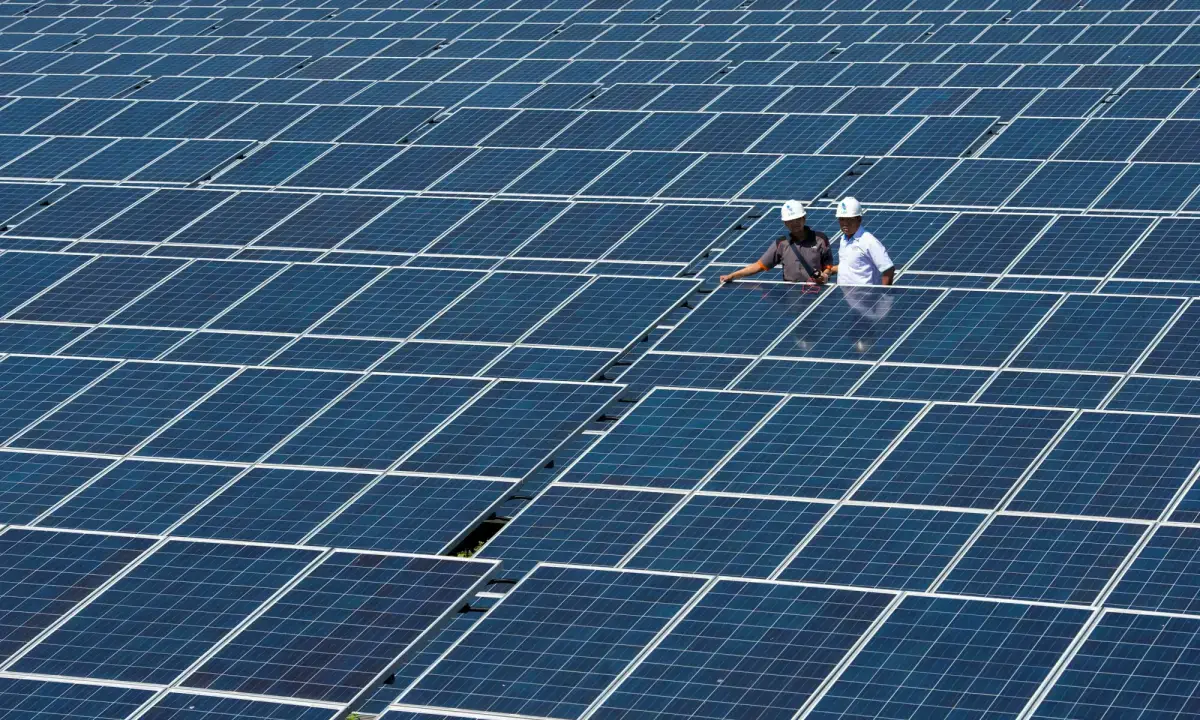
ISLAMABAD: The National Electric Power Regulatory Authority (Nepra) and the Power Division faced sharp criticism on Friday from a wide range of stakeholders over proposed changes to net-metering regulations, as critics accused authorities of ganging up against rapid solar energy adoption and pushing the country towards an “inefficient, unreliable and unaffordable” power system.
The objections were raised during a marathon public hearing convened by the National Electric Power Regulatory Authority (Nepra) to seek feedback on its proposed Prosumers Regulations 2025, which aim to significantly reduce incentives for net-metering solar consumers. Although Nepra itself proposed the draft regulations, their defence was largely mounted by the Power Division and its utilities, including distribution companies and K-Electric.
Participants at the hearing included think tanks, politicians, chambers of commerce, solar installers, service providers, industrialists and domestic consumers, many of whom argued that the proposed changes would undermine Pakistan’s clean energy transition.
The draft regulations envisage drastic revisions to the existing framework; however, stakeholders were barred from presenting alternative proposals. Nepra’s former member (law) Amina Ahmed, who assumed charge as member finance and technical for the next three years on Friday, directed commentators to confine their remarks strictly to the draft regulations and refrain from suggesting alternatives.

Critics warn proposed solar rules threaten clean energy drive and consumer rights


The regulator also declined a request from Pakistan Peoples Party leader Nadeem Afzal Chan for a live telecast of the public hearing on television or social media platforms to allow broader public participation, even if limited to pre-registered speakers.
Several chambers of commerce and industry demanded that hearings on an issue of such national importance should not be confined to a single session in Islamabad and called for similar consultations in all four provincial capitals. Nepra did not respond to these demands.

Several interveners complained that, despite the regulator seeking only feedback, distribution companies had already stopped accepting new solar applications and were discouraging online registrations through various means. They also alleged that some Discos had stopped accounting for electricity supplied by existing prosumers and were charging them at full rates.
Nepra Chairman Waseem Mukhtar and Member (Development) Maqsood Anwar declared such unilateral actions illegal and assured participants they would not be allowed to continue.
They said the Power Division should have acted in line with assurances previously given by the power minister, adding that the regulator would ensure reversal of these measures and take strict action against those responsible. The chairman sought a detailed report from Discos.
While the Power Division and its entities were given about 1.5 hours to explain the proposed changes, other commentators were limited to three minutes each. The hearing lasted more than three hours.
The Power Division informed the forum that existing registered prosumers would be shifted from net-metering to net-billing, with export units credited for only one month instead of the current three. All other contractual terms would remain unchanged until the expiry of their seven-year agreements.
Under the proposed rules, new prosumers would be offered five-year contracts, with export units purchased at Rs11 per unit, compared to around Rs26 per unit under existing arrangements.
Mr Chan said his party would challenge the proposed regulations, alleging that the power system was corrupt, inefficient, unreliable and unaffordable, while solar solutions had empowered farmers and small rural businesses such as tailors, welders and tyre shops. He alleged widespread payment of speed money and claimed consumers were forced to repair faulty transformers at their own expense, even though it was the utilities’ responsibility. He argued that people’s initiative to adopt solar energy should be protected rather than discouraged.
Think tanks warned that the proposed regulations contradicted Pakistan’s international commitments under the Paris Agreement and the UN Sustainable Development Goals, and would undermine efforts to reduce emissions, enhance energy security, save foreign exchange and improve industrial competitiveness. They suggested that the government should purchase surplus solar power and earn carbon credits estimated at $40 million annually.
The Power Division maintained that the government was not discouraging solar adoption but sought sustainable growth while addressing misuse. It said Pakistan’s clean energy share had increased from 40pc in 2015 to 55pc in 2025, with on-grid solar capacity reaching 7,000 megawatts and off-grid systems exceeding 13,000MW.
However, officials argued that rapid solar penetration had created grid stability challenges, including steep ramp-up and ramp-down requirements, voltage and backfeed issues, necessitating regulatory intervention.
Published in Dawn, February 8th, 2026


