





• FO spox says Islamabad cannot let citizens be killed ‘incessantly, mercilessly’
• Afghan envoy issued demarche, Kabul told to act against terror outfits operating from its soil
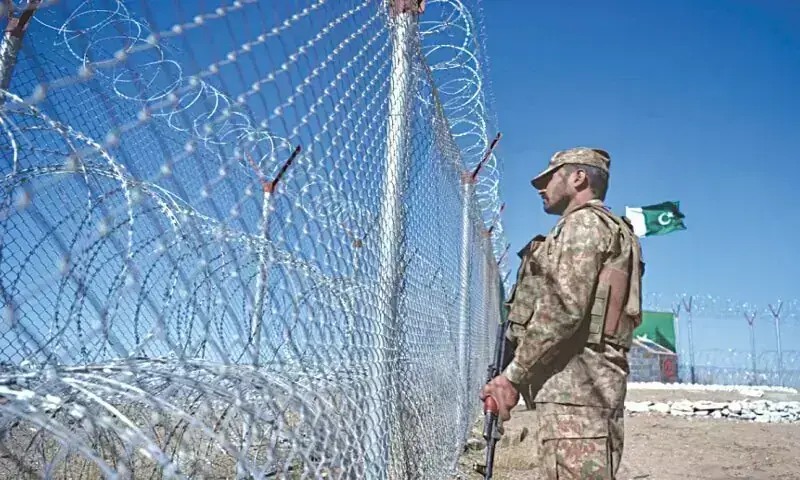
ISLAMABAD: The Foreign Office on Thursday said Pakistan reserves the right to target terrorist sanctuaries in Afghanistan to protect the lives of civilians and law enforcement personnel amid a spike in cross-border tensions following a deadly attack in Bajaur.
“Pakistan very legitimately demands that Afghan territory should not be used for terrorism inside Pakistan. So, as long as this demand is not met, whilst exercising patience, all options would obviously remain on the table,” FO spokesperson Tahir Andrabi said at the weekly media briefing.
There has been a resurgence in terrorism in Pakistan since the Afghan Taliban returned to power in Kabul in 2021. Islamabad has repeatedly urged the Taliban administration to dismantle terrorist sanctuaries on Afghan soil, particularly those linked to the Tehreek-i-Taliban Pakistan (TTP). Officials say those appeals have gone unheeded.

Attacks in Pakistan that were planned and directed from Afghanistan led to border clashes between the two sides last year. Various UN assessments have indicated that the TTP has benefited from Taliban tolerance and even active support, including access to safe houses such as guesthouses in Kabul for senior leaders, movement passes, weapon permits and logistical assistance.

According to the assessments, these arrangements have persisted despite internal Taliban debates in which some factions viewed the TTP as a liability because of strained ties with Pakistan. Conservative estimates place the number of TTP fighters in Afghanistan at around 6,000, with recruitment from Afghan Taliban ranks and operational enhancements. More than 3,500 terrorist attacks were attributed to the TTP last year, according to Pakistani security officials.
Mr Andrabi said it was a “fact that there is no positive response from Afghanistan.”

Tensions between Pakistan and Afghanistan heightened after the Feb 16 vehicle-borne suicide attack on a joint security forces post in Bajaur district near the Afghan border. Terrorists belonging to the TTP attempted to breach the Malangi check post and rammed an explosives-laden vehicle into its perimeter wall after an exchange of fire.
Eleven Pakistani soldiers were martyred. A young girl also died and seven others, including women and children, were injured when a nearby residential building was damaged in the blast.
Investigators said the suicide bomber, identified as Amad, alias Qari Abdullah or Abu Zar, was a member of the Afghan Taliban’s special forces from Balkh province. The TTP claimed responsibility for the assault.
Defence Minister Khawaja Asif warned that Pakistan would not hesitate to conduct strikes inside Afghanistan if attacks continued from across the border, saying military options remained viable. The Inter-Services Public Relations (ISPR) also described the assault as a “cowardly” act by the “Indian proxy” TTP.
Mr Andrabi said those statements were “fully endorsed and comprehensible”. Earlier in the day, the FO summoned the Afghan deputy head of mission and delivered what it described as a strong demarche to the Afghan Taliban regime over the Bajaur attack.
Mr Andrabi said “we cannot let our people be killed incessantly, mercilessly”.
“We reserve the right to any action in our right to self-defence, which is given to us under Article 51 of the UN Charter,” Mr Andrabi said. “Any action that we take against these terrorists will be essentially under our right to self-defence and the imperative of protecting the lives of our innocent civilians and the lives of our security forces.”
“When it comes to attacks against Pakistan, when it comes to killing of innocent civilians, a little child that was martyred in Bajaur, seven other women and children — in response to those attacks, what do you expect from us? Our patience is obviously not unlimited,” he said.
The FO said, “The Afghan Taliban regime has been told to take immediate, concrete and verifiable measures against all terror groups operating from its territory, including their leadership.”
Published in Dawn, February 20th, 2026


