





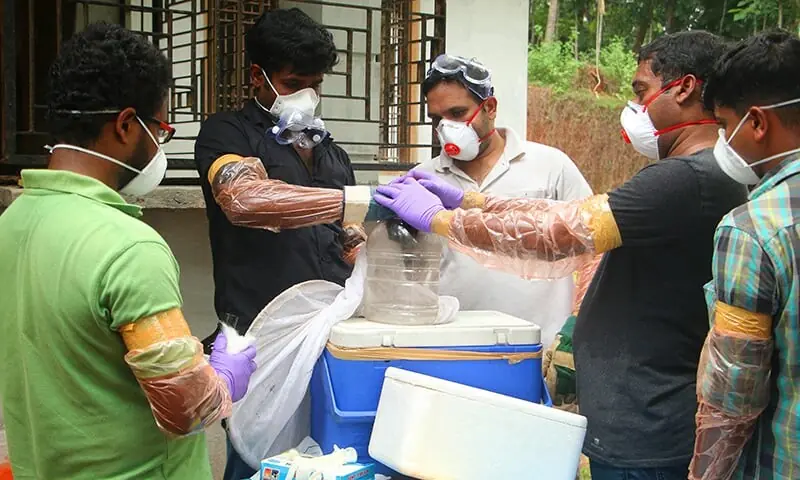
KARACHI: While rejecting fears concerning the possible spread of Nipah virus in Pakistan, experts at a roundtable conference held on Wednesday underscored the need for building healthcare readiness and prioritising implementation of infection control protocols.
They were speaking at the Aga Khan University Hospital (AKUH) at a briefing organised to create awareness about epidemiological risks, transmission pathways and prevention strategies related to Nipah virus.
According to the experts, the zoonotic virus, which is an infectious agent that jumps from animals to humans, causing disease, currently poses no direct threat to Pakistan.
As of late January, 2026, only two cases involving healthcare workers have been confirmed in West Bengal, India, and that the risk of international spread is currently categorised as low due to the geographical distance of the outbreak (eastern India, Bangladesh) and the virus’ limited human-to-human transmission.

Stress need to improve healthcare standards and adopt basic hygiene protocols


“The virus is found in animals but can also affect humans. However, only a handful of cases (of human-to-human transmission) have been reported in recent years globally,” said Dr Faisal Mahmood, Professor, infectious diseases and Associate Chief Medical Officer, AKUH, adding that no case has been reported in Pakistan.
The experts explained that the primary mode of Nipah virus transmission is zoonotic, occurring through direct contact with infected bats or the consumption of food, such as raw tree sap or fruit, contaminated by them.

“The virus is not spread through casual exposure to bats, such as flying nearby. It has a high fatality rate of 40 to 50 per cent but it doesn’t spread as easily as respiratory viruses such as Covid-19,” Dr Mahmood clarified.
According to Dr Nosheen Nasir, Associate Professor and Section Head of Infectious Diseases Department, AKUH, the two cases confirmed in West Bengal, India, were of nurses working at the same hospital.
“One of them is recovering while another is reported to be on ventilator support. The authorities there have tested 190 contacts, all of them have tested negative,” she said, adding that no case had been reported from the western region of India that bordered Pakistan.
According to her, cases of Nipah virus infection were first reported in 1998 in Malaysia, where it affected pig farmers. Since then, cases have reported in Bangladesh, India, the Philippines and Singapore.
About its clinical manifestation, she said the infection initially presented with flu like symptoms but rapidly progressed to severe brain inflammation, causing neurological problems including fits.
Responding to a question about the Nipah cases affecting healthcare workers, the experts agreed that infection control practices were too weak in Pakistan and needed to be implemented strictly that would help address growing threat of all kinds of infectious diseases including HIV and hepatitis C.
“We don’t need extra wards. We just need to be vigilant, improve our healthcare standards and adopt basic hygiene protocols,” Dr Mahmood said.
Responding to concerns over the strong regional presence of the virus and Pakistan’s compromised healthcare services, Dr Nosheen said: “The way the infection presents itself in humans, you can’t hide those cases. Having said that, we need to improve clinical surveillance.”
The panel acknowledged the government’s proactive screening of travellers at international entry points as a positive step in safeguarding public health. Drawing on lessons from the Covid-19 pandemic nearly six years ago, AKUH experts emphasised that strong health resilience is built through early preparedness, effective coordination, and sustained community awareness, rather than reactive containment alone.
Published in Dawn, February 5th, 2026


