





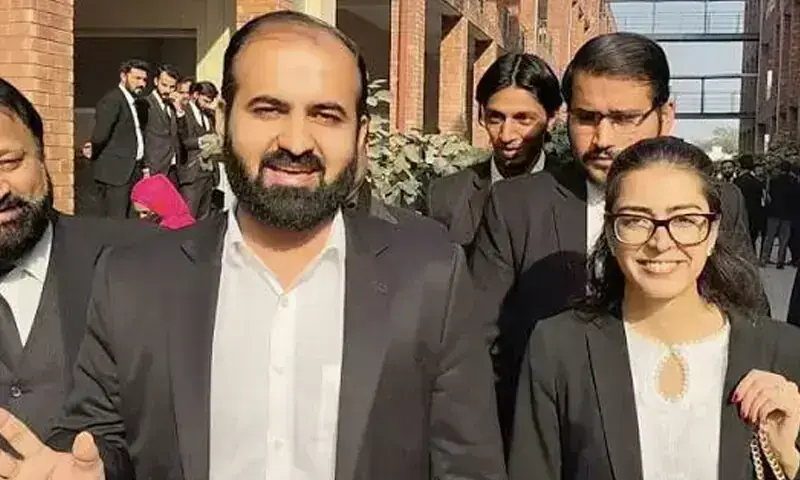
ISLAMABAD: An Anti-Terrorism Court (ATC) on Friday extended the judicial remand of lawyer Imaan Zainab Hazir-Mazari and her husband Hadi Ali Chattha for another fortnight.
The development came as ATC Judge Tahir Abbas Sipra heard a case registered against the two under various sections of the Pakistan Penal Code and the Anti-Terrorism Act over their alleged involvement in a lawyers’ protest at Constitution Avenue.
The couple was arrested last month while leaving the Islamabad High Court (IHC) in connection with the case. It is worth mentioning that the two have been sentenced to a total of 17 years in prison on multiple charges in a separate case pertaining to controversial social media posts.
During the hearing, the prosecution submitted a notification dated February 5, citing the prevailing law and order situation that, according to authorities, made it difficult to physically produce the accused before the court. It subsequently requested the court to mark the suspects’ attendance via video link.

Accepting the request, ATC Judge Tahir Abbas Sipra marked the attendance of both accused via video link from Adiala jail.

Furthermore, the court extended the judicial remand of Imaan and Hadi for 14 days, directing jail authorities to ensure their virtual presence at the next hearing scheduled for February 19.
Separately, the Islamabad High Court issued a two-page written order on a petition filed by Dr Shireen Mazari against the two lawyers being denied visitation rights following their conviction in a separate case.

The petition was heard by Justice Arbab Muhammad Tahir, who noted in the written order that the couple had been sentenced on January 24, but, according to the petitioner, they were not being provided with the facility to meet their family members and lawyers after the sentence.
However, the court observed that the petitioner had not “approached the relevant administrative forum regarding the matter”.
The IHC converted the petition into an application and forwarded it to the Adiala jail superintendent, directing that the matter be decided “expeditiously in accordance with the law”.
The high court further clarified that issues related to facilities provided to prisoners under prison rules must first be raised before the relevant administrative authorities, after which judicial proceedings may be initiated if required.


