


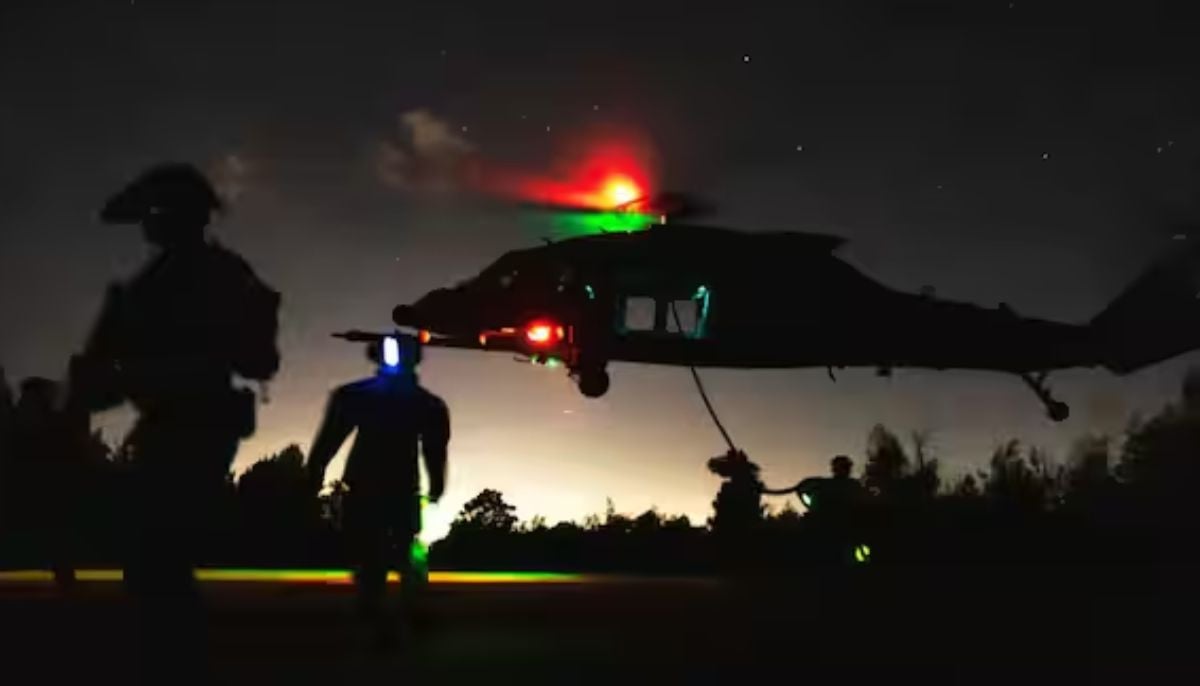
A high-stakes US special forces mission deep inside Iran has successfully rescued a downed American airman, thanks to a secretive new CIA technology capable of detecting a human heartbeat from miles away. The operation which President Donald Trump described “as one of the most daring in US history,” relied on a tool codenamed “Ghost Murmur” to locate an injured Weapons Systems Officer (WSO) hiding in the Zagros Mountains.
What is Ghost Murmur
Developed by Lockheed Martin’s Skunk Works, Ghost Murmur is a breakthrough in quantum sensing that allows the CIA to “see” through solid rock and vast distances. The tool uses diamond-based quantum sensors to detect the minute electromagnetic field generated by a human heartbeat. Artificial Intelligence processes the data to strip away background noise, isolating the unique signature of the specified individual. According to sources, the tool can pinpoint a person from up to 40 miles away, with one official noting, “If your heart is beating, we will find you.”
Mission success: 36 hours behind enemy lines in Iran
The rescue follows the April 3 downing of a US F-15E Strike Eagle over southern Iran. While the pilot was rescued immediately, the WSO-a high-ranking colonel-was forced to evade capture for nearly two days. The injured colonel climbed a 7,000-foot ridge and hid in a crevice to avoid Iranian drones and search teams. While the colonel remained silent to avoid detection, the CIA launched a “deception campaign”, spreading false reports that the crew had already been found to confuse Iranian searches. Despite the colonel’s emergency beacon being faint, Ghost Murmur provided the final, exact coordinates needed for the extraction team to move in.
The Extraction and “The final twist”
The rescue was a massive joint effort involving SEAL Team 6, Delta Force, and a fleet of over 150 aircraft. Special operations helicopters landed at the mountain site under the cover of darkness while US and Israeli warplanes provided air cover. After being moved to a secret “austere” airstrip inside Iran, the rescue team faced a crisis when their C-130 transport plane’s nose gear became stuck in the sand. A replacement aircraft was scrambled, and the team successfully exfiltrated to Kuwait just hours before a major US deadline for strikes against Iran.

A new era of surveillance
The successful debut of Ghost Murmur marks the first time quantum heartbeat detection has been used in a combat environment. While officials admit the technology is best suited for “low clutter” environments like deserts or mountains, its success suggests that traditional methods of hiding may soon be obsolete against US intelligence.