





During the hardening positions in the 1940s of the Indian National Congress (INC) and the Muslim League (ML) on the creation of a new state for the Muslims of India, there were other groups and parties that envisioned different resolutions to the “Muslim Question.”
Among these voices was that of the Communist Party of India (CPI), which was aligned with the INC in the late 1930s, yet slowly diverged from it in the 1940s. A major figure who articulated the CPI’s perspective on Muslim politics was Dr Kunwar Mohammad Ashraf — whose contribution has remained somewhat marginal in the received history of this period.
THE PALS OF MEWAT
Dr Ashraf was of Rajput stock from the Mewat region and hailed from a lower middle-class family that had settled in United Provinces (UP) in the 19th century. The Mewat region extends across Haryana and Rajasthan, where the majority population were Muslims (called Meo) and Chattriya (Rajput). A distinctive feature of the Meo community was that those Hindus who abided by the rules of the pals (the tribal groupings) were incorporated into the group, with loyalty to the pal overshadowing religious belonging.

Studies of the Mewat area from the early 20th century have shown how — in matters of birth, death and marriages — the pals would follow rituals and ceremonies of both religious communities.

Dr Ashraf’s grandfather, originally from Alwar in Rajasthan, had settled in the town of Daryapur near Hathras (Aligarh district) after 1857. The family had followed the tradition of intermarrying with Hindus and keeping Hindu names — Dr Ashraf’s father was born Murlidhar Singh, only changing his name to Murad Ali Khan when he passed the entrance examination for railway service as a guard.
A scholar, a communist and an anti-colonial activist, Dr K.M. Ashraf spent his life arguing that India’s Muslims and Hindus shared a future — and paid for it with exile, imprisonment and marginalisation from history


Dr Ashraf was born in 1903 in Daryapur, where he spent his early childhood before moving to Moradabad for schooling. At school, he was influenced by teachers who inculcated the spirit of anti-colonialism in their pupils. In due time, Dr Ashraf joined political activist Ubaidullah Sindhi’s group, Hazb Allah, and took an oath to fight the colonisers.
In 1918, Dr Ashraf passed his intermediate exams from MAO College in Aligarh and re-entered for his BA degree in 1920. These were the days of the Khilafat Movement, led by Maulana Mohammad Ali Jauhar, which was joined by Mohandas Gandhi, with his call for boycotting English goods and Satyagraha (non-cooperation) that would lead to Swaraj (independence).
Dr Ashraf joined the non-cooperation movement and, along with his friends, agitated for the MAO College to not take aid from the British sarkar [government]. In retaliation, the college administration expelled the students. This expulsion led to the founding of Jamia Millia Islamia (October 1920) as a nationalist alternative to MAO College, which Dr Ashraf and his friends joined.
However, Gandhi’s withdrawal from Satyagraha due to the Chauri Chaura incident — in which riled demonstrators killed 22 policemen — and the abolishing of the Ottoman caliphate by Turkish revolutionary Mustafa Kamal — both in 1922 — ended the non-cooperation/ Khilafat movement.
This curtailment brought a period of disillusionment for many of the movement’s cadres and Dr Ashraf returned to MAO College in 1923. He completed his BA honours and MA, and topped his class in the LLB course by 1927.
LONDON AND THE MAKING OF A MARXIST
During the college’s jubilee celebrations in 1927, Dr Ashraf was introduced to one of the guests, the Maharaja Jain Singh of Alwar state. In his address as vice president of the student union, he reminded everyone of Aligarh’s secular tradition and spoke of his own ancestral ties to Alwar.
The impressed Maharaja arranged a scholarship for his studies; Dr Ashraf joined Lincoln’s Inn for his Bar-at-Law and enrolled as a PhD candidate in mediaeval history at the School of Oriental and African Studies in London, UK.
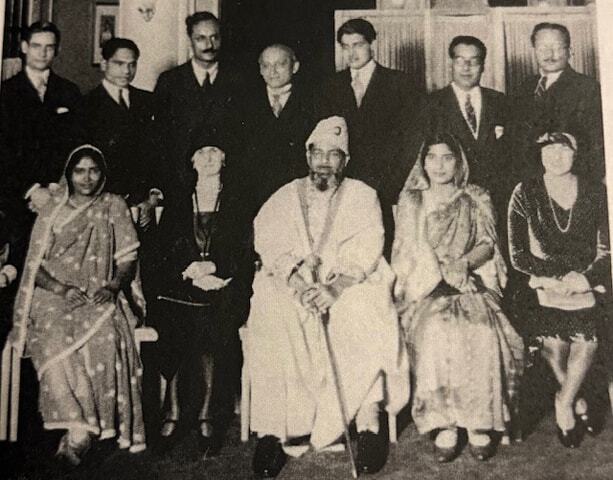
During this first trip to Britain, Dr Ashraf lived with Maulana Mohammad Ali, also supported by the Maharaja for medical treatment in the UK. Through the Maulana, he was introduced to Shahpurji Saklatvala (1874-1936), the Communist Party of Great Britain’s (CPGB) member elected to the British parliament.
In 1928, the Maharaja of Alwar invited Dr Ashraf and Maulana Mohammad Ali back to Alwar for his jubilee celebrations. Dr Ashraf was made in-charge of the preparations and oversaw the entire event. After the celebrations, Dr Ashraf was offered the position of personal adviser to the Maharaja, but declined — having witnessed firsthand the wealth, wastage and oppression of a major princely state. In 1929, Dr Ashraf received a scholarship from a foundation in Hyderabad and, with some support from his father, he returned to the UK to complete his PhD.
This time he had a more economically difficult life but he was connected to a range of young radicals studying in Britain, who were also his friends and comrades. They included Dr Z.A. Ahmad, Shaukat Omar, Sajjad Zaheer, Mahmuduzzafar, Hajra Begum (the only female in the group) and Imtiaz Ali Khan. Under Shahpurji Saklatwala’s initial guidance, this group started to work closely with CPGB in organising Indian students on nationalist grounds.
While involved in these activities, Dr Ashraf defended his PhD thesis (University of London) in the early 1930s. The thesis, Life and Conditions of the People of Hindostan (1200-1550 CE), was a pioneering work of social history regarding the Sultanate and early Mughal period in India.
THE MUSLIM QUESTION AND THE COMMUNIST ANSWER
Due to his affiliation with CPGP, Dr Ashraf returned as a committed Marxist to India in 1932-33 and soon joined the CPI under the leadership of P.C. Joshi. In 1935, he joined Aligarh University as a history lecturer.
From the mid-1930s, the CPI had aligned itself with some progressive section within Congress — figures like Jawaharlal Nehru, Subhas Chandra Bose and Jayprakash Narayan — who were trying to lead Congress in a potentially revolutionary direction. Therefore, when Jawaharlal Nehru was elected president of the All-India Congress Committee (AICC) in 1936, Dr Ashraf accepted a position at Nehru’s office in Allahabad, becoming secretary of the political bureau and also responsible for the Muslim Contact Cell of the INC.
In his writings, Dr Ashraf argued that the ML could exploit the resentment among Muslim masses stemming from the halted non-cooperation movement of 1922, compounded by the Nehru Report’s (1927) rejection of separate Muslim electorates and rising communal tensions. Yet he emphasised that his invitation was for Muslims to join the progressive groups within Congress. As a communist, he maintained that politics was organised essentially around class interests, which drove the exploitation of the poor and the marginalised.
In a 1938 letter to a friend, Dr Ashraf forcefully defended his work for INC, despite understanding the major reservations that a large portion of the Muslim population held against Congress politics.
In a nuanced position on Muslim politics, he suggested that his friend need not join INC and continue to work with the ML (despite Dr Ashraf’s reservations), provided he could steer the League toward holding democratic elections within the primary bodies of the party, increase its membership and organise it at the local level. For Dr Ashraf, this would lead to the Muslim community to stand up against British imperialism and not be subordinate to its dictates.
The Congress ministries resigned in October-November of 1939, as they opposed the British government’s action of declaring India as a party in the Second World War without consulting the Indian elected representatives.
The start of the War tested the alliance between the Congress and the CPI. Both parties initially labelled the war as anti-imperialist, yet the CPI went further, calling for a national revolution and mass insurrection to achieve independence. By 1941, this somewhat radical line led to the British detaining scores of CPI members, including Dr Ashraf, in the notorious Deoli Concentration Camp.
By early to mid-1940s, the CPI had also started to rethink the issue of Muslim separatism (exemplified by the 1940 Lahore Resolution), being put forward by the newly invigorated ML. In response to this shift in Muslim politics, Dr Ashraf (representing CPI) had started to hint at the nationalities question and the idea of self-determination, which would be developed later as a major policy agenda by the CPI.
According to the CPI, the linguistic and religious diversity of India had brought forward two major issues in Indian politics: the Hindu-Muslim divide and the linguistic-states problem. Was India one nation or were Hindu and Muslims separate nations and, similarly, did Bengalis or Tamils deserve different or autonomous states?
CPI’s more overt support of the ‘Muslim Question’ followed its policy of openly opposing Congress’ Quit India Movement. Although all communist members of the All-India Congress Committee (AICC) at the Bombay session in August of 1942 voted against the resolution, it was passed by an overwhelming majority.
The CPI vote was reflective of how, by 1942, the party had reversed its earlier line, moving from calling the War an ‘Imperialist War’ to a ‘People’s War.’ It now linked itself to the international drive against Germany’s fascist regime. This led to the unbanning of the party and the release of the leaders. Dr Ashraf was also released in 1943, though his health had suffered due to prison hardships and a prolonged hunger strike.
After their leadership’s release, the CPI condemned the British imprisonment of nationalist leaders while simultaneously urging Congress to collaborate with the ML and accept it as the representative voice of India’s Muslims.
In September of 1942, the CPI, echoing Dr Ashraf’s earlier formulation on self-determination, presented a resolution that sought to take the question of India not as a cultural whole, but as constituting various cultures, language groups and national sentiments. In this larger context, for the CPI, the slogan for Pakistan was understood as a call for self-determination and democracy for all nationalities.
Clearly, the right of self-determination came with the right of sovereignty, equality and the right to secession. Following this argument, the CPI’s manifesto for the 1945-1946 elections demanded immediate independence and transfer of power not only to two governments (India and Pakistan), but to 17 interim ‘sovereign’ national assemblies.
However, by late 1946, the CPI had started to change its position on the partition of British India. The party was critical of both the Congress and the ML for accepting the Partition plan. Eventually, although the CPI finally accepted the creation of Pakistan by arguing for the division of the party itself (in 1948), a deep suspicion of ML politics and the agony over British India’s division was the overwhelming sentiment that was shared by most party workers.
STATELESS
The violence during the partition of British India did not spare the Mewat area. The harmony and coexistence that was the hallmark of the Meo palbandi system was breached during the months of August and September of 1947, when unexpected communal riots broke out. Within this atmosphere, rumours circulated that Dr Ashraf was mobilising a large group of Meos to create a “mini-Pakistan” in the Mewat area.
Based on the policy of self-determination related to linguistic and ethnic identities, Dr Ashraf and Syed Mutalabi (an activist and friend) in 1942 had put forward the idea of a province that included Mewat and adjoining areas (not dissimilar to the creation of new provinces in post-independence India). Closer to independence, this idea included the abolition of princely states (especially of Alwar and Bharatpur).
The Maharajas of these two states and their right-wing allies used the idea of the “Pal Province” to instigate communal riots and broke the Hindu-Muslim unity that had been guaranteed through ages by the palbandi process; a community of historically mixed religious heritage was being forced to leave. In return, Dr Ashraf was accused by the police of instigating communal violence and a case was made to arrest Syed Mutalabi and him. It was decided that both travel to Pakistan for some time.
As Dr Ashraf travelled to Pakistan, his name was sent to the Pakistan intelligence services as someone wanted as a member of the CPI, along with the additional charge of spreading communal violence. Soon after his arrival, he was detained at Karachi Central Jail, even as he battled ill health.
In prison, his health condition further deteriorated. The government of Pakistan only agreed to release Dr Ashraf on the condition that he leave the country. At this juncture, the government of India did not give him permission to return. The only option was that he left for the UK as a British subject.
While in the UK, his health remained unwell, but he put himself through a gruelling routine of research in the British Library on archives related to mediaeval India, his area of expertise. After spending five years in the UK (1949-1954), he returned to India as a British subject, with a six-month visa. On arrival, he requested Maulana Azad, his mentor and friend, to assist him in staying in India. At the expiry of his visa, no action was taken.
Dr Ashraf spent two years in Kashmir working on a state history of the region and was later appointed as visiting professor of mediaeval history at Kirori Mal College at the University of Delhi. In 1960, with his college contract not renewed, he travelled to Humboldt University in East Berlin (GDR) to conduct research and take a position as visiting professor of mediaeval Indian history.
In his later writings, Dr Ashraf reflected on the 1940s and was critical of the division of British India due to the communalist politics propagated by the British. However, he did maintain that, to fight colonial imperialism, CPI’s policy (and his own) of bringing Jinnah and Gandhi together, and to give due respect to ML’s emerging popularity among Muslims, some concessions had to be offered to their demand for a separate region.
Dr Ashraf’s close relatives were practising Hindus, including his paternal aunt, instilling in him a lived sense of coexistence and mutual respect that he carried directly into his politics. His youth and early middle age were dedicated to the struggle for the freedom of his country, and for equal rights and social justice for the masses. He bore all kinds of sufferings, deprivations and imprisonment. However, once colonial rule ended, Dr Ashraf found himself stateless and exiled in London, without income and with very little social support. Yet he persevered and continued to write and teach in Delhi and then in Berlin.
A mesmerising public speaker, a scholar of Arabic, Persian and Urdu, who wrote poetry, short stories and plays, Dr Ashraf passed away due to a heart attack at the age of 59 in East Berlin on June 7, 1962.
He is buried at the Cemetery of the Socialists in Berlin-Friedrichsfelde, where he lies with the likes of Rosa Luxemburg and others who fought for democratic rights, against fascism and for socialism.
The writer wishes to thank Alisher Karabeav (ZMO Library, Berlin), Dr Razak Khan (Freie University, Berlin) and Ananya Iyengar (St Stephens College, Delhi) for their input.
The writer teaches anthropology at the University of Texas, Austin, in the USA. He can be contacted at: asdar@austin.utexas.edu
Published in Dawn, EOS, February 22nd, 2026


