





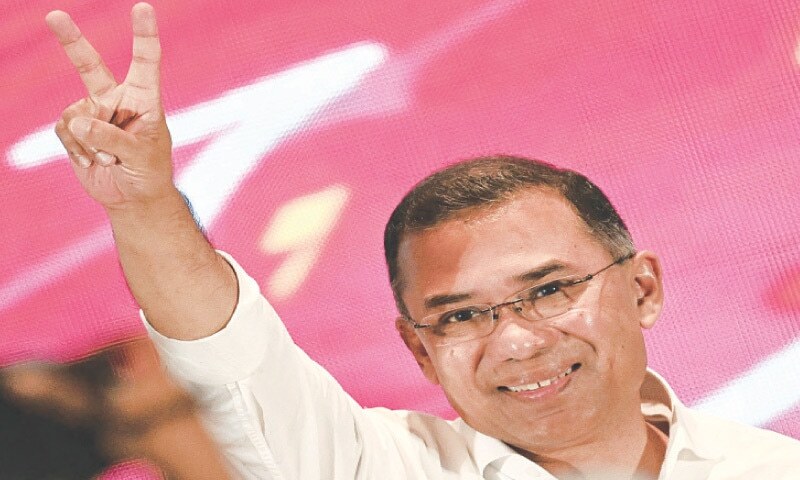
• Bangladesh’s PM-to-be pledges to restore governance, economy; vows to fix ‘broken’ systems
• Urges unity as BNP sweeps first polls since 2024 uprising
DHAKA: Bangladesh’s prime minister-in-waiting Tarique Rahman on Saturday dedicated his party’s landslide election victory to the citizens who “sacrificed for democracy” during the deadly 2024 uprising and pledged to prioritise the restoration of economy and governance.
Rahman, the 60-year-old scion of one of the nation’s most powerful political dynasties, called for national unity as he prepared to lead the South Asian nation of 170 million people following the Bangladesh Nationalist Party’s sweeping success in Thursday’s vote.
He will take over from an interim government led by Nobel laureate Muhammad Yunus, which has steered Bangladesh since a student-led uprising ousted Hasina in August 2024.

“This victory belongs to Bangladesh, belongs to democracy,” Rahman said in his first speech since the vote. “This victory belongs to people who aspire to and have sacrificed for democracy.”

The Election Commission reported the BNP alliance won 212 seats, securing a decisive two-thirds majority compared with 77 for the Jamaat-i-Islami-led alliance. Turnout was reported at 59 per cent across 299 constituencies.
The win marks a remarkable turnaround for Rahman, who returned to Bangladesh in December after 17 years of exile in Britain.

However, he emphasised that the new government faces “daunting challenges”, putting the restoration of governance and the stabilisation of the financial sector at the top of his agenda.
“We are about to begin our journey in a situation marked by a fragile economy left behind by an authoritarian regime, weakening constitutional and structural institutions, and destroying law and order,” Rahman said. “We have very serious challenges to face … tackle the economy of the country … to ensure good governance.”
Voters on Thursday also endorsed a sweeping democratic reform charter backed by Yunus through a concurrent referendum.
The approved reforms include prime ministerial term limits, a new upper house of parliament, stronger presidential powers and greater judicial independence intended to prevent a return to one-party rule.
Hasina’s Awami League party was barred from participating in the polls. Speaking from hiding in India, the 78-year-old former leader — sentenced to death in absentia for crimes against humanity — issued a statement decrying an “illegal and unconstitutional election”.
Conversely, Jamaat chief Shafiqur Rahman, whose party quadrupled its seats in parliament, conceded on Saturday despite initially alleging “inconsistencies”. He pledged to serve as a “vigilant, principled, and peaceful opposition”.
Rahman urged political rivals to work together following the tumultuous transition. “Our paths and opinions may differ, but in the interest of the country, we must remain united,” Rahman said.
Rahman is the son of former President Ziaur Rahman and former Prime Minister Khaleda Zia, who died last year. While rivals have criticised his political career for alleged corruption, charges he has denied, his party’s commanding majority is viewed by analysts as a crucial opportunity to restore political stability.
“The freedom-loving, pro-democracy people of the country have once again brought victory to the Bangladesh Nationalist Party,” Rahman said.
Published in Dawn, February 15th, 2026


