






“Mud, rain, and loincloths: Japan’s 200-year-old harvest wrestling ritual” refers to a traditional festival centered around mud sumo, a Shinto-linked agricultural ceremony held in rural Japan to pray for a good harvest.
The ritual is most famously associated with Isogami Shrine in Sasebo.
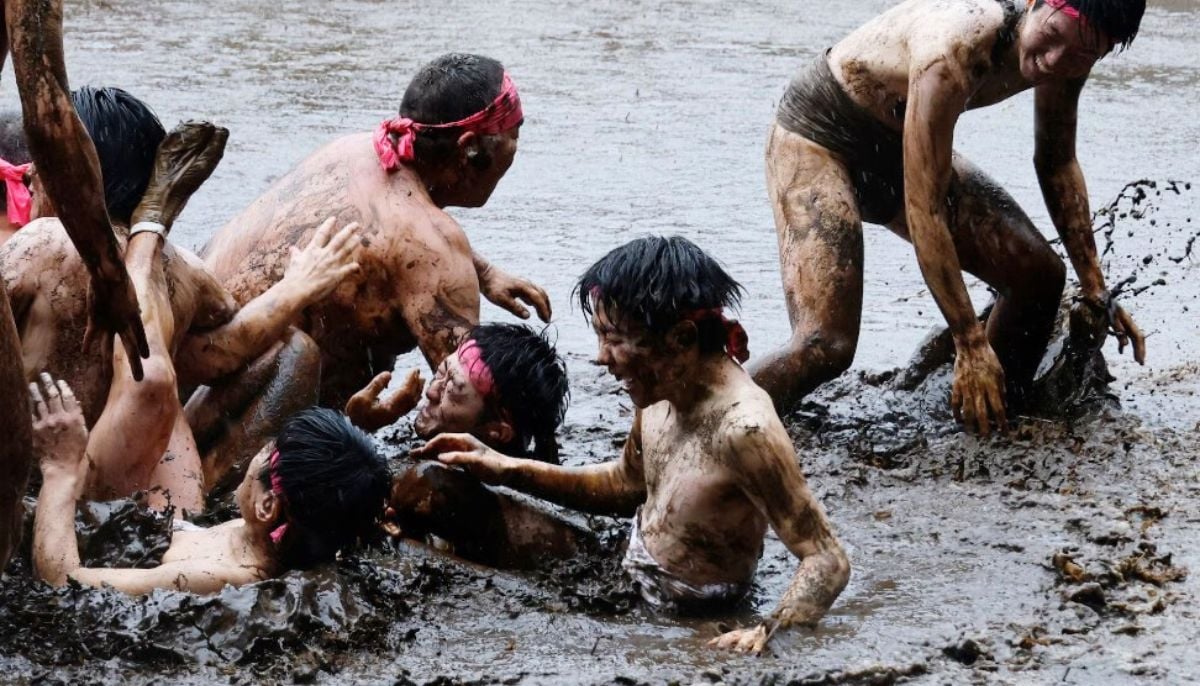
More than 30 Japanese men clad in loincloths braved cold and heavy rain in a harvest festival more than two centuries old, held in a small, muddy field in a residential pocket outside Tokyo, the capital.
Participants in loincloths were seen wrestling in a mud field during Warabi Hadaka Matsuri, the Warabi half-naked festival, in Yotsukaido, Chiba Prefecture, Japan, on February 25, 2026.

According to organizers, the festival, which has about 200 years of history, is held in hopes of a bountiful harvest.

About the ritual:

The event takes place outdoors, often in the rain, where men wear traditional fundoshi, or Japanese loincloths, and wrestle in a ring filled with mud.
Wrestlers intentionally throw each other into thick mud; they believe the muddier the participants become, the better the omen for a rich rice harvest.
Why do they use mud?
The participants use mud because in Shinto belief, mud symbolizes the following:
*Fertility
*Agricultural abundance
*A strong connection to the land


