



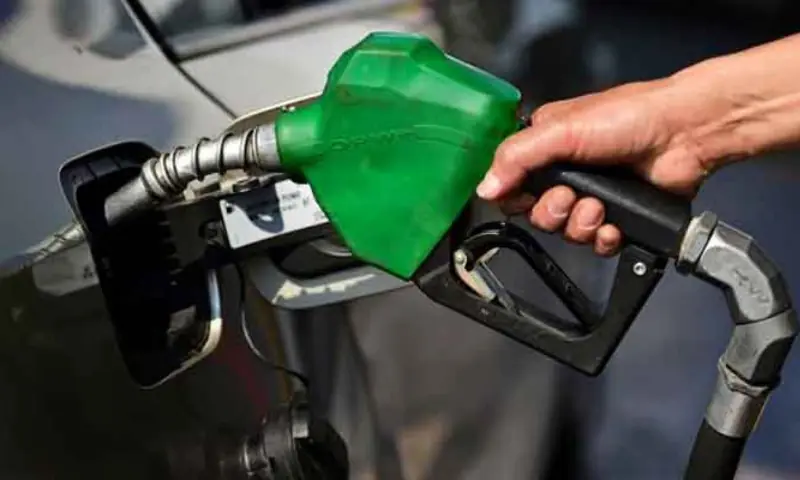
The government has increased the price of kerosene oil by another Rs40 per litre and approved Rs23 billion price differential subsidy for payments to oil marketing companies (OMCs) to keep the prices of two other oil products — petrol and high-speed diesel (HSD) — unchanged for the week ending March 20.
Otherwise, the petrol and HSD prices should have gone up by more than Rs49 and Rs75 per litre with effect from March 14.
With fresh price notification, Kerosene, commonly described as poor man’s fuel, has become the most expensive consumer product at Rs358 per litre and has seen the highest increase among all fuels since March 7.
The kerosene rate has now increased by about 12.6pc on March 14, bringing its cumulative increase to 90pc from Rs188.87 earlier this month.

In formal orders, the petroleum division of the energy ministry said that the prime minister had approved keeping the prices of HSD and MS unchanged, and that the government will pay the price differential of Rs75.05 per litre and Rs49.63 per litre on HSD and MS, respectively, to OMCs.

The estimated Price Differential Claims (PDC) of OMCs for the period from March 14, 2026, to March 20, 2026, i.e. Rs23bn would be paid by the Oil and Gas Regulatory Authority (OGRA).
“In this regard Finance Division, has obtained approval of the Cabinet for the creation of the ‘Prime Minister’s Austerity Fund’ and of ECC for allocation/ transfer of a sum of Rs27.1 billion to the Fund. An amount of Rs23 billion will be transferred to OGRA for the said purpose from the Fund”, the notification said.

The mechanism for payment of PDC, to be developed by the Oil and Gas Regulatory Authority (OGRA), shall also include the process for verification/ audit of the invoices received from OMCs. The Ogra has been directed to take the required action to implement these decisions and make the payments.
Last week, the government also increased the price of kerosene by almost 70 per cent, from Rs130.08 to Rs318.81 per litre.
The previous price of kerosene, which went into effect on March 1, was Rs188.73 per litre.
Kerosene is commonly used by households in remote areas where access to liquefied petroleum gas cylinders is difficult. However, unscrupulous elements also used it to mix with petrol for unfair profiteering, exploiting the large price gap between petrol and kerosene, which has now been removed.
The government has kept the petroleum levy on diesel unchanged at Rs55.24, and on petrol and higher-quality fuels like 95 and 97 Ron at Rs105.37 per litre, in addition to the Rs2.50 per litre climate support levy.
In addition, the government charges a duty of about Rs31 and Rs25 per litre on HSD and petrol, respectively. It also charges Rs20.36 and Rs15.84 per litre petroleum levy on kerosene and light diesel, and Rs77 per litre on furnace oil.
Moreover, about Rs6.50 per litre on HSD and more than Rs8 per litre on petrol and kerosene inland fuel equalisation margin is also to ensure uniform rates across the country.
Petrol and high-speed diesel are the major revenue drivers, with monthly sales of about 700,000 to 800,000 tonnes, compared with just 10,000 tonnes of monthly demand for kerosene.


