




The pattern that is emerging suggests a gradual shift in the dynamics of the war.
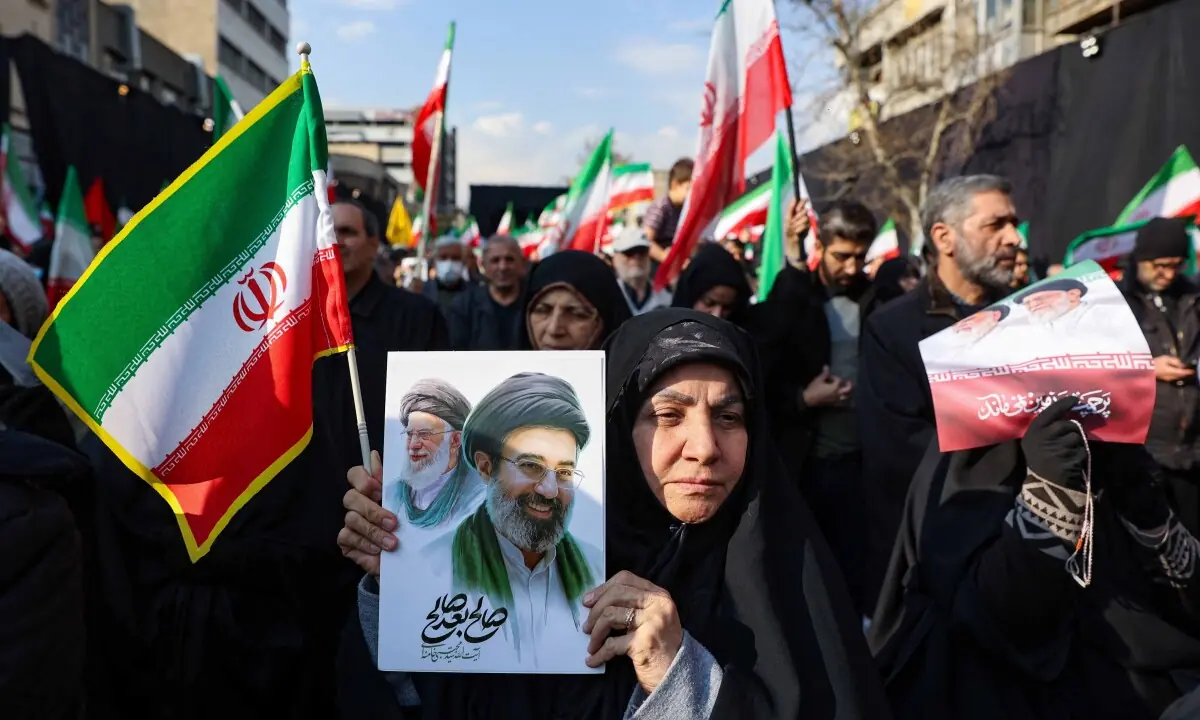
The 10th day of the war began with a development that may shape the trajectory of the conflict more than any exchange on the battlefield. Early on Monday, Iran’s Assembly of Experts formally anointed Ayatollah Mojtaba Khamenei as the country’s new supreme leader. The transition that happened without any disruption signalled both institutional continuity and a consolidation of authority at a time when Iran remains under sustained military pressure.
Within Iran, the appointment was immediately endorsed by the revolutionary core and the political and military elite that publicly pledged allegiance, while state media framed the succession as a stabilising step that ensured the continuity of the political system despite the wartime environment, and there were no signs of unrest in cities, suggesting public acceptance as well.

The acceptance of the new supreme leader extended beyond Iran’s borders as well, particularly among actors aligned with Tehran’s regional network of allies in Lebanon, Iraq and Yemen who moved quickly to signal recognition, reinforcing the perception that the ‘Axis of Resistance’ would continue to operate under a coherent command structure.

For Israel and Western capitals, however, the appointment was interpreted as confirmation that the conflict was unlikely to produce a rapid diplomatic opening because Ayatollah Mojtaba Khamenei is widely regarded as a figure closely aligned with the Revolutionary Guard and unlikely to seek compromise under conditions of military pressure.
While the political transition stabilised the leadership structure in Tehran, developments on the battlefield suggested that Iran continues to maintain the operational tempo of the war. The most significant strike during the past 24 hours was a drone attack on Israel’s Haifa refinery complex, which triggered large fires and forced the suspension of operations at one of the country’s most important energy facilities. Iranian officials described the strike as retaliation for coalition attacks on oil depots near Tehran and presented it as evidence that Iran retains the capacity to impose costs on its adversaries.

The pattern that is emerging suggests a gradual shift in the dynamics of the war. Iran appears determined to sustain a steady rhythm of calibrated retaliation focused on infrastructure with strategic economic value, particularly energy facilities, while the US has begun to slow the pace of its own operations. Reports in American and Israeli media indicate that US airstrikes have declined sharply over the past two days, with Israel now conducting several times more attacks than its principal ally.
Several factors appear to be shaping this shift. American officials are said to be increasingly conscious of the strain on weapons stockpiles and the sustainability of prolonged operations, while domestic political pressure on US President Donald Trump is rising as the financial and economic costs of the war become clearer. Israel, by contrast, appears adamant on maintaining military pressure on Iran and has expanded the scope of its strikes.
These differing approaches are beginning to reveal subtle differences between Washington and Tel Aviv over operational priorities and the broader strategic direction of the campaign. The cancellation of a planned visit to Israel by US envoys Steve Witkoff and Jared Kushner reflected this unease, with reports suggesting disagreements over Israeli attacks on Iranian oil infrastructure and uncertainty about how far the war should be pushed.
The strategic debate is also beginning to surface within Israel itself. Some Israeli defence officials are quietly raising questions about how the war might end and whether prolonging the campaign indefinitely serves Israel’s long-term interests, particularly as the economic and regional consequences of the conflict are mounting.
The military campaign may, therefore, have approached the point where some in Tel Aviv and Washington have begun questioning as to what the campaign has qualitatively been able to achieve during the ten days, except for a few tactical gains, as the core objective of forcing the collapse of the Iranian regime remains unfulfilled and potentially far more costly to pursue.
At the same time, there is growing concern in Israeli strategic circles about the risk of the war expanding into other theatres, especially Lebanon, with a rejuvenated Hezbollah ready to pull Israel into a prolonged ground conflict.
Economic impact
The economic dimension of the war is also becoming increasingly pronounced. Oil markets reacted sharply to the Haifa refinery strike and the continuing fires in Iranian oil depots near Tehran. Brent crude rose above $100 per barrel during trading as traders priced in the possibility of prolonged supply disruptions in a region that remains central to global energy flows. Tanker traffic through the Mediterranean has, meanwhile, begun to adjust routes as insurance premiums for ships operating near the conflict zone are climbing rapidly.
For Washington, the rise in oil prices carries an additional political cost because the financial burden of sustaining the war is already significant, and the risk of renewed global inflation is beginning to worry policymakers. Public support is also eroding, with nearly 59 per cent of Americans already disapproving of the war, and any prolonged economic strain caused by higher fuel prices and wider inflationary pressures is likely to deepen that opposition. What began as a military confrontation is therefore steadily turning into an economic stress test for the US with consequences that extend well beyond the Middle East.
The environmental consequences of the conflict are also becoming increasingly severe. Coalition bombing of oil depots around Tehran has ignited massive fires whose thick black smoke has been visible from space and has pushed pollution levels in the Iranian capital to dangerous levels. Hospitals are reporting a surge in respiratory cases, particularly among children and the elderly, while environmental scientists warn that the black carbon released by the fires could drift northward toward the Caspian region, contaminating soil and water systems and potentially accelerating the melting of snow and ice.
Meanwhile, the fires triggered by the strike on Haifa’s refinery complex have produced a grim symmetry with toxic smoke affecting neighbourhoods around the port city and forcing Israeli authorities to place hospitals on alert. In both countries, the targeting of energy infrastructure is generating environmental costs that extend far beyond the immediate military objectives.
Diplomacy efforts become fragmented
The diplomatic landscape is, however, becoming more fragmented with regional actors trying to cope with the conflict. At this crucial point, Arab and Gulf states appear divided over how to respond to the war and the role they should play in attempting to contain it.
Oman has emerged as one of the most outspoken voices calling for restraint. Foreign Minister Badr bin Hamad al Busaidi condemned the US and Israeli strikes on Iran as immoral and illegal while framing Iranian retaliatory actions as “regrettable”. He has been emphasising that the door to diplomacy remains open and urging Arab states to work collectively toward halting the escalation.
Qatar has taken a more cautious position. While strongly condemning Iranian strikes on neighbouring countries, Doha continues to emphasise mediation rather than military engagement. Emir Sheikh Tamim bin Hamad Al Thani held urgent discussions with US President Trump, warning that the conflict is entering a dangerous phase and urging steps to contain the fighting.
Saudi Arabia is pursuing a delicate balancing act. Riyadh has condemned Iranian attacks on Gulf states but its foreign minister, Prince Faisal bin Farhan, has also criticised Israel’s actions as contributing to regional destruction while maintaining communication channels with Tehran.
Russia has shown little inclination to support the Gulf effort to pressure Iran. Foreign Minister Sergei Lavrov effectively rebuffed appeals from Arab diplomats to intervene with Tehran, asking them not to try to sit on two camels at the same time. He questioned if they (Arabs) had forcefully denounced Israeli and US actions and warned that the US-Israeli campaign risked triggering wider nuclear proliferation across the region. He also accused Washington and Tel Aviv of attempting to draw Arab states deeper into the conflict.
These divisions have been visible as well at the United Nations Security Council, where emergency meetings on the Middle East crisis continue without agreement on a unified resolution. Russia and China have blocked proposals that focus solely on condemning Iran while insisting that any resolution must address attacks on civilian infrastructure and call for an immediate ceasefire.
Despite the absence of a breakthrough, several diplomatic channels remain active, though their nature remains exploratory. Contacts facilitated by Oman and Qatar, together with parallel Saudi-Iranian communications, appear aimed primarily at preventing further escalation rather than achieving an immediate settlement.
Beyond the central theatre, the network of proxy fronts remains active, though secondary to the direct exchanges between Iran and Israel. Hezbollah has continued cross-border fire from southern Lebanon while signalling readiness to escalate if the conflict deepens further. At the same time, Iraqi resistance factions have maintained intermittent drone pressure on sites linked to US logistics, though no major incidents were reported in the past day. Yemen’s Houthi movement has remained outside the war so far, but continues to warn that further attacks on Iran could bring the Red Sea theatre into play.
In the Gulf, the internal security dimension of the conflict resurfaced in Bahrain, where Iranian drones struck fuel storage tanks at the Bapco refinery complex in Sitra, sending thick plumes of smoke across the area and prompting authorities to warn citizens against sharing images of strike locations. Although the government retains firm control and no major protests were reported in the past 24 hours, analysts caution that repeated attacks on energy infrastructure combined with the presence of US military facilities could revive internal tensions.
The events of the 10th day point to a war that is entering a more complex and uncertain phase, with Iran looking confident, while the US–Israel coalition faces growing economic and political costs amid questions arising about how the conflict might ultimately end. For now, the fighting continues without a clearly defined political destination. As the war expands into energy markets, environmental damage and regional diplomacy, the challenge of finding a viable exit from the conflict appears increasingly difficult.
Header image: A woman holds a placard with an image of Iran’s new Supreme Leader Ayatollah Mojtaba Khamenei, alongside late Iranian Supreme Leader Ayatollah Ali Khamenei in Tehran, Iran, March 9, 2026. — AFP


