




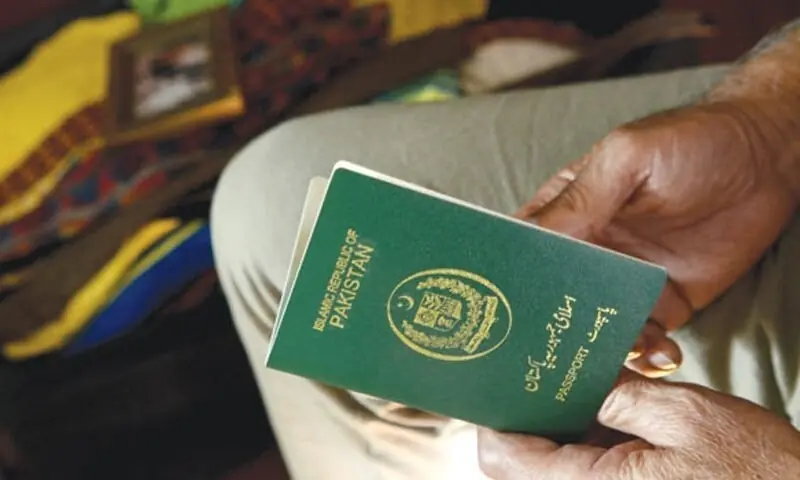
• ‘Cooperation’ with UK authorities has kept Islamabad off visa ban list so far
• Rejection rate of asylum claims by Pakistanis at 70pc, but very few deportations
• Shadow home secy pushes for tougher measures
LONDON: As the UK bans visas to a handful of countries that have high asylum cases, Pakistan has come under renewed scrutiny after questions were raised about the low number of deportations.
The development comes days after the UK put an ‘emergency brake’ on visas for the first time on nationals from four countries following a surge in asylum claims from legal routes. In a move described as “unprecedented” by the government, the Home Office will end sponsored study visas for all nationals of Afghanistan, Cameroon, Myanmar and Sudan and also end skilled worker visas for Afghan nationals.
Earlier this week, a journalist asked UK Home Secretary Shabana Mahmood why Pakistan had not yet been targeted by proposed visa restrictions, noting that the country accounted for the largest share of people who entered Britain on legal visas and later applied for asylum.

The question also highlighted the low return rate of rejected Pakistani asylum seekers.

“This is not the end of the action we will take,” Mahmood said in response. “This is the beginning and not the end of the action we will take in this area.”
However, she declined to comment on whether discussions were underway with other countries regarding possible visa sanctions.

Pakistan ‘cooperating’
Sources on both the Pakistan and British government sides told Dawn that although Islamabad was cooperating with the UK authorities on the repatriation of rejected asylum seekers, the number of Pakistanis on student visas who later sought asylum was very high, prompting alarm from the UK government.
They added that discussions were ongoing between the two sides and that Pakistan’s cooperation mighty be the reason it had not been targeted by a ban.
Official figures show that Pakistani nationals now represent the largest group seeking asylum in the United Kingdom, accounting for roughly one in 10 applications.
In 2024, 10,638 Pakistanis applied for asylum, nearly double the total recorded a year earlier and higher than applicants from Eritrea, Iran and Afghanistan.
Many applicants initially enter Britain through legal routes, including student, work or visitor visas, before later submitting asylum claims.
70pc rejected
Government data indicates that more than 70 per cent of Pakistani asylum claims are rejected.
Despite the high refusal rate, only a small number of unsuccessful applicants are returned. Home Office figures show that 10,853 Pakistani asylum claims were refused in 2025, but just 445 individuals were deported to Pakistan during the same period — around 4.1pc of rejected applicants, or roughly one in 25.
British officials say countries that fail to cooperate in accepting deported nationals could face a range of penalties, including the suspension of priority visa services or broader restrictions affecting tourists, students and workers.
A government source told British media that the UK would not hesitate to impose visa sanctions on countries that do not cooperate in taking back their citizens. The figures have also triggered a political debate in Britain.
Chris Philp, the shadow home secretary, described the removal rate as “pathetic”, noting that a returns agreement was signed with Islamabad in 2022 when then home secretary Priti Patel was in office.
He argued that tougher steps were needed.
“We must drastically reduce the number of visas granted to Pakistani nationals and exit the European Convention on Human Rights so that people with no right to be here can be deported,” he said.
Published in Dawn, March 7th, 2026


