





As the Climate Week Karachi 2026 came to a close on February 4, the urgency for climate action was palpable across panels and community dialogues, with one message reiterated loud and clear by experts and policymakers: Pakistan can no longer afford business as usual on climate change. Adaptation and resilience must move from paper to action.
Climate change is no longer a future threat, but a lived reality in Pakistan today, manifesting regularly in the form of melting glaciers and heat waves, erratic rainfall, and flooding. According to the United Nations Development Programme, rising global temperatures are accelerating glacier retreat in Pakistan, with almost 10,000 glaciers having receded in recent years, leading to floods and future water scarcity.
Meanwhile, erratic rainfall patterns have made the country vulnerable to floods and droughts. The 2025 monsoon season displaced about 3.5 million people in Pakistan and left 1.6m in Sindh at the risk of flooding, per data compiled by the United Nations Office for the Coordination of Humanitarian Affairs.
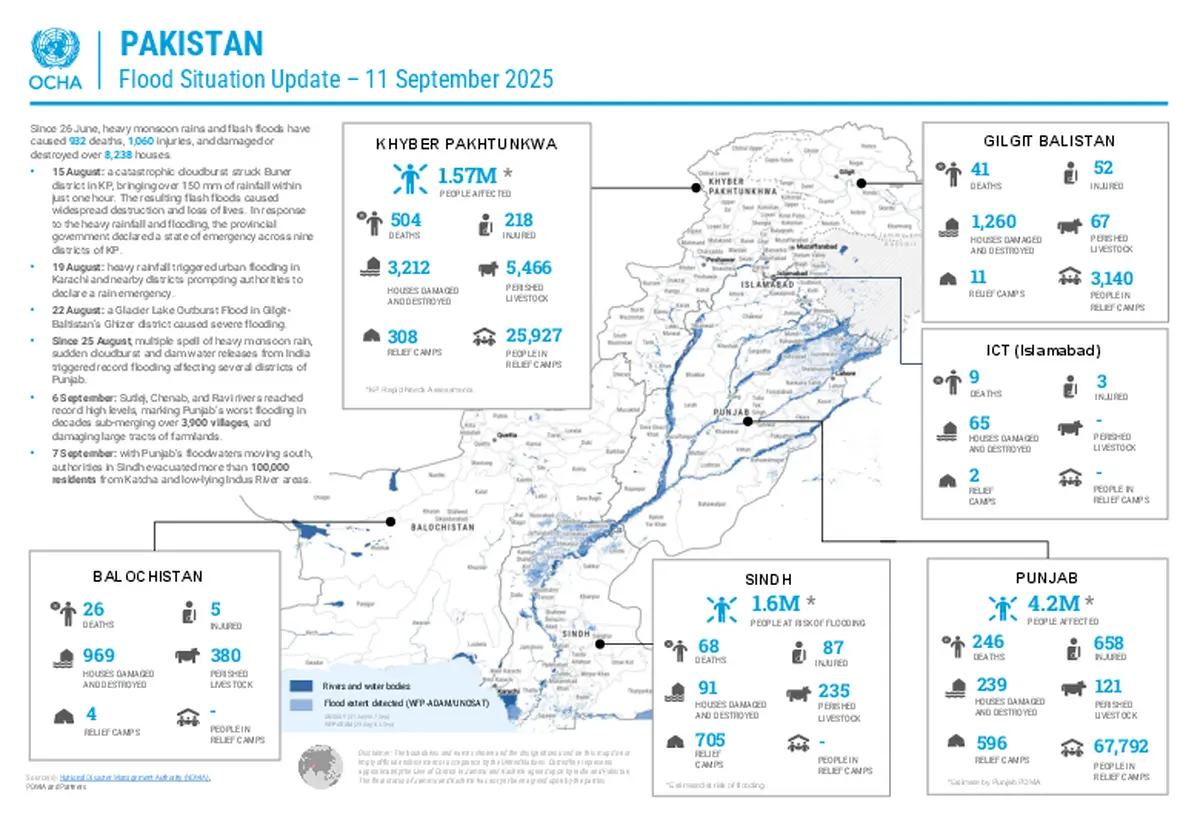
Sindh suffered an estimated loss of Rs32.2 billion last year due to these climate anomalies, which range from urban flooding and heatwaves in urban areas to droughts and livelihood damage in rural villages. These trends, now backed by scientific and meteorological data, underscore the need for both mitigation and adaptation strategies that are locally grounded.

And this is exactly what was discussed at length during Climate Week Karachi 2026; that resilience is not just an environmental necessity but a socioeconomic need. When there is a lack of early warning systems, resilient infrastructure, and equitable access to finance, vulnerable communities bear the brunt of climate shocks.

Climate finance in Pakistan
In the past few years, Pakistan has initiated several climate finance initiatives — both domestic and international — to build adaptive capacity.
In 2024, Pakistan launched the National Climate Finance Strategy to mobilise and streamline funds for climate change adaptation and mitigation, as well as to strengthen institutions and enhance transparency. The next year, the government issued its first sovereign Green Sukuk, a Shariah-compliant instrument that raised significant capital of around Rs30 billion for climate-aligned investments. Similarly, Green bonds were also introduced to fund environmentally sustainable projects.

Apart from local initiatives, the country secured more than $1.5 billion in climate finance from global sources, including the International Monetary Fund’s Resilience and Sustainability Facility ($1.4 billion) and Green Climate Fund (GCF) commitments. The latter has approved a number of projects in Pakistan addressing flood risk management, smart agriculture, urban transit emissions, and distributed solar deployment.
In late 2025, Pakistan and the Asian Development Bank signed climate resilience projects worth $304.5 million, including the Sindh Coastal Resilience Sector Project, designed to improve water resource management, restore nature-based defence, and enhance planning capacities for coastal communities in Thatta, Sujawal, and Badin districts.
Similarly, the World Bank has also approved $102 million for the Resilient and Accessible Microfinance (RAM) Project, aimed at strengthening access to finance for vulnerable populations, especially in the face of climate shocks and disasters.
Where the system still falls short
But even after all the progress Pakistan has achieved in mobilising climate finance, there remains a profound gap between available resources and their translation into effective local-level resilience-building against climate change. This particularly holds true for Sindh.
In a 2018 research paper, the World Bank referred to the southeastern province as the country’s most vulnerable hotspot, owing to its geographic location, population concentration, lack of access to infrastructure, and climate-induced disasters (floods, heatwaves and droughts).
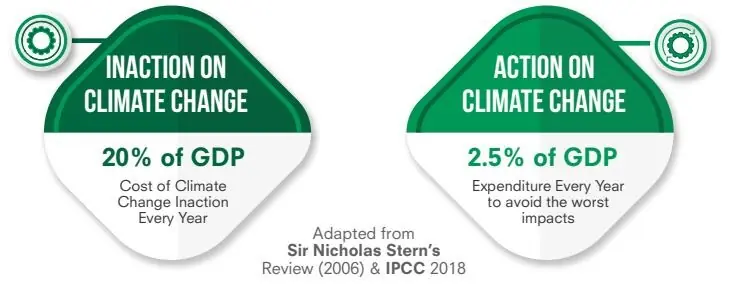
The economic implications of this vulnerability are stark. The UNDP, in its policy paper, ‘Cost of Inaction on Climate Change’, estimated that unmitigated climate impacts could impose losses — damage to agriculture, health infrastructure and productivity — equivalent to about 20 per cent of Sindh’s gross domestic product.
On the other hand, the costs of avoiding or reducing these impacts would amount to 2.5pc of the province’s GDP, the paper noted, highlighting how proactive adaptation and resilience investment could translate into a large economic return.
Simply put, delayed or insufficient climate action is not just an environmental risk but a macroeconomic liability for all, especially in Sindh.
Decentralisation and access
One of the core weaknesses in Pakistan’s climate finance system lies in its highly centralised structure. Climate finance, especially international funds, is commonly routed through federal ministries and other implementing agencies, even though responsibility for key climate-sensitive sectors such as water management, agriculture, urban development, and disaster response rests primarily with provincial and local governments.
This institutional mismatch limits provinces and municipalities from designing and implementing projects that respond directly to local climate risks.
Analysis conducted by the Consortium for Development Policy Research, a Pakistan-based research and dissemination organisation, highlights that fiscal and constitutional arrangements for climate action plans, including approval, restructuring, and disbursement majorly reside at the federal level, while the responsibility for implementation resides at the provincial level.
This structure of centralised control creates delays and gaps.
Case in point: the Sindh Coastal Resilience Project. Formalised at the end of 2025, its preparatory phase laid bare the common administrative and access risks that Pakistan’s climate financing ecosystem faces.
The project was launched to protect coastal livelihoods, food security, and ecosystems in climate-vulnerable districts of Thatta, Sujawal and Badin. But even as it was designed for Sindh and implemented by provincial institutions, the project’s grants — from the Asian Development Bank (ADB) and Green Climate Fund — were formally negotiated and signed by the Federal Ministry of Economic Affairs.
So even when it is by Sindh, for Sindh and to Sindh, the province does not have direct access to the full financing envelope. Instead, all of the approvals, fund releases, and compliance requirements flow through federal channels, lengthening preparation and implementation timelines.
This yet again proves that without streamlined mechanisms that pass access and management of climate funds down to the grassroots — provincial and municipal governments — vulnerable populations will continue to suffer.
Absorptive capacity and implementation gaps
The lack of access and control is not just limited to Sindh but plagues the entire country. Reports reveal how Pakistan’s capacity to absorb and utilise climate funds continues to be a bottleneck, with chronic underspending, delayed disbursements, and setbacks in project implementation.
For instance, the GCF’s $37 million ‘Transforming the Indus Basin with Climate Resilient Agriculture and Water Management’ project had disbursed less than 45pc of its funds by its original completion timeline. In its documents, the Fund prominently mentioned absorption capacity as a climate finance constraint in Pakistan.
Sindh’s experience demonstrates that limited absorptive capacity is not an abstract national problem but a project-level constraint with measurable consequences. Despite repeated climate shocks and sustained financing commitments, many projects have suffered delays, pointing to institutional and procedural barriers in converting approved funds into timely adaptation outcomes.
A prominent example is the Sindh Resilience Project, launched in 2016 and supported by the World Bank to strengthen flood and drought risk management in the province through infrastructural upgrades and institutional capacity building.
Originally scheduled to close in 2021, only half of the project’s planned sub-schemes have been completed as of 2024-2025. Several of its components are yet to begin. In its implementation status report, the World Bank blamed limited procurement bottlenecks, limited project management capacity and governance risks for the delays.
Similarly, the Greater Karachi Bulk Water Scheme (K-IV) has faced many challenges as well. The project, originally launched to supply 260 million gallons of water per day, has been repeatedly delayed since its inception in the early 2000s. As of 2025, K-IV remains only 60-65pc complete, with original timelines pushed back and costs escalating significantly from initial estimates.
A key driver of these delays has been the mismatch between budget allocations and implementation requirements, where the federal budget 2025-26 only earmarked Rs3.2 billion of the roughly Rs40 billion required to push the project towards completion. Coordination mechanisms, including redesign of project components and transfer of execution responsibility from provincial agencies to Wapda have also contributed to higher costs and deferred timelines, illustrating how absorptive capacity constraints can amplify vulnerabilities even when financing is available.
These project-level findings are backed by budget execution. An independent analysis of Sindh’s climate-relevant expenditures shows that less than half of the allocated climate funds were spent over a 15-16 year period, i.e. out of Rs48.8 billion allocated for climate-related departments, only Rs20.2 billion was spent, pointing to chronic under-utilisation.
Building a resilient future
All of this evidence suggests that climate change in Pakistan is no longer just about risk recognition or finance mobilisation. It is equally about whether existing institutions and frameworks can convert approved resources into a timely and local-level response, implementing reforms as the central task of the next phase of climate action.
For climate finance to yield a meaningful impact, Pakistan must first start with decentralising access by empowering provincial and municipal governments with direct financing windows and simplified procedures.
Next, it should build technical capacity at the local level for project design, planning and implementation, alongside strengthening monitoring and transparency mechanisms.
And most of all, the nation must integrate climate priorities into local and provincial development planning, thereby ensuring that resilience is embedded in decision-making across sectors.
Turning climate finance into real resilience requires political will, institutional reform, and a decisive shift toward localised climate governance. Without this, climate action will only be visible on paper.


