





It was never going to be easy for the International Cricket Council (ICC) to sideline Pakistan from the T20 World Cup, let alone exclude them from the marquee clash against India. That is precisely why, today on February 15, Pakistan will take on India for the ninth time in T20 World Cup history.
It is a rivalry in which Pakistan has managed only one victory so far. Yet win numbers barely matter when these two teams meet, because this contest has grown far beyond cricket and has become arguably the most anticipated fixture in global sport.
In the build-up to this match, uncertainty loomed large. Until just days before the game, there was no official confirmation that Pakistan would play. This followed a dramatic political intervention when the Government of Pakistan announced that it would not permit the Pakistan team to participate in the World Cup group-stage match against India. Despite the tournament featuring 20 teams, this single lucrative fixture dominated headlines across the cricketing world.
The tension had been sparked when Bangladesh approached the ICC, requesting that their World Cup matches be shifted out of India due to political and security concerns. The ICC rejected this request, citing operational challenges, and eventually removed Bangladesh from the tournament, replacing them with Scotland. This decision sent shockwaves through the cricket community and raised serious questions about fairness and consistency in governance.

The most anticipated match in the ongoing T20 World Cup, Pakistan versus India today, almost didn’t happen. But the issue was always about more than a single match. It was about respect, equity and the balance of power in international cricket


At that moment, Pakistan emerged as the only major cricketing nation willing to stand publicly in solidarity with Bangladesh. Pakistan’s position was rooted in recent precedent.
In the 2025 Champions Trophy, India refused to travel to Pakistan and the ICC allowed their matches to be played at a neutral venue in the UAE. Similarly, in the 2026 T20 World Cup, Pakistan was already playing all its matches in Sri Lanka rather than India. Given this background, many believed that Bangladesh deserved the same consideration rather than outright exclusion.

The Pakistan government took a firm stance and instructed the national team not to play India unless the issue was addressed. This moment marked a rare instance of a powerful cricket board openly challenging both the ICC and the Board of Control for Cricket in India (BCCI).
On Sky Sports, former England captain and respected commentator Nasser Hussain weighed in on the controversy. He remarked that it was difficult to imagine the ICC treating India the same way if they had refused to play in a host country at short notice. He further stated that Pakistan was speaking to the ICC and BCCI in the only language that truly moves world cricket, financial leverage and commercial reality.
Hussain also expressed admiration for both Bangladesh and Pakistan, praising Bangladesh for taking a principled stand and Pakistan for defending another full member of the ICC.
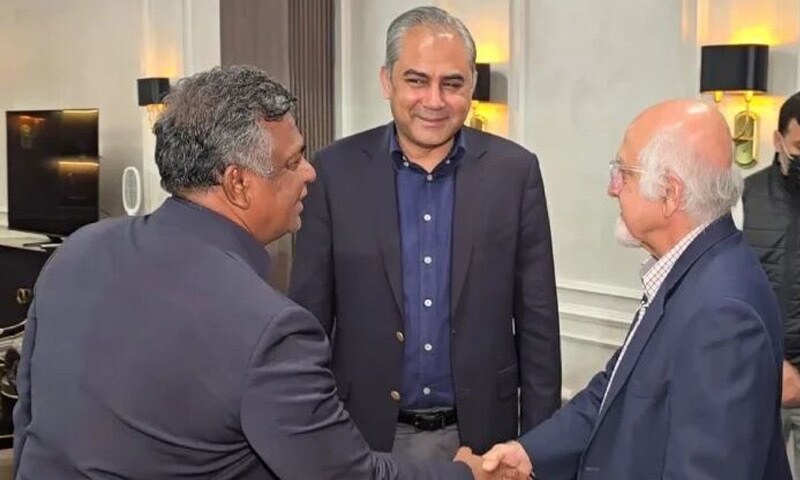
The situation reached a turning point on Sunday, February 8, when the Bangladesh Cricket Board (BCB) president and the ICC deputy chairman travelled to Pakistan for high-level talks with Pakistan Cricket Board (PCB) chairman Mohsin Naqvi. These discussions proved crucial and, by Monday evening, a resolution began to take shape.
Following the meeting, the BCB formally requested Pakistan to proceed with the match against India on February 15. Shortly after, the ICC issued a detailed press release outlining key assurances, including recognition of Bangladesh as a valued full member with a proud cricketing heritage, confirmation that their absence from the 2026 World Cup would not harm their long-term cricketing future and a commitment to continue supporting cricket development in Bangladesh, a nation of over 200 million passionate fans.
Most importantly, the ICC confirmed that no financial, sporting or administrative penalties would be imposed on Bangladesh. The BCB also retained the right to approach the ICC Dispute Resolution Committee if it chose to do so. Additionally, Bangladesh was guaranteed hosting rights for an ICC event between 2028 and 2031, ahead of the 2031 Men’s Cricket World Cup, subject to standard procedures.
Following this resolution, the Government of Pakistan officially announced on social media platform X that Pakistan would indeed play India today. This marked a historic moment in cricket diplomacy, where one board stood up for another in the name of fairness and equality among ICC members.
Despite this positive outcome, a misleading narrative began circulating in the Indian media. Several outlets portrayed Pakistan as backing down or surrendering under pressure. This interpretation was far from the truth.
The reality is that India versus Pakistan matches in ICC tournaments generate immense global viewership and revenue. Broadcasters, sponsors, the ICC, BCCI and PCB all benefit significantly from this rivalry. Even during periods of intense public hostility, such as the 2025 Asia Cup, India ultimately played Pakistan despite political tensions at home. At that time, Indian players refused to shake hands as a symbolic gesture, yet they still participated because a full boycott was simply not commercially viable.
What made this situation different was that Pakistan became the first team to openly risk financial losses and potential ICC sanctions by threatening to withdraw from the biggest match in world cricket. This was not a retreat but a calculated stand based on principles.
At the same time, the ICC was never in a position to simply remove or punish Pakistan the way it did with Bangladesh, even though this was exactly what many in India, particularly sections of Indian media and officials close to the BCCI, were hoping for.
Kicking Pakistan out of a global event was never going to be straightforward, because Pakistan is one half of the biggest rivalry in world cricket, a rivalry that generates enormous revenue, viewership, sponsorship and broadcast value for every ICC tournament.
The India versus Pakistan contest is not just another match, it is one of the most commercially powerful fixtures in international sport and the entire financial model of ICC events benefits heavily from its existence. Broadcasters pay premium rights fees largely because of this match-up. Sponsors invest more when these two teams meet. And host countries rely on this game to maximise ticket sales and global engagement.
Because of this, the ICC had to handle Pakistan’s stance with far greater caution and diplomacy than it did with Bangladesh, as any harsh action against Pakistan would have directly damaged the tournament’s commercial appeal and credibility. Unlike Bangladesh, Pakistan sits at the centre of the most profitable rivalry in cricket.
In truth, all three parties, Pakistan, India and the ICC, ultimately wanted this match to go ahead. However, Pakistan ensured that the ICC and BCCI acknowledged the need for fair treatment of all member nations rather than selective enforcement based on power or politics.
In the end, this episode became a win-win situation. Bangladesh secured a future ICC hosting opportunity without any penalties, while Pakistan demonstrated leadership, solidarity and moral courage. More importantly, Pakistan proved that it is not merely a participant in world cricket but a nation willing to challenge the system when fairness is at stake.
This was not just about a single match. It was about respect, equity and the balance of power in international cricket. And on that front, Pakistan emerged with its reputation not only intact but strengthened.
The writer is a cricket correspondent and
digital content creator. X: @abubakartarar
Published in Dawn, EOS, February 15th, 2026


