





IN May 2010, when public confidence in the criminal justice system (CJS) was visibly eroding, nine retired and seven serving inspectors general of police, under the aegis of the Law and Justice Commission, came together to confront the question of why policing consistently failed to deliver justice. Months of intensive deliberation by the Police Reforms Committee resulted in the comprehensive report titled Police Reforms: Way Forward — a professional blueprint drafted by the highest ranks of the police service, with the active engagement of senior members of the judiciary. Yet it was ignored.
The central diagnosis of the report was stark but accurate. Flawed investigations are the primary cause of high acquittal rates in Pakistan, owing to poor evidence collection, weak forensic support, inadequate case preparation and interference in investigations. The result is not merely acquittal of the accused; it is systemic discrediting of the entire CJS. The police blame the prosecution, the prosecution questions the investigation, the judiciary is accused of being lenient, and citizens lose faith in all three. The committee identified three structural weaknesses: politicisation of police command and transfers, weak accountability mechanisms and chronically deficient investigations due to lack of specialisation and resources. These observations were grounded in decades of operational experience and supported by professional analysis.
At the heart of the report was the drafting of a ‘Model Police Law’ to meet the demands of 21st-century policing, which sought to ensure that the police would be politically neutral, democratically controlled, administratively and operationally autonomous, effectively accountable and professionally specialised. It was an attempt to balance autonomy with structured oversight through public safety commissions and independent police complaints authorities. The report concluded that independence without accountability breeds impunity and accountability without independence breeds subservience. Sustainable reform requires both.
The report examined the institutional evolution of policing — from the Police Act of 1861 to the Police Order 2002. It concluded that policing is interwoven with criminal law, criminal procedure and evidence. Fragmentation of police laws across provinces, without regard to constitutional jurisprudence and federal primacy in criminal matters, weakens uniform enforcement of fundamental rights. The Supreme Court, therefore, settled this by recognising the concurrent jurisdiction of the provinces and the federation over policing, in addition to criminal laws. In any case, equal protection under the Constitution cannot coexist with wildly divergent standards of police organisation and accountability.

The blueprint exists. But what is missing is political maturity and sustained commitment.


The committee proposed the separation of investigation from public order. A distinct investigation wing, headed by an additional inspector general, would oversee crime, legal matters, forensic integration and data management. Special investigation units were recommended for crimes such as terrorism, kidnapping for ransom and human smuggling. Forensic laboratories were to be made operationally autonomous. Scientific and digital evidence was to be given primacy. Without structural separation, investigation officers remain overburdened with law-and-order assignments, VIP security and other duties.. The report recognised that improving conviction rates requires institutional redesign.
The section dealing with terrorism noted the abysmally low success rate in the prosecution of terrorism offences and the inconsistent conviction statistics claimed by different provinces. It observed the misuse of anti-terror laws for ordinary crimes. Recommendations included specialised training for investigators and prosecutors, clearer statutory definitions, improved evidentiary standards and stronger coordination among agencies. Another component of the report, urban policing, recognised the need for differentiated policing in densely populated centres. The committee proposed urban police divisions that would serve populations of up to half a million, each with functional wings for operations, investigation, traffic, security, internal accountability, community relations and IT. The burdened court system was also addressed, and alternative dispute resolution mechanisms under legal safeguards were suggested to resolve minor conflicts swiftly and affordably. Accountability mechanisms were treated with equal seriousness. The report acknowledged public grievances such as failure to register cases, harassment, abuse of power, defective investigations and other abuses, and proposed strengthening internal accountability branches while also operationalising independent external complaints authorities.

So why was such an in-depth report sidelined? The answer lies less in constitutional debate and more in political economy. Professional reform reduces discretionary political control over postings, transfers, investigations, and law-and-order deployment. In a system where influence over police machinery is a tool of patronage, autonomy is perceived as loss of control. Political parties routinely promise police reforms in their manifestos. Yet when presented with a professionally drafted framework requiring no external consultants and minimal structural experimentation, successive governments chose inaction. This was not a failure of capacity but of will, compounded by vested interests and short-term political calculations.
A malfunctioning CJS undermines economic growth. Investors want jurisdictions where property rights are protected and contracts are enforceable; businesses need predictable law enforcement and credible dispute resolution. Tourism, infrastructure development and foreign investment all depend on internal stability. Modern economies have not flourished in an environment where the CJS collapses owing to weak investigations and politicised policing. The report stresses that the police must serve the Constitution and the public, and not individuals or factions. Security of tenure for key appointments, transparent oversight mechanisms, functional specialisation and financial autonomy were not privileges for officers but safeguards for citizens. An accountable and independent police service is the backbone of enforceable fundamental rights and a country free of terrorism and organised crime.
So the blueprint exists and the jurisprudence supports reform. But what is missing is political maturity and sustained commitment. The problems identified in 2010 remain largely unresolved. Fragmented legal frameworks persist while investigations are still structurally weak. Accountability mechanisms are unevenly implemented. Public trust continues to fluctuate. Policymakers can either continue treating policing as an instrument of short-term political convenience or recognise it as a professional institution essential to the rule of law, economic progress and national security. The responsibility now rests with those who govern to decide whether reform will remain a slogan or become a reality.
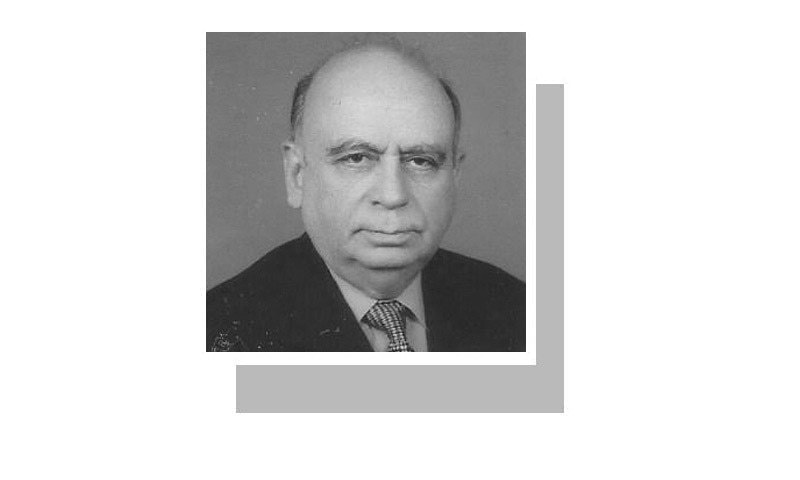
The writer is former IGP Sindh and convener of the Police Reforms Committee, Law and Justice Commission.
Published in Dawn, February 13th, 2026


