





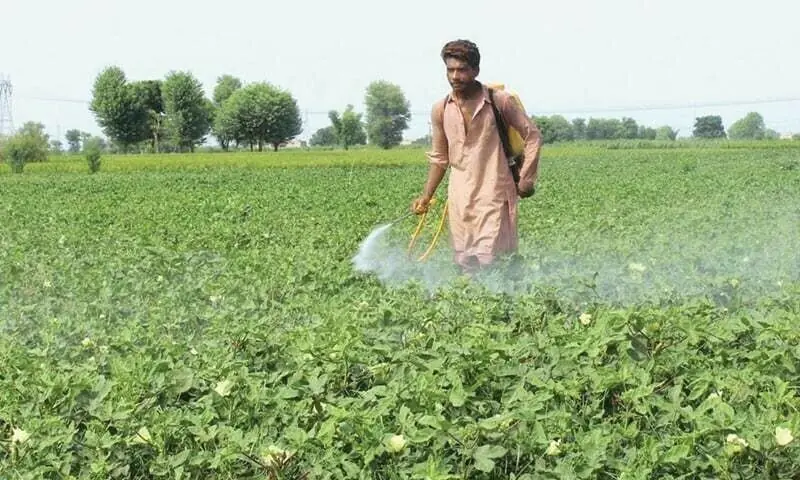
Pakistan’s farmers, 97 per cent of whom own less than 12 acres, enter every sowing season in an information vacuum. The country lacks an institutional mechanism to align supply and demand for agricultural commodities — factoring in last year’s crop acreage, domestic needs, global supply conditions, and export prospects — and to guide farmers on crop selection. As a result, at sowing time, farmers largely make decisions based on the prior years’ crop profitability, rather than forward-looking market signals.
This information gap usually produces two outcomes: in some crops, acreage expands excessively, creating a market glut that leads to price crashes and heavy losses for farmers. In others, cultivated area contracts sharply, which fuels imports and ultimately forces consumers to pay higher prices for the crop. The cycle repeats itself almost every year — crops change, but the underlying dysfunction remains intact.
So far, this mismatch of supply and demand has been most pronounced in vegetables, where farmers are often forced to destroy their mature, fruit-bearing crops or divert the produce to livestock feed, particularly during peak harvesting days. While seemingly drastic, these actions represent a logical response to the harsh financial realities farmers face.
In many cases, market prices fall so low that they fail to cover even basic costs such as harvesting labour, packaging, and transportation. In recent years, tomatoes, white radish, squash, onion, turnip, cauliflower, coriander, and spinach have all inflicted heavy losses on growers; this year, cabbage and potatoes have joined the list. Unfortunately, such massive food losses are neither documented nor accounted for in any meaningful analysis.

Destroying mature crops in the face of overproduction or a weak market is a waste of the country’s resources and a clear sign of systemic failure


Until recently, these recurring vegetable losses were considered a localised problem rather than a systemic threat, as most vegetables are grown on small areas with limited production volumes. Potatoes, however, were cultivated on around one million acres this year, making the current crisis a matter of widespread concern.
Given the intensifying competition in global markets, the broader risk is far more serious. Persistently poor crop planning, ineffective government policies, and a weak agricultural advisory system threaten to extend similar overproduction-driven losses to major exportable field crops as well.

Rice offers a worrying early signal. In the first half of FY26, Pakistan’s rice exports have declined by around 50pc, whereas in FY25, the rice area expanded to 9.6m acres — an increase of 7.2pc. The area is set to expand further in the coming season as farmers are switching away from cotton and sesame. Already, the cotton area has decreased by 15pc in FY25, while sesame acreage in Punjab contracted by 37pc (2025 crop). Moreover, the rapid spread of solar-powered tubewells has proved a key catalyst for the unchecked expansion of rice cultivation.
Likewise, if Pakistan’s maize — one of the country’s five major crops — faces export pressures due to shifting global supply conditions or international market dynamics, the domestic market could quickly turn adverse for farmers due to oversupply.
Regrettably, unlike China, India, and several other countries, Pakistan has failed to develop a biofuel industry — bioethanol and biodiesel — that can absorb surplus maize, sugarcane, and other agricultural crops as raw material.
All this underscores the urgent need for an institutional mechanism, supported by a full-fledged team of experts and researchers who regularly apply rigorous analytical tools and modelling techniques to assess national demand, worldwide market trends, and export potential for each crop. Such a framework should translate market signals into crop-wise acreage targets and, in turn, advise farmers to increase or reduce cultivated area well ahead of each sowing season.
In addition, the government should use remote sensing, satellite imagery, and artificial intelligence-based models that can estimate acreage with reasonable accuracy within two to three weeks of sowing to monitor the area under newly sown crops so farmers can be warned when cultivation exceeds market-viable clusters. These tools also provide reasonably accurate yield forecasts months in advance, which can enable early government policy responses and timely market interventions. They also allow authorities to proactively identify and pursue export opportunities.
The real question, however, is whether farmers will follow such advisories. Some advocate crop zoning as a solution, but in a democratic country, compelling farmers to plant specific crops amounts to an infringement of economic freedom.
Consider cotton: growers face repeated losses due to the absence of a support price, the imposition of an 18pc sales tax on locally produced cotton, limited access to high-yielding and climate-resilient seed varieties, and sharply rising input costs. Under these conditions, compelling them to return to cotton cultivation cannot be justified unless the government first fixes these distortions and provides an enabling environment for the crop.
One thing, however, is certain: farmers are more likely to heed clear warnings against planting crops facing overproduction or having weak market prospects, as no one knowingly steps into a loss-making venture.
In an increasingly competitive global environment, a business-as-usual approach in the agriculture sector is no longer an option. Pakistan must harness modern technologies to strategically plan crop areas and make the best use of scarce land and water resources. When market gluts force farmers to destroy mature crops or divert produce to livestock feed, these are often dismissed as farmers’ losses, but in reality, they represent a national loss — a waste of the country’s precious natural and financial resources.
Khalid Wattoo is a development professional and a farmer, and Dr Waqar Ahmad is a former associate professor at the University of Agriculture, Faisalabad.
Published in Dawn, The Business and Finance Weekly, February 9th, 2026


