





In 2015, Coke Studio released ‘Phir Se Game Uthadein’ — an anthem for the ODI World Cup set to happen the same year. It was inspired by Slogett and Carlone’s 1992 anthem ‘Who Rules the World’, the soundtrack to Pakistan’s first and most fabled major victory in cricket.
Produced by Strings and sung by Atif Aslam, the song proclaimed “Jeet ki daastaan, phir ho gi jawaan” to the same tune as “Who’s gonna be number one, who’s gonna take up the cup?”.
There is a dexterity required to mythologise something that has actually happened — Pakistan has done that with the 1992 World Cup. There must have been a time when the historical immediacy of the victory would lend itself as proof that it was real.
But ever since I can remember, the 1992 World Cup has been a pedestalised peak that seems harder and harder to re-mount as the years go by.

1992 is invoked in every metaphor for victory in Pakistan, sporting or otherwise. It is the incantation we chant when we are inviting good fortune, and the prayer we use to give shape to this imagined fortune.

We look for it every time we’re stuck in a quagmire mid-tournament (which is by and large a yearly occurrence).
The 2015 invocation was no different. The words josh and junoon were used, as they always are, those abstract ideals of hope and zeal and valour that never fully lend themselves in translations to other languages.

But what was perhaps most intriguing about this remake was the fact that a sad follow-up was shot.
After Pakistan was knocked out by Australia (because, of course), the TV and video advertisements that brandished all colours of waving flags a day before were replaced by clips of an imagined aftermath: hung faces in front of projector screens, the green stars and crescents painted on them going flaccid.
Empty rooftops with stray, limp pieces of confetti sadly billowing in the breeze. A sadder version of the song, essentially saying “we lost, but it’s okay.”
It’s not the reprise that particularly tickled my fancy, but the idea that a company producing a hype song for one of the decade’s most anticipated cricketing events had the foresight to produce a version for the sadder, but probably likelier outcome.
It’s not like it came as a shock — the campaign included the routine defeat to India, the fabled 1-4 collapse against the West Indies that the country woke up before dawn to witness, and of course, an immediately historicised dropped catch in the quarter final.
All of this is to say that Pakistan losing or ungracefully bowing out of a tournament isn’t necessarily an unfamiliar feeling. It is often anticipated, often met with a begrudging acknowledgement: “haan yaar, pata tha yehi hoga.”
And yet, I was thirteen years old during that particular World Cup, and while I do remember all the horrors in technicolour, I cannot help but remember the few gleaming specks of joy that somehow muscled their way out of them.
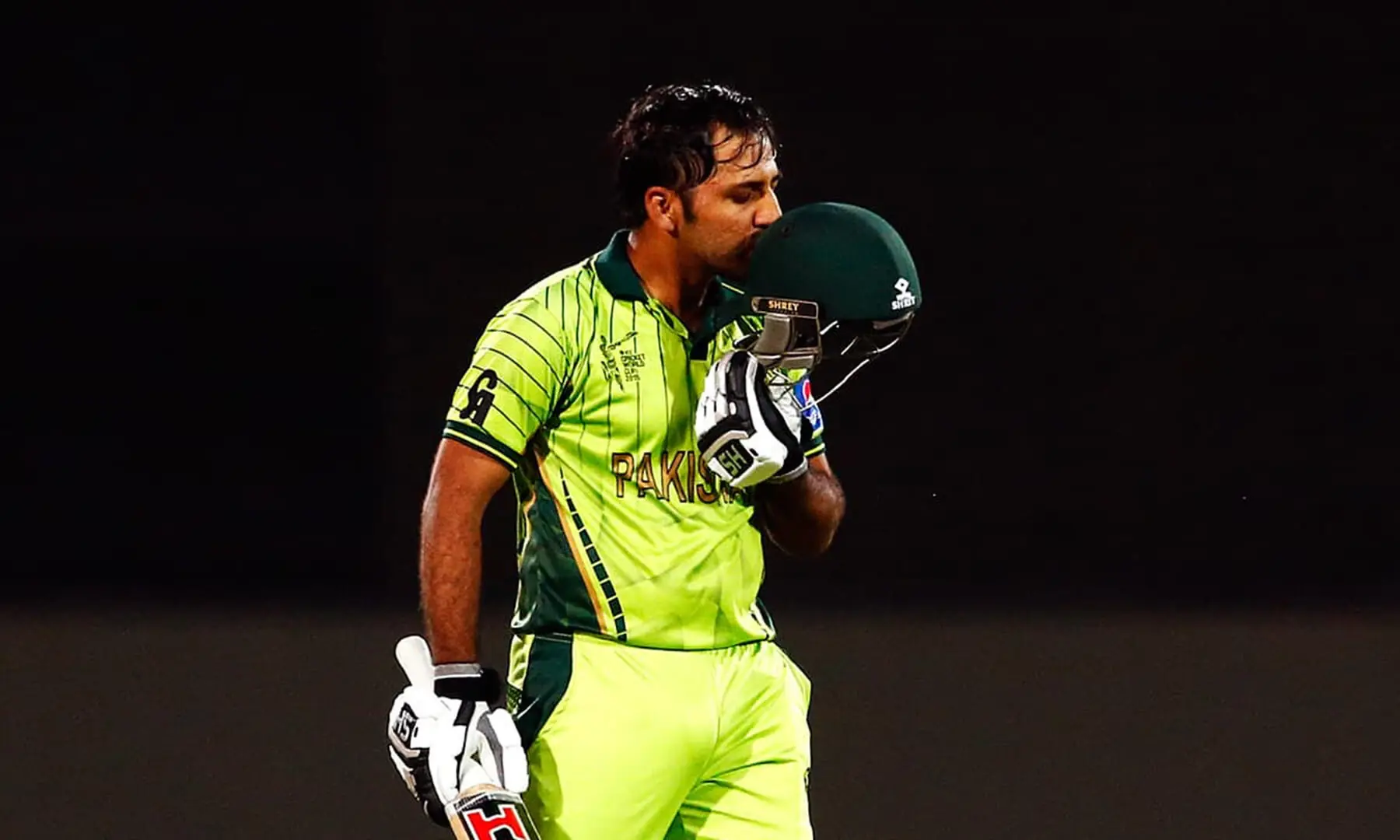
I remember a then 27-year-old Sarfaraz Ahmed playing perhaps the first iconic knock of his career against South Africa, falling short of a half-century by one run, and Pakistan winning a game that it probably shouldn’t have.
Across the world, as Wahab Riaz was bowling ball after ball of the spell of his life to Shane Watson, I remember loitering around my school’s staffroom during the quarter final, asking the one teacher who would indulge my classmates and me by giving us an update on the score.
After each of these trips, we would trundle back to class and take a moment to collectively (mournfully) pray at our desks.
I remember realising properly for the first time in my life that all the stretched out, worn out, drawn out cliches about coming back to this team over and over again would be true for my whole life.
Cricket feels different now than it did back then — it’s faster and more saturated, with so many more places and people and things involved.
There is some form of a “World Cup” every year, and it feels difficult to truly feel what a looming World Cup feels like when one is around the corner every month.
Much more recently, the constant uncertainty around cricket has been cause for further disillusionment — a Champions Trophy which was supposed to happen entirely at home not having been so, disappointing showings in 2023 and 2024, and an Asia Cup truncated with political puppet shows.
Going into the T20 World Cup, Pakistan is once again at the centre of what looks like a less-than-ideal unfolding: Pakistan has boycotted the match against India in solidarity with Bangladesh against ICC’s inconsistent treatment across teams.
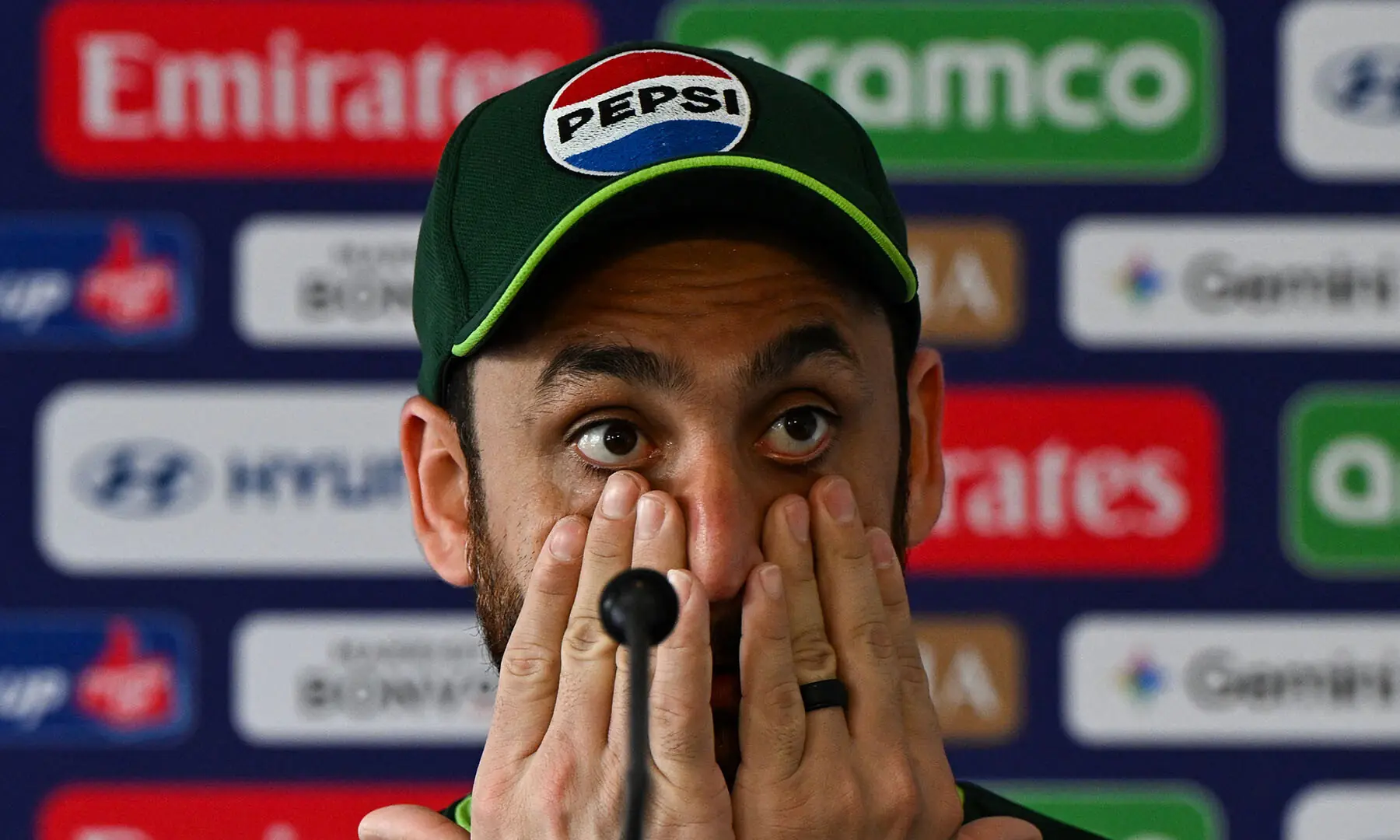
As a result of the hybrid-model compromise with India in 2024, which promised neutral venues for both teams in the case of an ICC tournament in either one, Pakistan will be playing its group matches in Colombo, with Sri Lanka being cohosts for the tournament.
Of course, we have a long history with our good friend Colombo in the rain, and with a fluctuating percentage of rain in the forecast, the possibility of any of Pakistan’s games being washed out is not zero. There is no margin for error. The realistic thing would be to not hope too much.
And yet, one can’t help but feel like that after a while; the Pakistan side showing up to this World Cup feels like a team again.
Salman Ali Agha’s success at number 3 has unlocked a vein of potential for Pakistan — while his T20 strike rate is around 122, at this position, he has averaged 37 and struck at a solid 168, especially in the recent series against Sri Lanka and Australia.
Batting aside, Agha has amassed T20 series wins against South Africa, Australia, West Indies and Bangladesh, in addition to two tri-series wins and leading Pakistan to be the finalists in the Asia Cup.
As we speak, Saim Ayub is the world’s number one all-rounder in T20 cricket, and Usman Tariq, with his perfectly legal action, has provided Pakistan’s bowling line-up with a contested but undeniable innovation.
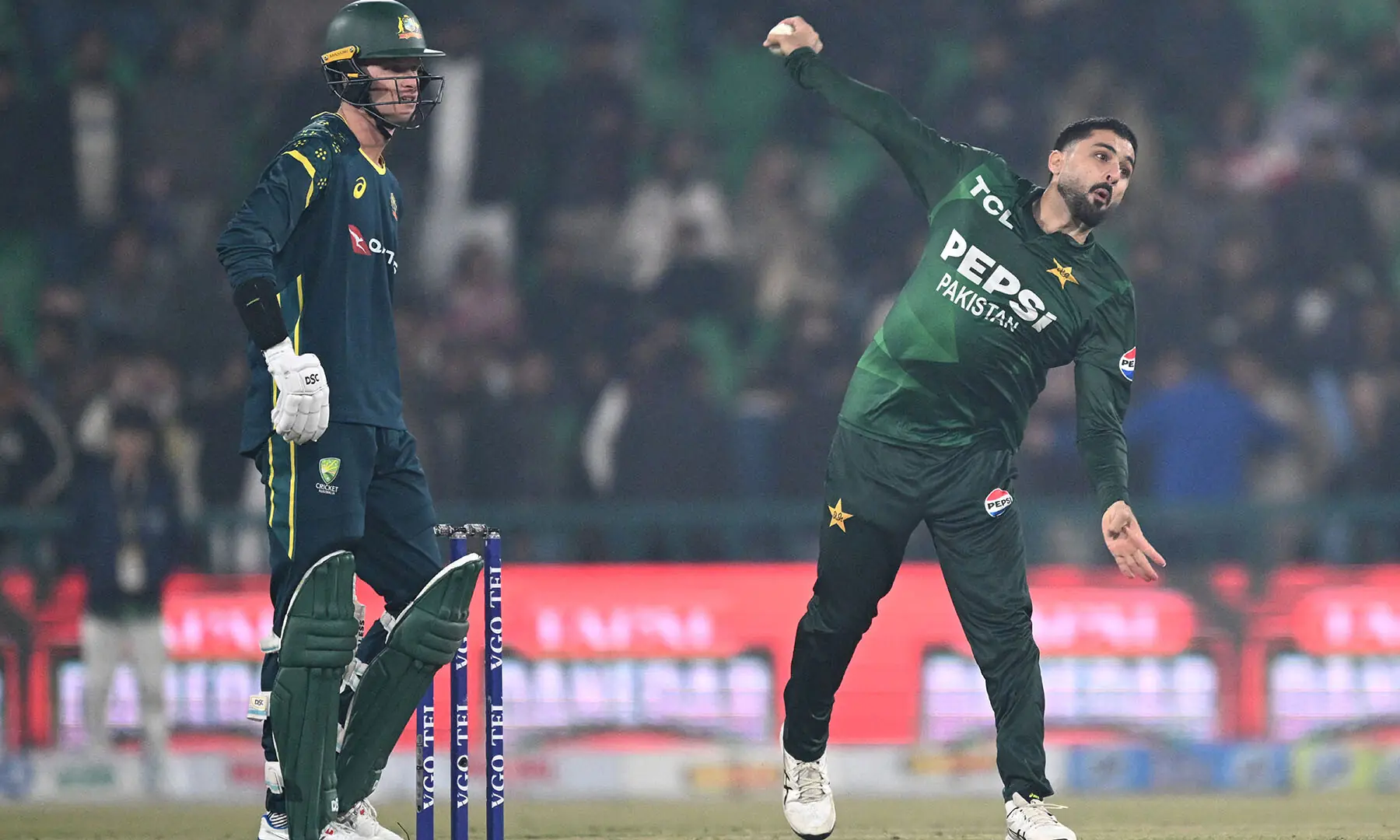
The spin arsenal of Saim, Abrar Ahmed, Usman Tariq, Shadab Khan and Muhammad Nawaz has shaped up to be one of the most promising in the tournament, if the statement 3-0 win against Australia was any indication.
All histories up till now have shown that Pakistan’s form before a tournament is just about as untrustworthy as Pakistan’s performances during one — but against all my wisdom, I am compelled to hope.
Of course, cricket is currently at the mercy of administrative mishaps and Pakistan fans are at the mercy of the Pakistan cricket team. But sometimes it is good to remember that not even the most illustrious of wisdoms and an undeniable breadth of knowledge does not absolve us of this reality: when Pakistan plays cricket, we will be tuning in.
Hopefully, this time, the sadder songs will remain in the archives.
Header image: Pakistan’s Shaheen Shah Afridi (2R) celebrates with teammates after taking the wicket of Australia’s captain Mitchell Marsh (L) during the third T20 international cricket match between Pakistan and Australia at the Gaddafi Stadium in Lahore on February 1. — AFP


