


• Says cameras in gynae depts crosses a ‘red line’; accuses govt of choosing ‘surveillance’ over reforms
• Claims weak data laws risk leaks, political misuse; alleges no healthcare, patient groups consulted on this policy
• References Quaid-i-Azam’s decision on health privacy
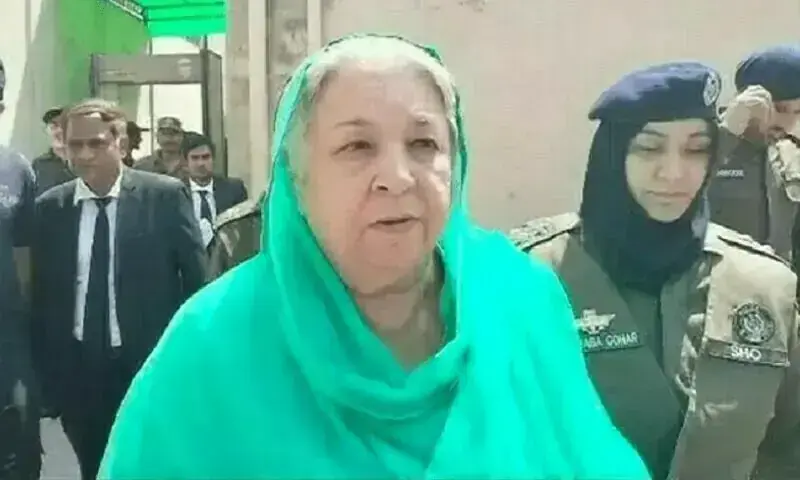
LAHORE/ ISLAMABAD: Incarcerated former Punjab health minister Dr Yasmin Rashid has criticised the provincial government’s decision to mandate body-worn cameras for nurses and frontline hospital staff, warning the move will compromise medical confidentiality and erode patient trust.
In a message relayed from Kot Lakhpat Jail through PTI leader and lawyer Shayan Bashir on Sunday, Ms Rashid argued that introducing continuous audio-visual recording in clinical environments risks fundamentally altering the relationship between medics and patients.
“Patients disclose personal information — physical, psychological, reproductive and familial — precisely because medical spaces are protected from exposure and surveillance,” Ms Rashid said.

“Even when recordings are not misused, the knowledge that one is being recorded can change patient behaviour, suppress honest disclosure, and discourage vulnerable populations from seeking timely care.”
The Punjab government recently announced the camera initiative, framing it as a measure for transparency and accountability in response to public dissatisfaction with state hospitals.
However, Ms Rashid asserted that authorities have chosen “surveillance over reform”.

“Hospitals are not police stations,” she said. “They are spaces where people disclose their most intimate fears, illnesses and vulnerabilities.”
A gynaecologist by profession, Ms Rashid expressed particular alarm regarding the policy’s impact on women’s health services. She stated that childbirth and gynaecological care involve physical exposure and emotional fragility, arguing that recording in such settings crosses a red line.
“No circular, no SOP, no press conference can undo the damage caused when a woman feels watched instead of cared for,” she stated.
Ms Rashid also questioned the administrative execution of the decision, noting there was no meaningful consultation with nurses, doctors’ associations, or patient-rights groups.
She raised structural concerns regarding data privacy, asking who would own the footage, how long it would be stored, and whether patients could refuse recording.
“In a system where data protection is weak and political misuse of information is not hypothetical, these are not technical gaps but structural dangers,” Rashid said.
To illustrate the ethical weight of privacy, Ms Rashid cited the historical example of Quaid-i-Azam Muhammad Ali Jinnah, whose serious illness was kept confidential during the Pakistan Movement.
She noted that this was an ethical judgement rooted in the understanding that medical privacy can carry consequences far beyond the individual.
The former minister contended that cameras are being used to scapegoat staff.
She noted that issues such as staff shortages, medicine stock-outs, and broken equipment cannot be solved by surveillance. Instead, she called for patient exit interviews, independent grievance redressal, and training for paramedical staff in patient rights and de-escalation.
“Healthcare reform is slow and often invisible. Surveillance is quick and headline-friendly,” she stated. “But a government that confuses the two is not fixing healthcare. It is managing optics while trust quietly collapses.”
Mr Bashir confirmed that the message was dictated during his legal visit with the former minister. He added that the party plans to continue its agitation for the release of former PM Imran Khan.
Previously, there appeared to be agreement among healthcare workers and officials interviewed by Dawn that the policy may be unsustainable, could infringe on privacy, might be incompatible with medical professions, and potentially catastrophic.
Pakistan Medical Association President Dr Izhar Ahmed Chaudhry conveyed his incredulity to Dawn, asserting that the proposed action would be an ineffective method for healthcare improvement and will harm the government’s image.
For Young Doctors Association (YDA) Punjab President Dr Shoaib Niazi, the decision was a “useless act” for which the association was “not consulted”.
“The footage will go to the IT department, and anyone can access it without patients’ consent,” Dr Niazi said.
Published in Dawn, January 26th, 2026


