



• Warns provincial govt against implementing ‘illegal aspirations of land mafias’
• Calls legislation unconstitutional, in conflict with CPC, CrPC, Evidence Act, other laws
ISLAMABAD: The Pakistan Bar Council (PBC) on Saturday went beyond mere condemnation of the recently promulgated Punjab Protection of Ownership of Immovable Property Act, 2025, cautioning the Punjab government against implementing what it described as the “unlawful aspirations of land mafias”.
Presided over by Vice Chairman Chaudhry Tahir Nasrullah Warraich, the outgoing PBC cabinet unanimously demanded that the Punjab government immediately recall the law and tender an apology to the Lahore High Court (LHC) for what it termed “insulting remarks and a rude attitude”.
The PBC — the apex body regulating the legal fraternity — reiterated that lawyers stand firmly with the LHC and will not allow anyone to compromise the integrity of the judiciary.

The council warned that if corrective measures were not taken within a few days, the lawyer’s community would be compelled to launch a movement on the issue.
On December 22, LHC Chief Justice Aalia Neelum suspended the operation of the law and announced that the matter would be heard and decided by a full bench of the court.
The controversy surrounding the newly enacted law further intensified on December 24, when various lawyers’ associations — irrespective of political affiliation — endorsed the Lahore High Court’s intervention to suspend its implementation.

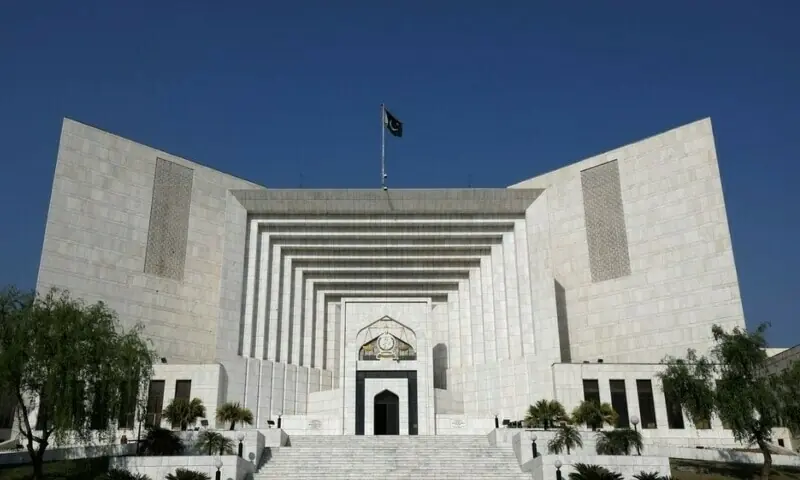
During its 247th meeting, held at the Supreme Court Building in Islamabad on Saturday, the PBC passed a resolution on the issue in addition to conducting other agenda items.
The unanimous resolution rejected and disapproved the Punjab Protection of Ownership of Immovable Property Act, 2025, which empowers deputy commissioner-led committees to decide property disputes.
The resolution also condemned the Punjab government for passing the Act, stating that it was unconstitutional, unlawful, and in conflict with the provisions of the Qanoon-i-Shahadat, Civil Procedure Code (CPC), Criminal Procedure Code (CrPC), Evidence Act, Illegal Dispossession Act, and other relevant laws, thereby rendering their provisions redundant. The council noted that the matter had been challenged and that the LHC had rightly suspended its implementation.
The council commended and appreciated the LHC chief justice for passing a timely order, observing that the newly enactment compromised established and settled legal principles governing property matters.
The resolution expressed concern that the law had created a parallel system of jurisprudence whereby property disputes would be resolved by deputy commissioners, district police officers, revenue officers, and other government officials instead of courts — a practice it termed wholly unlawful.
The PBC further observed that the new law dismantled the civil judicial system, civil rights, and judicial supremacy, as it allowed a revenue officer to hand over possession of property even when the matter was pending before a civil court, suggesting an attempt by certain elements to concentrate all powers, including judicial authority.
The resolution regretted that the Punjab government had allegedly resorted to trolling and propaganda against the LHC chief justice and the judiciary. As a result, the council condemned what it described as an onslaught against the LHC following the suspension of the Act.
The council also expressed grave concern over the conduct of the Punjab government, regretting that the province’s chief executive appeared to be surrounded by aides protecting the interests of land mafias and grabbers, alleging that the Act was passed to safeguard those interests.
The resolution emphasised that it was incumbent upon the judiciary to curb and address such unlawful practices in the interest of justice, transparency, and equity, as reflected in the LHC’s order.
It further stated that the judiciary has the constitutional mandate to interpret laws, and that the LHC chief justice had rightly suspended an enactment that undermined judicial authority.
Published in Dawn, December 28th, 2025


