



When Saba, a social media influencer, first began riding a scooter on Peshawar’s roads, the public instantly reacted to the novel sight. As she moved through the city, she explained, people stared at her, visibly shocked to see a woman riding a two-wheeler on her own. The attention, however, did little to dampen her spirits. She kept her focus on the road ahead.
“My family’s support gave me the confidence to ignore those reactions and focus on my way,” she told Dawn.
Motorcycles dominate Pakistan’s roads, far outnumbering cars. According to a study by the Gallup Pakistan Digital Analytics Platform (GDAP) and data from the Pakistan Automotive Manufacturers Association (PAMA), more than 20.4 million motorcycles were sold between 2007 and March 2025, compared to just 2.6m cars. Pakistan’s two-wheeler market is now the world’s ninth largest, recording the strongest growth among the top 50 global markets in 2025.
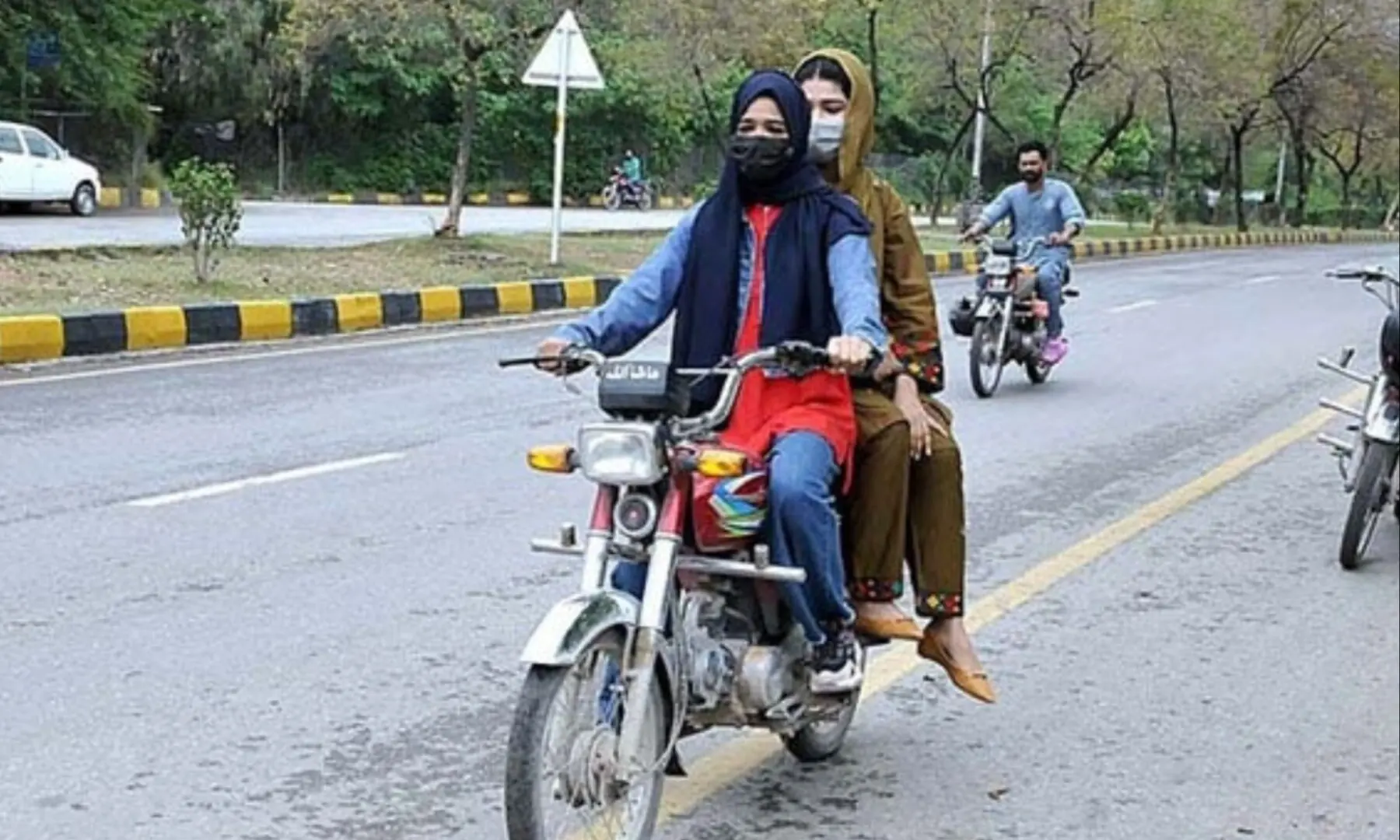
Despite this dominance, it is very rare to see women riding motorcycles or scooters, particularly in cities like Peshawar, often perceived as conservative. For Pakistani women, travelling on a two-wheeler is governed by socially sanctioned rules. And even though they’re unwritten, these norms are rigid. For example, a woman may not grip the handlebars herself, and as a passenger, she is expected to sit side-saddle behind a male rider. Any other posture is widely regarded as a violation of female modesty.

Defying the norms
Women like Saba, undeterred by such conventions, are quietly reshaping Peshawar’s streets. She believes the city is becoming safer and more accepting of women’s presence on the roads.
“I believe my decision has encouraged others. We can ride a scooter safely in Peshawar, as this is not immodesty; we can ride a scooter within our limits,” she said.
Saba hopes more women will push past stereotypes and barriers with confidence and determination. “I have not had to deal with any negativity or harsh words from others.”

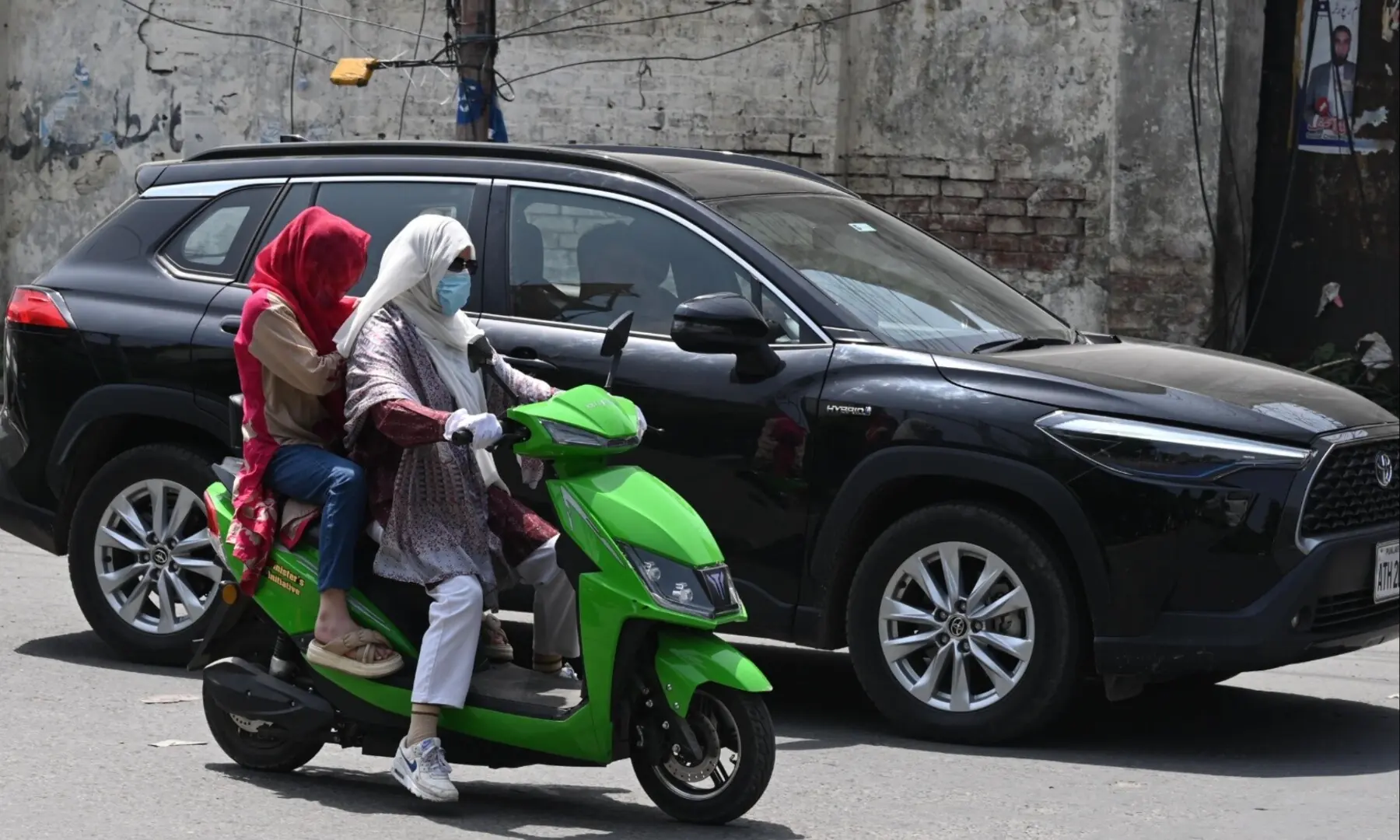
Official figures, however, portray how rare such visibility remains. The Pakistan Digital Census 2023 shows women make up 49 per cent of Peshawar’s 4.7m population, around 2.3m residents. Yet traffic police data for 2025 indicates only 1,931 women hold driving licences in the city.
Each woman travelling through Peshawar on a scooter, therefore, is not merely a commuter but a pioneer in a quiet shift.
Research on women’s use of scooters in Pakistan suggests that ownership and use of two-wheelers can symbolise autonomy and challenge gendered norms. Studies on urban transport show how harassment and safety concerns on public transit restrict women’s mobility, making personal transport a more viable option.
“People often label Peshawar as a typical city, but my goal is to raise awareness that Peshawar’s females are just as capable as those in other cities. That is why I decided to take the first step and start riding a scooter,” said Saba.
“I have a car and a driving licence, but a scooter is very easy to ride. I can attend meetings and run errands without any difficulty.”
Empowerment through mobility
Dr Zafar Khan, a sociology lecturer at the University of Peshawar, says the sight of women riding scooters or motorcycles signals not only a socio-cultural shift but also empowerment.
“There was a time when even women driving a car was not acceptable here, but now we can see a change, with some women even riding motorcycles or scooters,” he told Dawn.
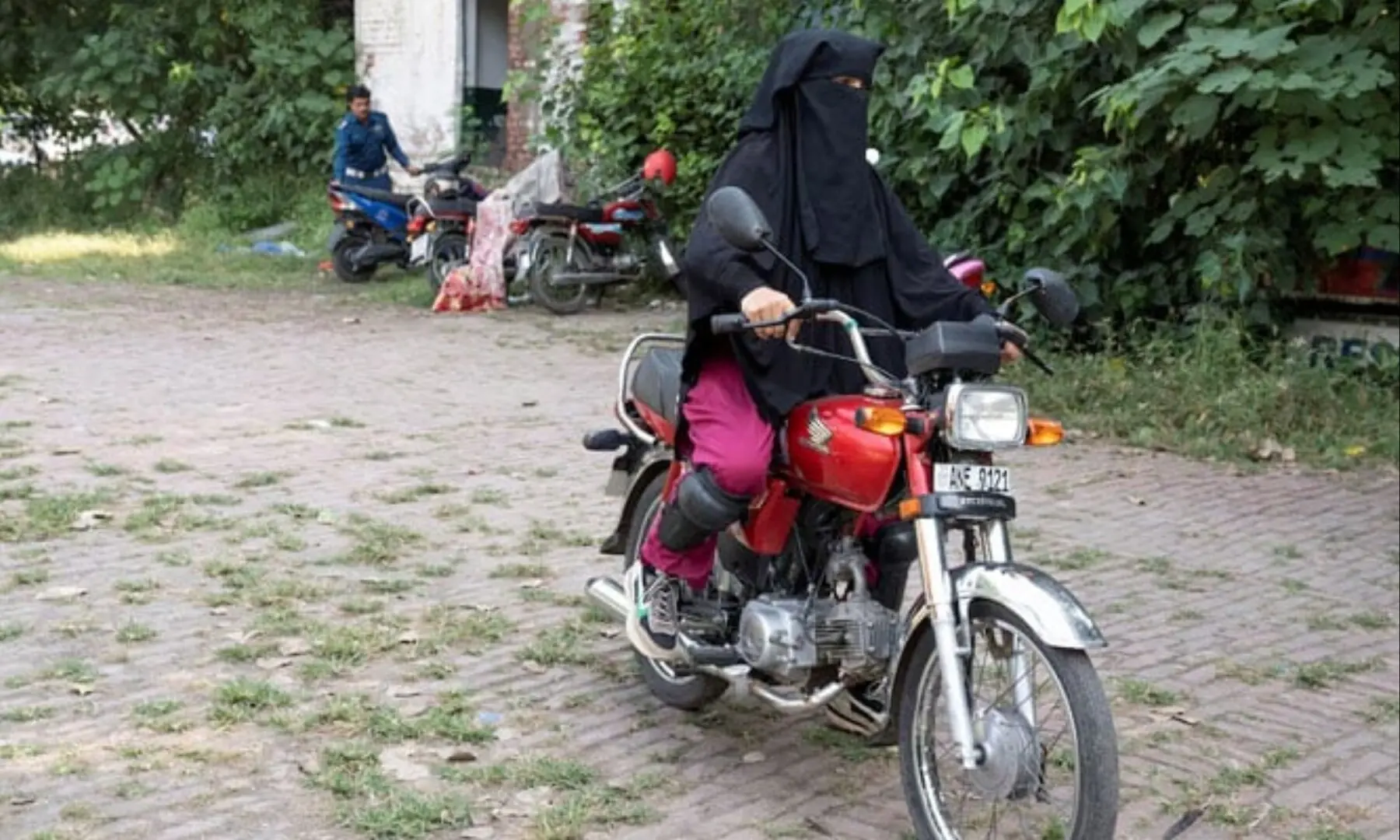
He noted that personal transport enables women to manage daily responsibilities independently. “In this patriarchal structure, their dependency on men will decrease. Motorcycles can help with tasks such as dropping children at school, commuting to college or university, or even going to the gym,” he said.
Dr Khan added that mobility also has economic implications. “If women are working, their commute becomes easier. At the university, I see several women riding motorcycles and scooters, and when I saw a girl on a bike for the first time, my first thought was, ‘change is coming’,” he said.
The academic stressed that broader societal and government support is essential. “If society, along with the government, supports women in such initiatives, it can reduce their dependence on others and protect them from harassment on public transport. Providing a safe environment will allow women to become more socially and economically empowered.”
Role of family support
Citizens of Peshawar have also stressed the importance of enabling women riders. Tahir Naeem, a native now living in Islamabad but visiting the city every weekend, said: “Females should have safe spaces. An alternative mode of transport is a good opportunity. It gives independence, reduces reliance on others and is economical.”
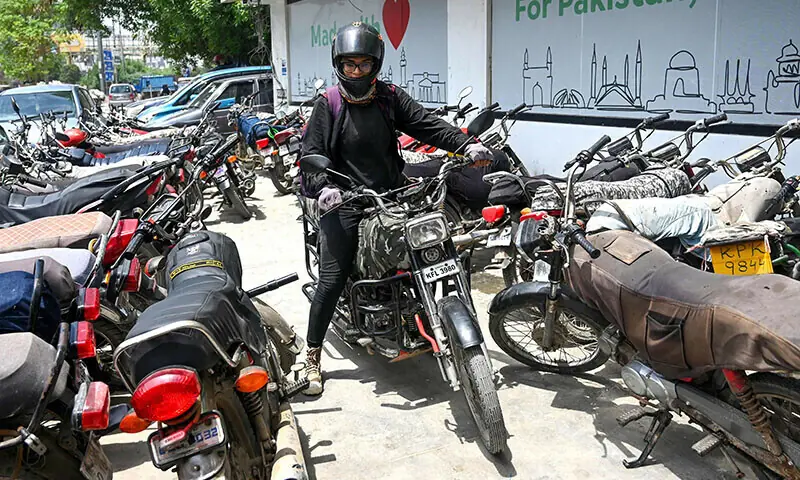
He added that family support is crucial for such changes to take root.
This was evident in the experience of Huma, a University of Peshawar student. She moved from riding a bicycle in childhood to riding a motorcycle in 2020, encouraged by her father.
“If the family supports you, no one can say anything,” she told Dawn. Growing up in a joint family, her father ensured that no one interfered with her decision. His backing gave her the freedom to pursue independence.
“People appreciate me for riding a motorbike, and it is a confidence booster. I feel safe riding at night, too. I have never faced negativity, though people do get shocked when they see me riding for the first time,” she said.
“Riding my bike has made my life much easier. I am independent and can get around without relying on anyone else.”
Huma also had a message for other young women: “Riding a bike has been a game-changer for me. It is about being independent and free. Many girls stop themselves because of what people might say.”
‘Change will take time’
Peshawar-based journalist Jamaima Afridi told Dawn that, being from and working in the area, she understands the challenges women face in the city. “Whenever something is unfamiliar or uncommon in society, it is bound to be challenging,” she said.
“I think this will become normal only when such women come forward and practise the basic right to freedom of movement. Over time, people will get used to it.”
She reflected on her own experience, recalling a cycling rally she organised in her village. “It drew a lot of criticism, but it also made people realise that women should have the right to cycle,” she said.
Afridi emphasised that creating public debate around women riding bicycles or motorcycles is the first step toward building space for their mobility.
“The initial women taking this step will face difficulties: stares, criticism, claims that they are ‘ruining the culture.’ But with time, it will improve. The key is that as many women as possible practise this right, creating visibility and normalising it,” she said.
A quiet revolution
The number of women riding scooters in Peshawar may still be small, but their visibility signals something larger: a shift in how women are claiming space in a city that is, gradually, learning to make room for them.
“My Peshawar is wonderful,” Saba said with a sigh, “and it is getting better for girls.”
Mohammad Ashfaq from Peshawar contributed to this report.
Header Image: Women riding their scooties on the streets of Lahore. —Arif Ali/ White Star


