


President Zardari reaches Baghdad on official visit, to hold bilateral meetings with Iraqi leadership


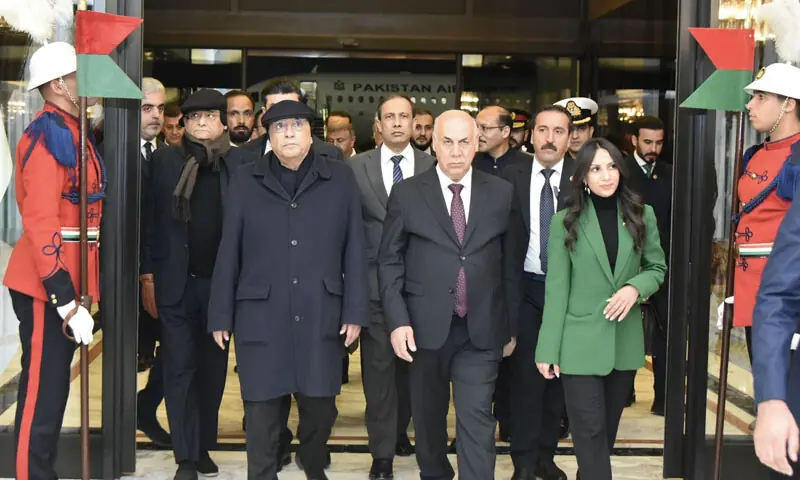
President Asif Ali Zardari has reached Iraq on an official visit, a post on the Presidency’s X account said on Saturday night.
He was received by Iraq’s Culture Minister Ahmed Fakkak Al-Badrani upon his arrival in Baghdad, the post said, adding that during his trip, the president would hold meetings with senior Iraqi leadership.
The meetings were expected to advance cooperation further strengthen Pakistan-Iraq ties, the post added.
Separately, Pakistan’s Ambassador to Iran Muhammad Mudassir Tipu posted on X that while en route from Islamabad to Baghdad, Zardari “conveyed a goodwill message to the Iranian leadership“ as his aircraft entered Iranian airspace.
“It reaffirmed solidarity with Iran, emphasising mutual respect and stronger relations between the two historic neighbors,” Tipu said.

He added: “ The president’s message coincides with the Iranian nation celebrating Yalda Night tomorrow — a civilisational tradition that brings hope, joy, and compassion amongst people and families. The spirit of Yalda Night defines our bilateral, social, and cultural affinities as well.”
Previously, the Foreign Office had said in a statement that President Zardari would undertake an official visit to Iraq from December 20-24.
According to the statement, he was invited for the visit by his Iraqi counterpart, Abdul Latif Jamal Rashid.
It said that during his meetings with the Iraqi leadership, President Zardari would review bilateral relations between the two countries and explore ways to further strengthen cooperation across key areas of mutual interest, including trade and investment, energy, reconstruction, manpower, technology, education and people-to-people exchanges.
The discussions would also cover regional and international developments, as well as cooperation at multilateral forums.
“The visit is expected to reinforce the traditionally warm and cordial ties between the two countries, identify new avenues of partnership, and enhance people-to-people linkages, particularly in the context of religious tourism and economic collaboration,“ it said.


