



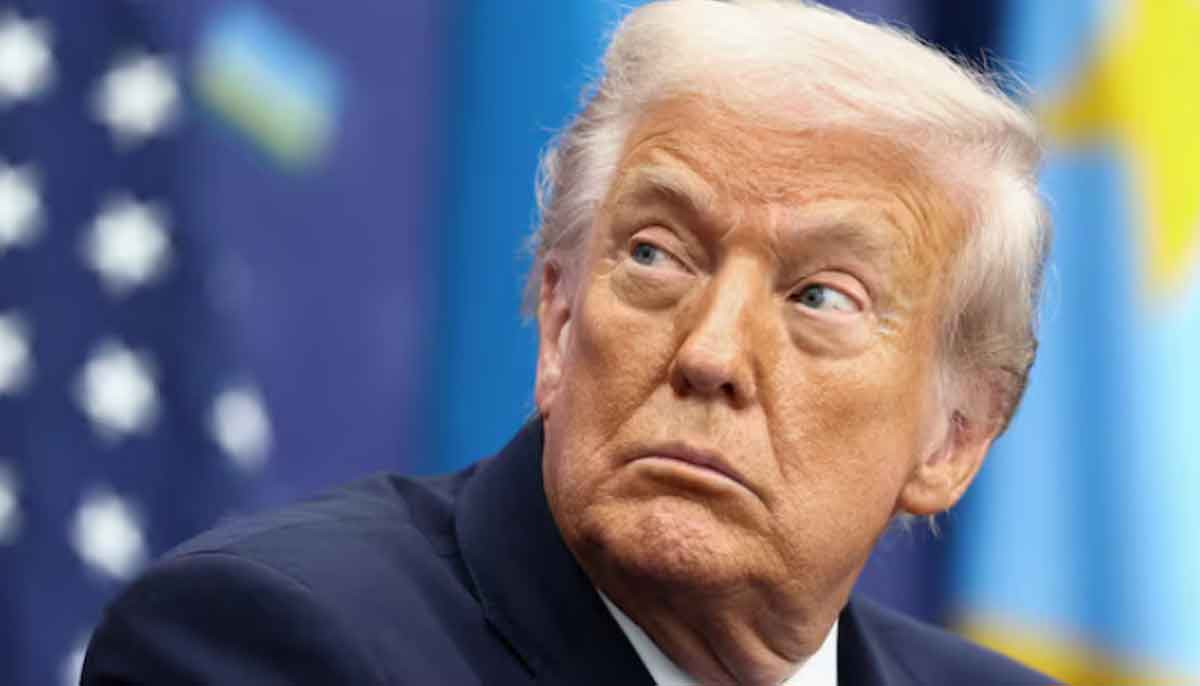
Debate over “Trump Derangement Syndrome (TDS)” has resurfaced after President Donald Trump’s remarks on social media about actor-director Rob Reiner’s murder.
What did Trump say?
President Trump mocked Rob Reiner in a social media post on Monday, suggesting the slain actor and director died because of his anti-Trump views — a remark that triggered swift and bipartisan backlash for injecting politics into a family tragedy.
A vocal Democratic activist, Reiner, 78, and his wife Michele, 70, were found dead in their home on Sunday. Their son Nick Reiner was arrested on homicide charges. Police have yet to ascribe a motive.

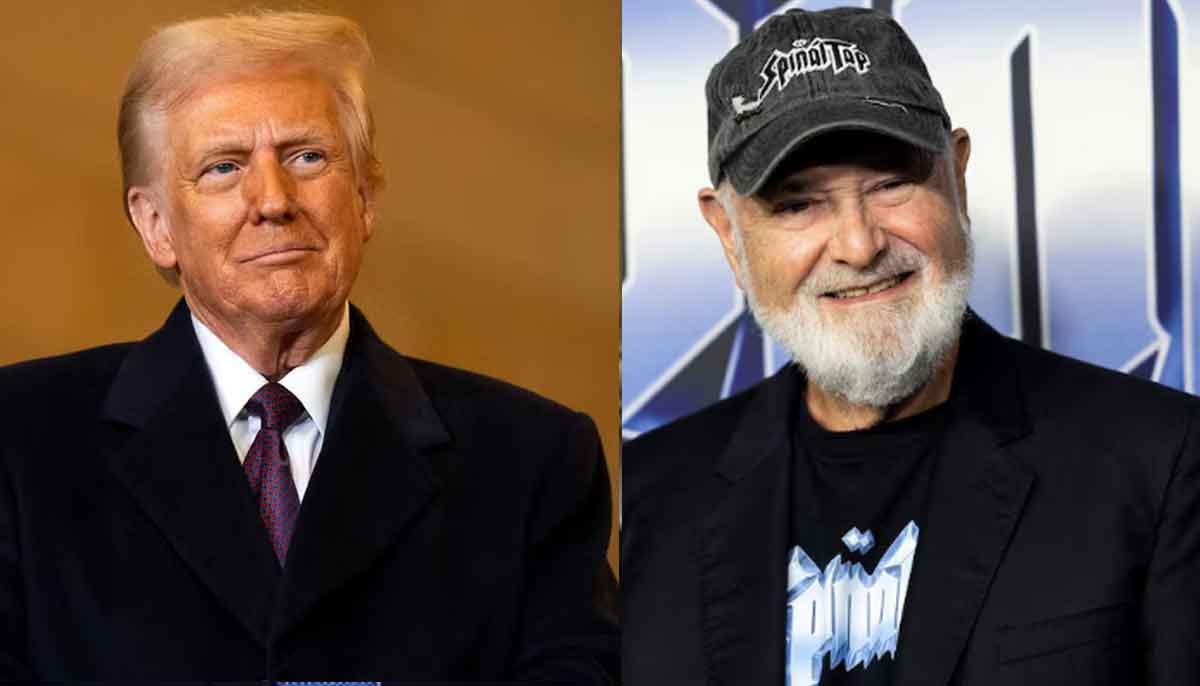

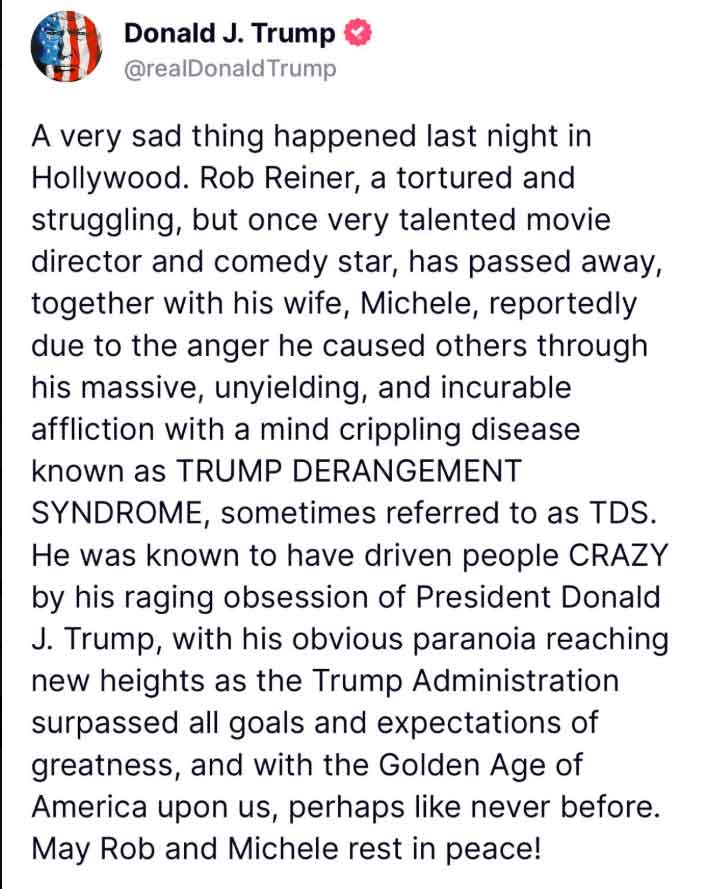
In a post on Truth Social, Trump referred to Rob Reiner as “tortured and struggling” and said Reiner and his wife had passed away “reportedly due to the anger he caused” by opposing the Republican president.
“He was known to have driven people CRAZY by his raging obsession of President Donald J. Trump,” the president said.

What’s Trump derangement syndrome
Trump’s social media post prompted renewed attention to a provocative bill by Republican Rep. Warren Davidson that mocks critics of the president.
This is not a serious medical or scientific initiative in the usual sense. Trump Derangement Syndrome” (TDS) is a political insult, not a real diagnosis.
It’s commonly used by Trump supporters to mock critics, implying they react irrationally to anything involving Trump.
It is not expected to become law, fund real medical research, or be taken seriously by doctors, psychologists, or Congress as a whole.
Here is the text of the press release issued in May by Rep. Warren in May 2025:
Today, Rep. Warren Davidson (R-OH) introduced the Trump Derangement Syndrome (TDS) Research Act of 2025. This bill would direct the National Institutes of Health (NIH) to study the psychological and social roots of what is known as Trump Derangement Syndrome, a phenomenon marked by extreme negative reactions to President Donald J. Trump. He was joined by original cosponsor Rep. Barry Moore (R-AL).
“TDS has divided families, the country, and led to nationwide violence—including two assassination attempts on President Trump. The TDS Research Act would require the NIH to study this toxic state of mind, so we can understand the root cause and identify solutions.” said Rep. Davidson (R-OH). “Instead of funding ludicrous studies such as giving methamphetamine to cats or teaching monkeys to gamble for their drinking water, the NIH should use that funding to research issues that are relevant to the real world.”
“Trump Derangement Syndrome has become an epidemic on the Left,” said Rep. Moore (R-AL). “Some individuals who suffer from Trump Derangement Syndrome have participated in nationwide political and social unrest, even trying to assassinate President Trump twice. Rep. Davidson’s common-sense bill will use already appropriated funds on an NIH study that can make a difference.”
Background:
The TDS Research Act addresses a critical issue: the instinctual negative and often violent reaction to any supportive statement or event related to President Trump. By leveraging NIH’s existing programs at the National Institute of Mental Health, the bill will:
Investigate TDS’s origins and contributing factors, including the media’s role in amplifying the spread of TDS.
Analyze its long-term impacts on individuals, communities, and public discourse.
Explore interventions to mitigate extreme behaviors, informing strategies for a healthier public square.
Provide data-driven insights into how media and polarization shape political violence and social unrest.
Require an annual report to Congress.
No Additional Spending: Uses existing NIH resources and avoids new spending.
