



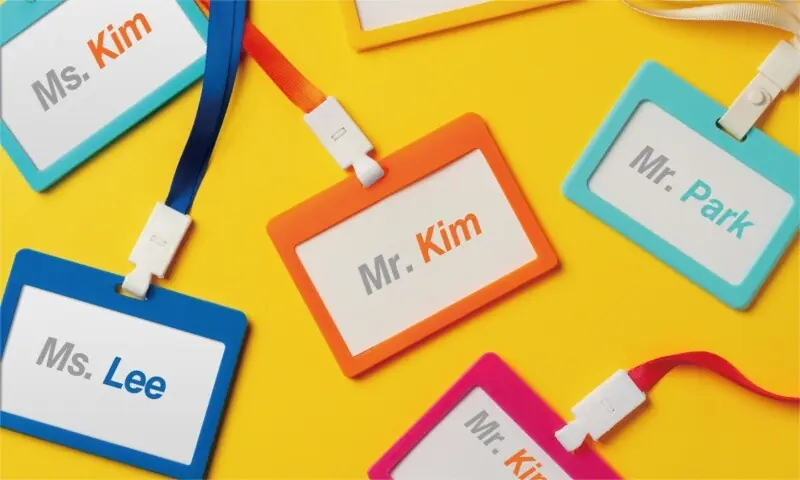
If you meet a South Korean, there‘s a 45 per cent chance that their surname is either Kim, Lee or Park. And there’s an even higher probability — some say nearly 90 per cent — that their surname originates from a bogus family tree.
According to the latest census data from Statistics Korea, these three surnames account for nearly half the population, which is over 20 million people. Expand that to the top 10 surnames, and you’re looking at 64 per cent of the population.
This remarkable concentration has given rise to the Korean expression, “finding Mr Kim in Seoul,” to describe an impossible task — something akin to finding a needle in a haystack.
Name game
Korean family names may seem simple at first glance. Most are a single syllable, with a staggering concentration of a few popular names rarely seen elsewhere.

However, there are many sub-branches even within the same surname. Each surname is associated with a clan name, which indicates the name‘s regional origin or ancestral hometown. Although there are traditionally only 288 surnames, they are connected to over 4,000 different clans.
For example, a person surnamed Kim could belong to the Gimhae Kim clan, the Gyeongju Kim clan or the Andong Kim clan, each representing the supposed birthplace of the first ancestor to ever bear the name.
Many families keep family records known as “jokbo” to trace this intricate genealogy dating back centuries or even millennia. But the accuracy of these cherished family trees is often, shall we say, questionable.

Questionable because, for much of the Korean Peninsula‘s 5,000-year history, most people lived without surnames.
According to historians, in ancient times, family names were reserved exclusively for royals and nobles. It wasn‘t until the Goryeo era (918-1392) that surnames began to filter down to the general population.
By the late 10th century, even most commoners had acquired at least a clan name, if not a proper surname. But the lowest class, including slaves, butchers and shamans, remained without surnames or clan names until much later.
Enter the early Joseon era (1392–1910), a period marked by the transition to a Neo-Confucian hierarchy with four classes, devastating wars and some seriously creative record-keeping.
As the kingdom struggled to fill the coffers after major conflicts like the Imjin War (1592-1598) and the Qing invasion of 1636, they hit upon a novel idea: selling positions and aristocrat status to commoners.
Following the aftermath of the Imjin War, the government, desperate for funds, began selling away government positions in earnest. This practice expanded significantly over subsequent decades, particularly during times of crisis or conflict when the state coffers ran low.
By the late 17th century, the floodgates had opened. Men with enough resources could buy their way into the privileged “yangban” class, complete with exemptions from taxes, military service and other pesky obligations.
And what better way for a man to cement his newly purchased status than by cooking up an illustrious family history?
Fabricating family trees, or jokbo, hence became a popular practice among the masses from the middle to the end of the Joseon era. The newly minted yangban began inserting their names into others‘ prominent family trees, claiming ancestry from prestigious clans and regions.
The more creative among them listed their earliest ancestors as hailing from China — a convenient way to avoid any awkward cross-checking.
By the late Joseon era, jokbo forgery had become a full-blown industry. The Veritable Records of the Joseon Dynasty even document a case from 1764 where a bureaucrat was caught running a full-blown counterfeiting operation.
Every man’s surname
More importantly, this period of flux also saw the expansion of surname usage to the lowest classes.
As the government‘s practice of selling positions extended to men at all levels of society, those in the lowest class found an unprecedented opportunity. For a payment in kind, they could now purchase commoner status, which came with the right to adopt surnames.
This development marked a significant erosion of the class hierarchy that had defined the early Joseon era. By the time its class system was officially abolished in 1894, nearly everyone had a surname as we know it today.
This trend is evident in historical records: A longitudinal study of the Danseong prefecture (now Sancheong-gun, South Gyeongsang Province) census register shows that the percentage of households without surnames dropped from 45 per cent in 1681 to just 6 per cent in 1816.
In the end, while most Koreans now share a handful of common surnames, these names carry within them a legacy of striving for social mobility and reinvention — faking it if necessary.
For those who might wonder if Koreans today care about the authenticity of their genealogy, the answer is: not so much. With so many people sharing the same family names, distinctions based on claims of Joseon-era noble status — genuine or not — have diminished in importance.
After all, in contemporary Korea, social status tends to depend less on one‘s great-great-grandfather’s titles and more on the wealth of one‘s parents, one’s educational background and professional achievements.
So, the next time you meet a Kim, Lee or Park here — which will probably be within the next minute — just remember their ancestral claims might be a bit more imaginative than they appear.
This article was originally published on The Korean Herald, an ANN partner of Dawn.


