



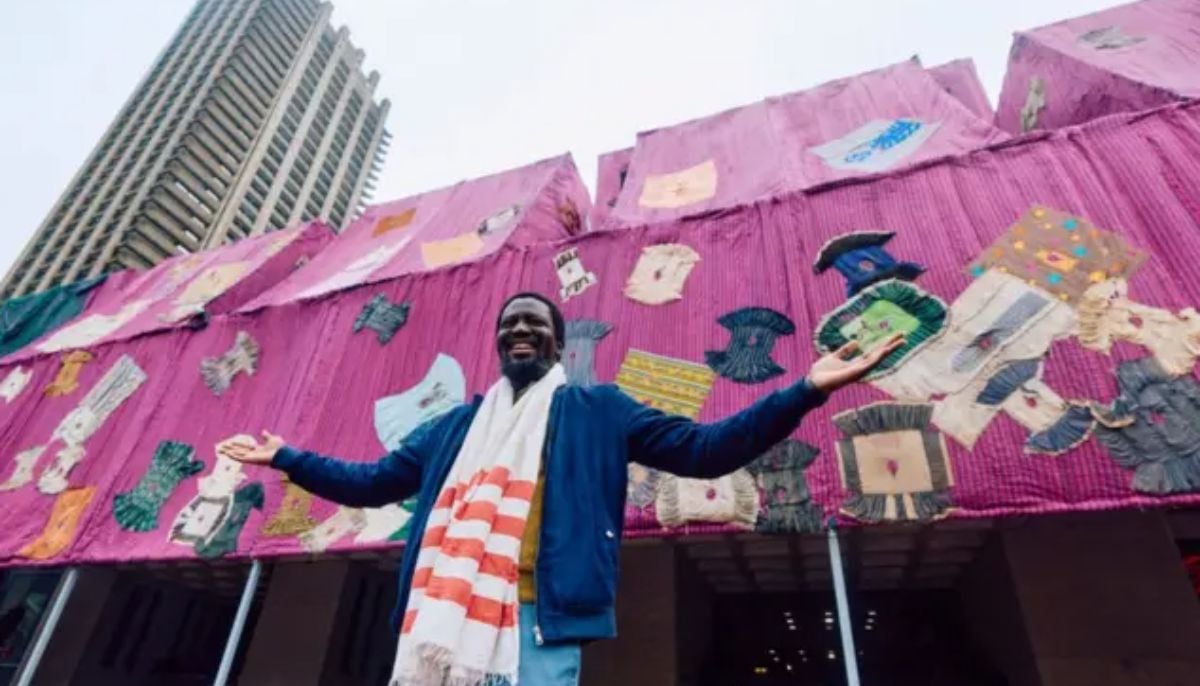
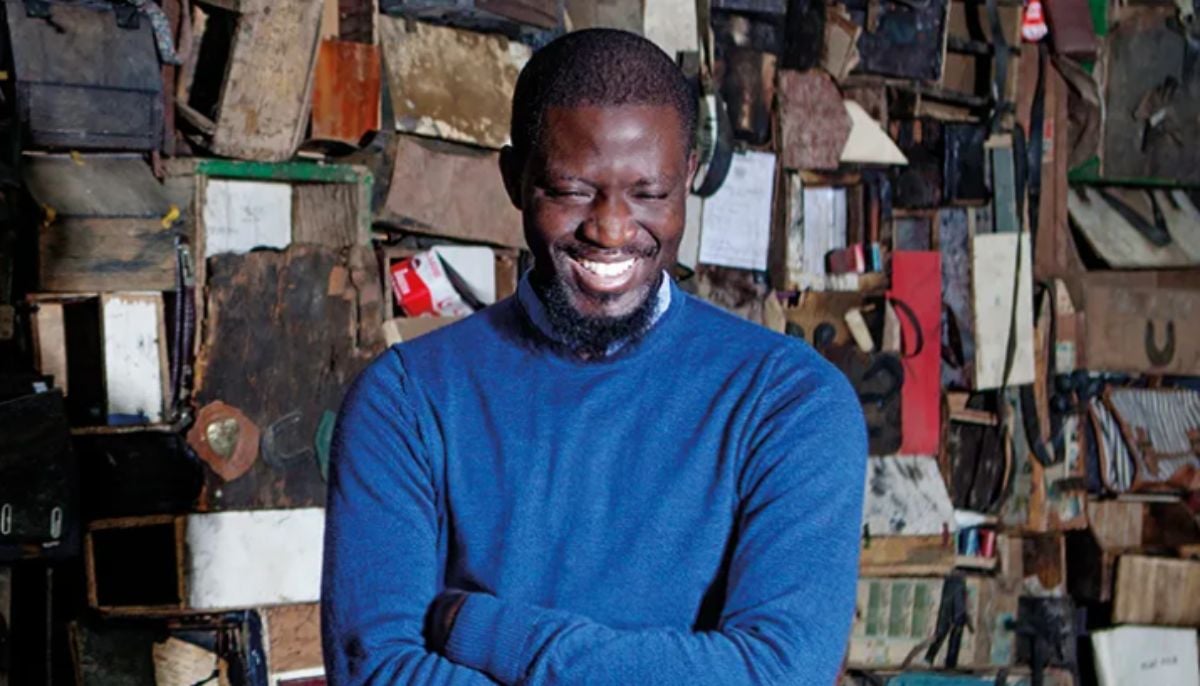
Ibrahim Maham has become the world’s first African artist to be named as the most influential figure in the art world, featuring in ArtReview’s annual power list.
The Ghanaian artist Mahama, whose work often uses found materials including textile remnants, topped the ranking of the contemporary art world’s most influential people and organizations as chosen by a global judging panel.
The artist expressed that he felt humbled to be named at the top of a list that he heard about from university times back in 2011, when he used to study at Kwame Nkrumah University of Science and Technology in Ghana, Africa.
Mahama said, “For me to be part of this, especially coming from a place like Ghana, which for many years was almost as if we were not even part of the discourse, is quite humbling.

One of the world’s most influential artists hoped his success could inspire younger artists in his country to “realize that they are part of the contemporary discourse and not just on the sideline.”
ArtReview’s editor-in-chief, Mark Rappolt, said the choice of Mahama’s artwork indicated that the seat of power was shifting in the world of art.

“I think you could also look at that as saying there’s a realignment of where global finance sits … I wouldn’t say that the art world is separate from those worlds. The MENA region has historically always been a bridge between east and west.” said Mark.
Mahama has been represented by the influential Apalazzo Gallery and White Cube galleries and his practice includes using old hospital beds, discarded train carriages, and other artifacts that he turns into art objects.
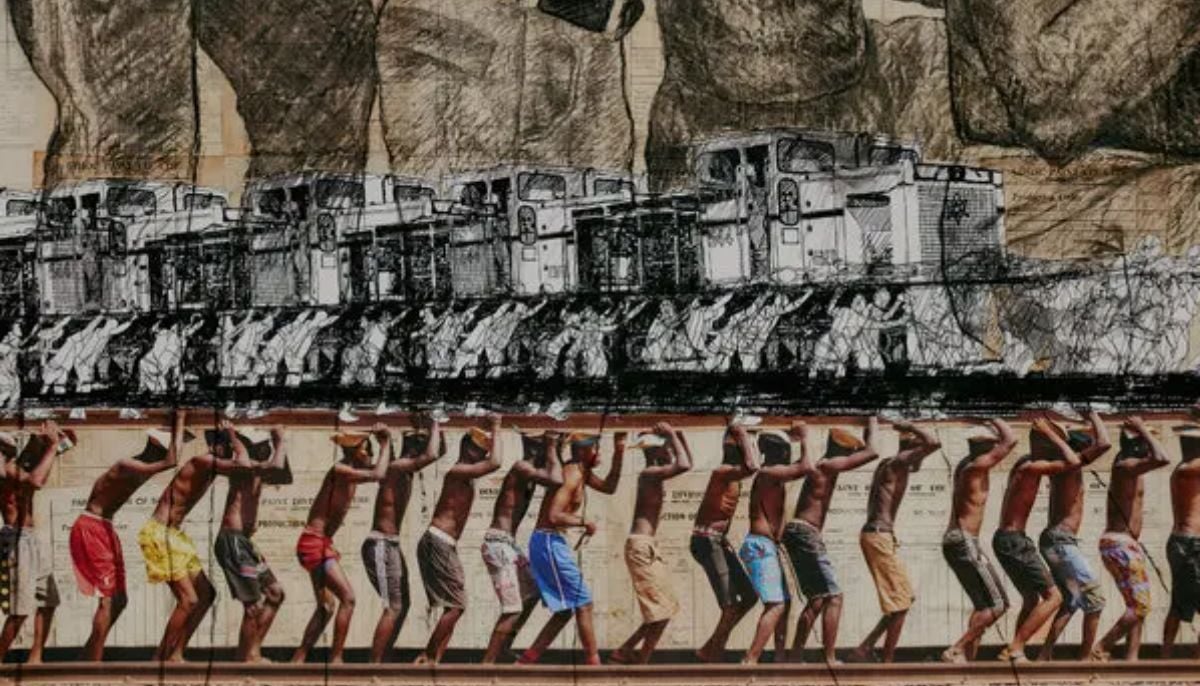
The Ghanaian contemporary artist is best known for his large-scale installations, sculptures, and architectural interventions that explore global trade, labor, commodification, economic inequality, migration, and socio-political legacies of colonialism in Africa.
Last year at the Edinburgh Festival, Mahama’s Songs About Roses, which focused on the rise and fall of the railway that the British government built in Ghana between 1898 and 1923, was described as being “as extraordinary as a great magic-realist novel”.
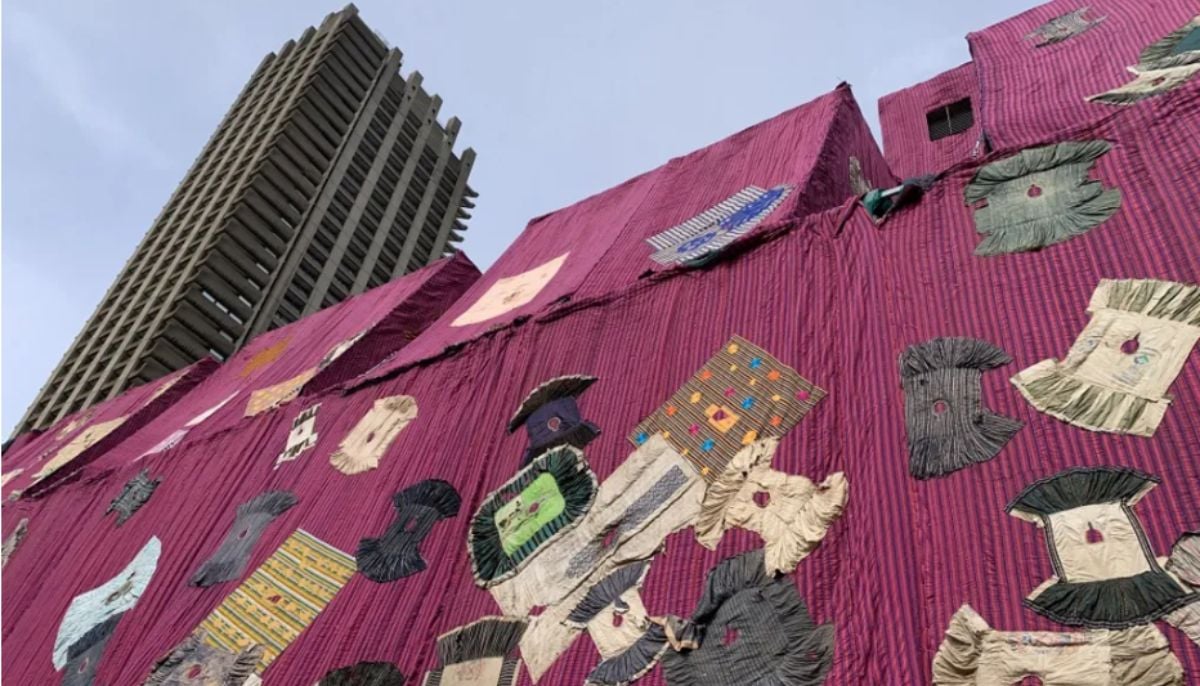
A few months before the Edinburgh show began, Mahama draped the 2000 sq ft Barbican Centre with bright pink fabric, which had been stitched together in a football field because of its exceptionally large size.
In 2019, Mahama opened the Savannah Centre for Contemporary Art in Tamale, a 900 sq. metre site that is an exhibition space, library, residency space, archive and studio.
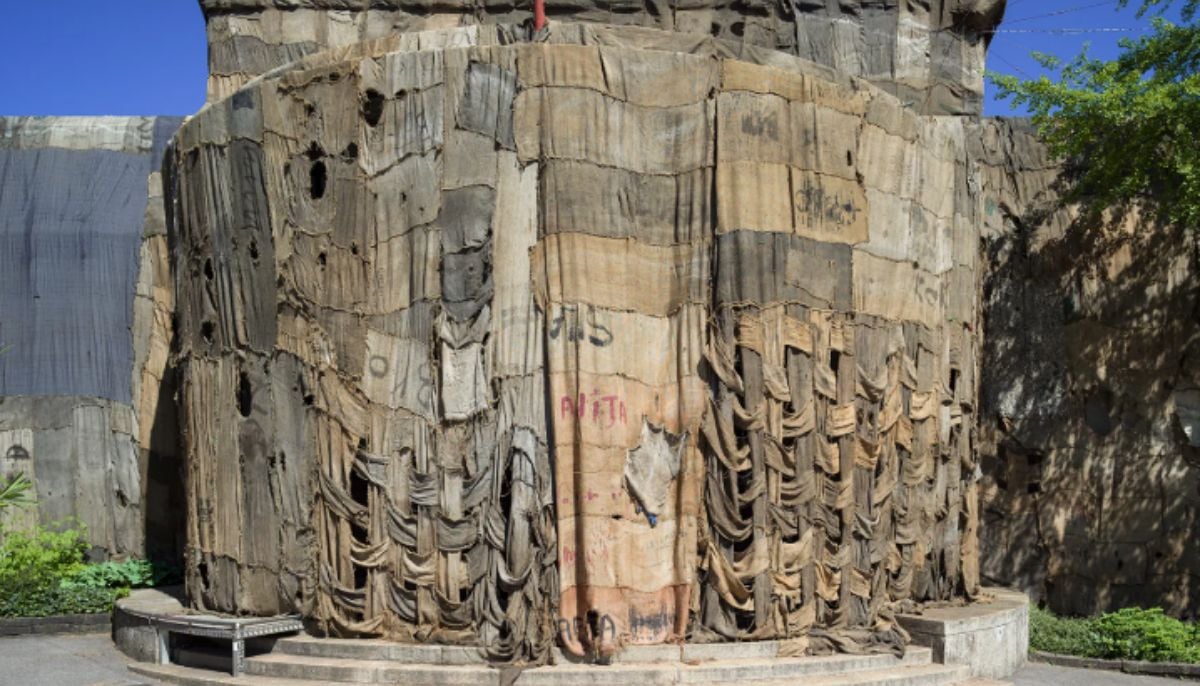
The ArtReview’s editor-in-chief said, many of the highest-ranking artists ran programmes in their local communities.
“Mahama is not only acting as the classic idea of the sole artist producing his own flashes of genius but also as a person who’s part of a community.”
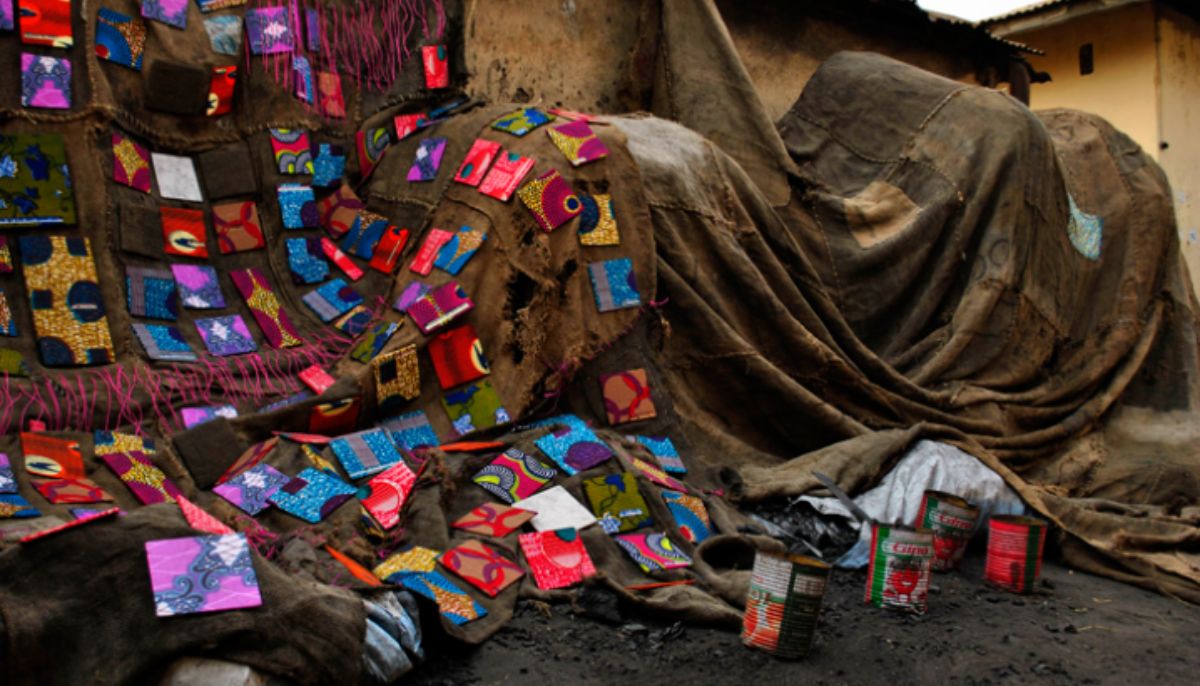
Additionally, the annual art power ranking had been evaluated after compiling artworks from all around the world, which had been running for 24 years.
The power list’s top 10 features several artists and curators from the Middle East and Africa.
1. Ibrahim Mahama, Africa
2. Sheikha Al-Mayassa bint Hamad bin Khalifa Al-Thani, Qatar
3. Sheikha Hoor al-Qasimi, UAE
4. Wael Shawky, Egypt
5. Ho Tzu Nyen, Singapore
6. Amy Sherald, America
7. Kerry James Marshall
8. Saidiya Hartman, UK
9. Forensic Architecture
10. Wolfgang Tillmans, Germany


