


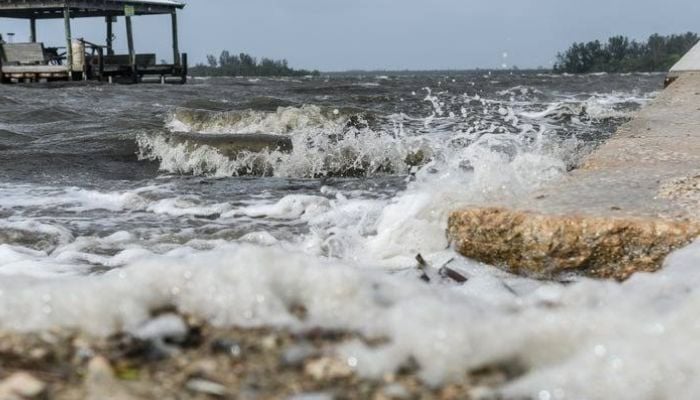
Hurricane Isaias has weakened to a post-tropical cyclone as Category 1 storm after making landfall in Florida as updated by the US National Hurricane Center.
The hurricane made landfall Friday night along the northern Gulf Coast of Florida near Destin as a Category 2 storm, the hurricane moved across the western Florida Panhandle.
After moving inland across Alabama toward the Tennessee Valley it downgraded to a post-tropical cyclone.
According to the NHC, it was located about 65 miles west-northwest of Panama City, carrying maximum sustained winds of 90 mph.

All hurricane warnings have been discontinued, though storm surge and tropical storm warnings remain active in parts of Florida and eastern Alabama.

As of Friday evening, the life-threatening storm surges up to 9 feet and flash flooding threatens coastal and inland regions. Hurricane-force winds extended up to 35 miles from the center, with tropical storm winds extended up to 205 miles.
Speaking about the impacts, Alabama’s emergency management agency said the hurricane battered trees and power lines therefore it is not advisable to travel in Houston County which is grappling with a flash flood warning.

It posted on X, “Due to the impacts of Hurricane Isaias, all Houston County roads are closed until further notice. These road closures will remain in effect until conditions are deemed safe for travel.”
Similarly, emergency evacuations were also conducted in Florida and Georgia. Mandatory evacuations were ordered in targeted areas, including coastal communities in Florida and non-residents or tourists in key Alabama counties.
Officials, including Senator Rick Scott urged immediate evacuations, telling residents in designated zones. “DO NOT WAIT! Get out NOW!”
Hundreds of thousands lost power across the Southeast, including 430,000 in Florida, 300,000 in Alabama, and ~40,000 in Georgia.
Hurricane Isaias is the first hurricane of the 2026 Atlantic season which formed with a delay due to El Nino conditions.
