


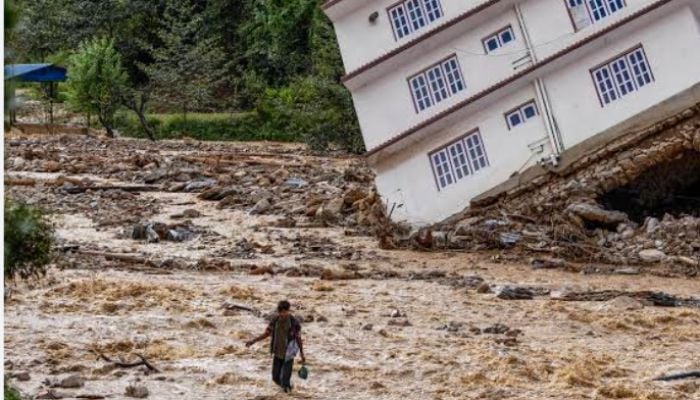
A powerful and sudden flash flood tore through northern Nepal’s mountainous Rasuwa district, destroying parts of local villages, sweeping away engineering and power project sites, and triggering a major emergency response.
The sudden deluge surged across the border from Tibet at approximately 9:15 a.m., catching communities off guard, with water levels reportedly reaching up to 10 meters in some areas.
Hydrological experts suspect the flood may have been triggered by a high-altitude Glacial Lake Outburst Flood (GLOF), although authorities have not yet confirmed the exact cause and are also investigating the possibility of a sudden cloudburst.

According to Reuters, the areas of Syapru Besi and Timure in Rasuwa, a mountainous district with a population of about 50,000, were severely affected. Officials urged residents living along the Bhote Koshi and Trishuli river corridors to evacuate to higher ground immediately.

Prime Minister Balendra Shah ordered the immediate mobilization of the Nepal Army, police, and specialized rescue teams to the affected areas. Authorities have also issued high-alert warnings as rescue operations continue.
The flooding has damaged local infrastructure and disrupted electricity supplies in the affected areas. No immediate estimates of casualties or property losses were available.

The disaster also highlights the broader economic and regional risks facing Himalayan infrastructure, with damage potentially affecting transit routes, cross-border trade, and vital hydroelectric projects as changing climate patterns contribute to glacier melt and increasingly extreme weather events.
