

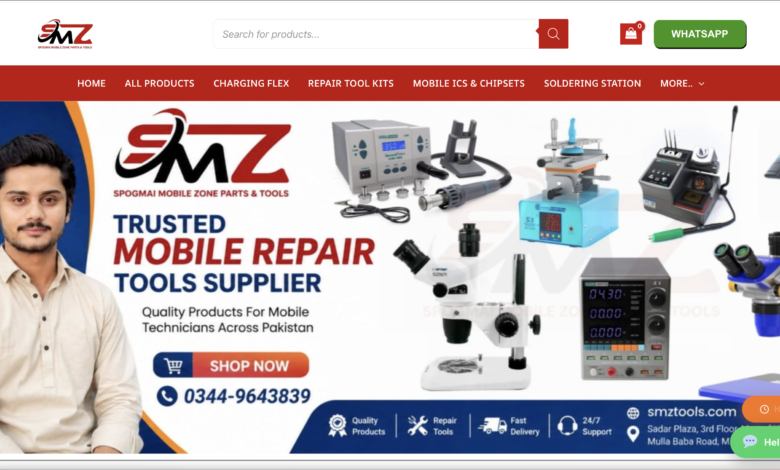
Mingora, Swat — In Pakistan’s fast-growing mobile repair economy, two closely linked businesses out of Mingora, Swat, are addressing the sector from opposite ends of the same problem: who trains the technicians, and who supplies them once they’re ready to work.
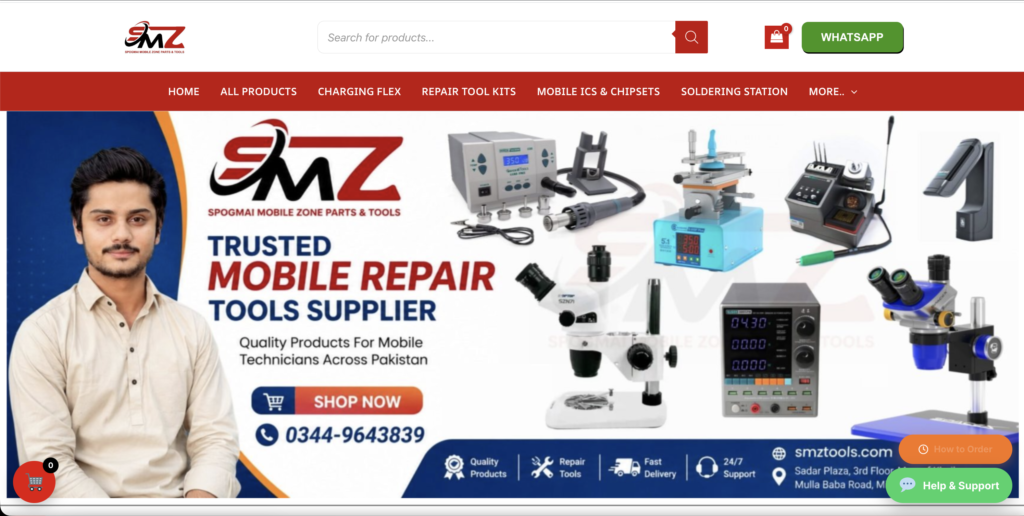
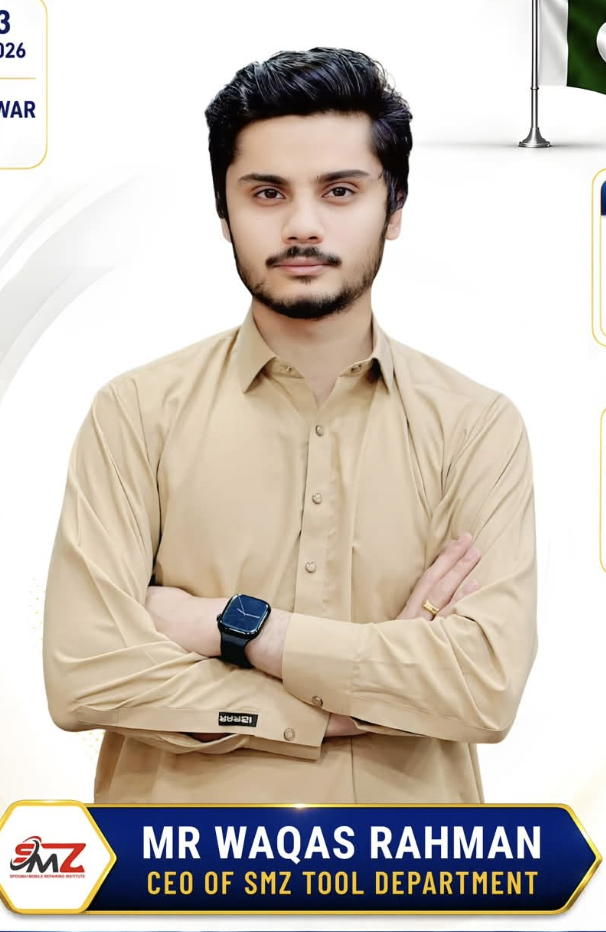
SMZ Institute, led by veteran trainer Sir Tahir Rehman, has spent nearly eight years training mobile repair technicians, with more than 7,000 students passing through its Level 1, 2, and 3 courses at branches in Swat, Lahore, Karachi, and Rawalpindi. Its sister company, SMZ Tools, led by CEO Waqas Rehman, supplies the parts, ICs, and equipment that graduates — and thousands of other technicians nationwide — rely on to actually do the work, serving more than 5,000 repair professionals across the country.
“They’re really two halves of the same idea,” Waqas Rehman said. “One side teaches people the skill. The other makes sure that once they have the skill, they can actually access the tools and parts to use it — without depending on a handful of big-city markets.”
For technicians in smaller cities and towns, that combination matters. Mobile repair has become an accessible entry point into self-employment for many young people across Pakistan, particularly in areas with limited formal job markets. But two things have historically held the trade back outside major cities: access to structured training, and access to genuine components and equipment.
SMZ Institute’s advanced, chip-level curriculum — covering everything from basic diagnostics to IC reballing and board-level repair — is designed to take students well beyond entry-level skills. Meanwhile, SMZ Tools’ catalog of thousands of products, from mobile ICs to soldering stations and microscopes, ships nationwide through its online store at smztools.com, with orders typically delivered within two to five business days.

Both businesses operate out of Mingora, a city better known for its scenic surroundings in the Swat Valley than for national supply chains or training networks — a detail local business observers say reflects a broader pattern of small-city entrepreneurship reaching national scale through digital ordering and online course delivery.

“We didn’t set out to build something in Swat that would serve people 1,000 kilometers away,” Tahir Rehman said. “But once the training was solid and the tools were reliable, distance stopped being the barrier it used to be.”
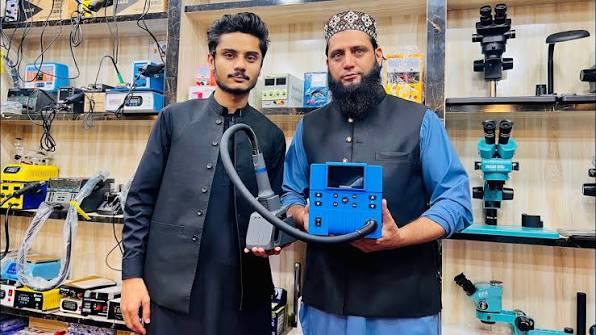
Together, the two ventures now represent one of the more established training-and-supply networks serving Pakistan’s mobile repair technicians, with plans on both sides to expand further into additional cities in the coming years.