


• Cost of running civil govt rises 16pc, crosses Rs1tr for first time
• Fiscal deficit shrinks to 2.6pc on the back of provincial surpluses, lower interest bill
• Defence spending up 18pc; primary surplus reaches record 2.9pc of GDP
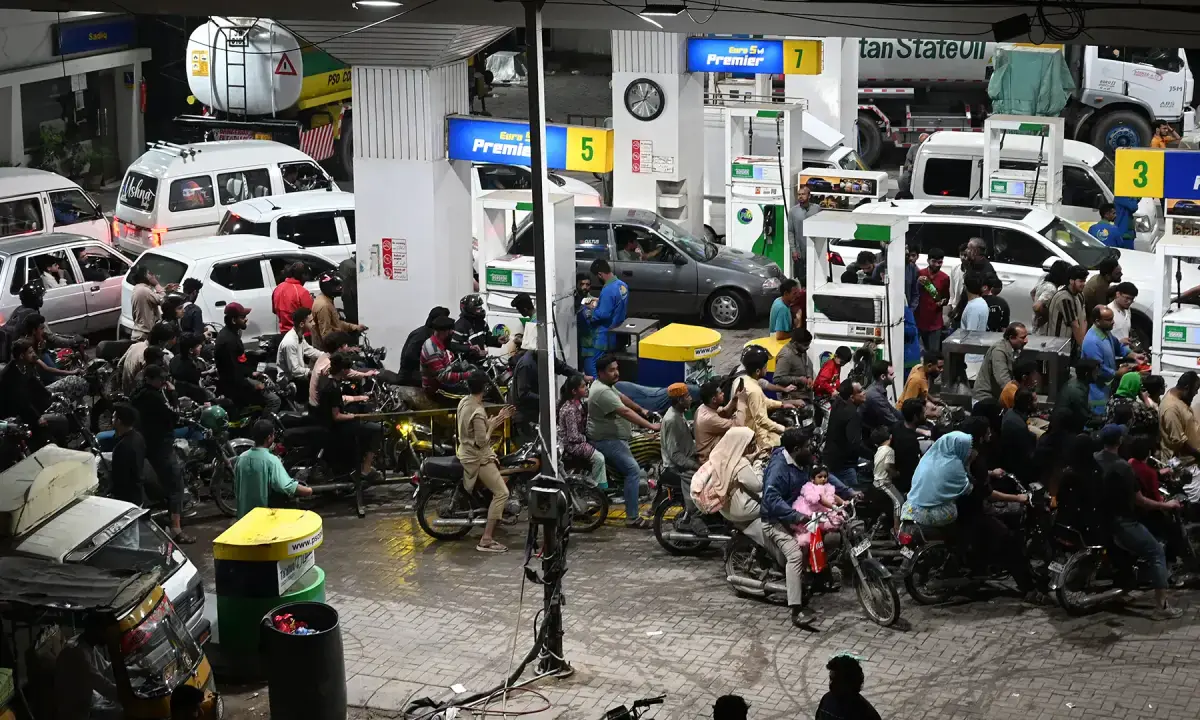
ISLAMABAD: With a record Rs1.567 trillion petroleum levy collection amid record consumer-end oil prices following US-Israel attacks on Iran, the cost of running the civil government rose 16 per cent in the fiscal year 2025-26 to cross Rs1tr for the first time despite restructuring and austerity measures, official data showed on Thursday.
At the same time, record cash surpluses from the provinces and a sharp fall in interest payments helped contain the fiscal deficit at 2.6pc of GDP — the lowest since FY03 for which comparable data is available on the Ministry of Finance website — while the primary surplus reached a historic 2.9pc of GDP.
In its annual report on fiscal operations for FY26, the Ministry of Finance reported that petroleum levy collection surged 29pc to Rs1.567tr from Rs1.22tr a year earlier. It also surpassed the original budget target of Rs1.468tr, which had subsequently been revised upward to Rs1.498tr as part of the FY27 budget exercise.

The Rs1.567tr petroleum levy did not include an undisclosed amount of customs duty and Rs26bn collected through the carbon levy. For the current fiscal year, the government is targeting an even higher Rs1.676tr in petroleum levy, besides Rs50bn through the climate levy on petroleum products.

Despite restructuring and austerity policies, expenditure on running the civil government increased by 16pc to Rs1.033tr from Rs892bn in FY25, breaching the Rs1tr mark for the first time and exceeding the Rs971bn budget estimate.
Defence expenditure also increased by 18pc to Rs2.588tr from Rs2.194tr a year earlier. However, it was only Rs38bn higher than the Rs2.55tr budget allocation despite additional requirements following Indian attacks.

Total revenue collection declined marginally to 15.6pc of GDP in FY26 from 15.7pc a year earlier. Federal Board of Revenue collection stood at Rs13.01tr, around 10pc short of target but almost 11pc higher than Rs11.74tr collected in FY25.
Despite the revenue shortfall, historically high provincial cash surpluses and a steep decline in interest payments enabled the government to sharply reduce the overall fiscal deficit.
The primary surplus — the difference between total revenues and expenditure excluding debt servicing — reached 2.9pc of GDP, the highest since the government began reporting the indicator in FY20.
The fiscal deficit had peaked at 8.9pc of GDP in FY19 before falling to 8.1pc and 7.1pc in the following two years. It rose again to 7.9pc in FY22 but has since declined amid successive IMF-backed fiscal tightening.
Meanwhile, the primary account remained in deficit until turning into a surplus of 0.9pc of GDP in FY24. It improved to 2.4pc the following year and further to 2.9pc in FY26.
Three major contributors to the fiscal improvement were record provincial cash surpluses of Rs1.45tr, petroleum levy collection of Rs1.567tr and a Rs1.939tr decline in interest payments.
The finance ministry reported that interest payments fell to Rs6.947tr, or 5.5pc of GDP, from Rs8.887tr, or 7.7pc of GDP, in FY2024-25 — a decline equivalent to 2.2pc of GDP in a single year.
Subsidies were also contained at Rs1.01tr, almost 22pc below Rs1.3tr in FY25, while development expenditure fell to Rs727bn from Rs786bn.
Mainly because of savings on interest payments following the easing of the policy rate from 22pc to 10pc, total expenditure declined to Rs23.09tr from Rs24.16tr in FY25.
As a result, total expenditure fell to 18.2pc of GDP from 21.1pc a year earlier. Current expenditure also declined to 16.3pc of GDP (Rs20.69tr) from 18.8pc (Rs21.5tr) in FY25. Defence expenditure, however, edged up to 2pc of GDP from 1.9pc.
The four provinces posted a 57pc increase in their combined cash surplus to the Centre, taking it to a record Rs1.45tr from Rs921bn in FY25 — an increase of Rs529bn in a single year. They had committed a surplus of Rs1.38tr under the national fiscal pact.
Punjab alone provided Rs915bn — almost equivalent to the combined Rs921bn surplus of all four provinces a year earlier and 163pc higher than its Rs348bn contribution in FY25. Sindh followed with a 24pc increase in its surplus to Rs350bn from Rs283bn. PTI-led Khyber Pakhtunkhwa provided Rs165bn, around 6pc lower than Rs176bn in FY25, while Balochistan posted a surplus of just Rs20.74bn.
On the accounting side, the government reported a record statistical discrepancy of Rs853bn.
The discrepancy stood at Rs329bn in FY25 and had drawn concern from the IMF, which had suggested a technical mission that the government declined.
The finance ministry attributed Rs448bn of the discrepancy to under-reporting at the federal level and Rs405bn to provinces.
It said the federal discrepancy stemmed from “variations on account of time lag in reporting and book adjustments amongst SBP, FBR and EAD data”. At the provincial level, Rs266bn of the discrepancy was attributed to increases in commercial bank deposits, while KP and Balochistan accounted for Rs95bn and Rs72bn, respectively, also largely due to movements in bank deposits.
Published in Dawn, August 14th, 2026
