





• 14 countries, including Pakistan, Turkiye, Egypt, back joint statement
• Dar, Saudi counterpart discuss Red Sea, Bab al-Mandeb situation
• Sisi warns of serious escalation after port strike in Egypt
• Iran says US strikes killed civilians, IRGC members
• Claims attacks on US-linked targets in Jordan, Kuwait, Bahrain
• US denies Iranian claim of damage to F-35 jets in Jordan
RIYADH: Saudi Arabia on Thursday unveiled plans for a multinational maritime defence coalition to protect shipping and energy supply routes in the Red Sea region, as the Middle East war spread across new fronts with US-Saudi strikes on Iran-aligned groups in Iraq, Iranian attacks on US-linked targets in Jordan, Kuwait and Bahrain, and a drone strike on gas vessels at Egypt’s Damietta port.
The Saudi defence ministry said chiefs of staff and representatives from 43 countries, along with the European Union delegation, attended the meeting out of 51 countries and organisations invited. Saudi Arabia would serve as the coalition’s founding and leading state and host its permanent headquarters.
The announcement came as the United States said it struck Iran’s Revolutionary Guards’ military command centres and drone facilities after Tehran fired at US forces in the region. Iran said the US strikes killed civilians and Guards members, while its forces claimed attacks on US assets in Jordan, Kuwait and Bahrain.
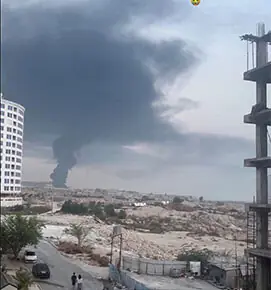
At the same time, Egypt said an initial investigation found that an unidentified drone caused a fire on two vessels at the Mediterranean port of Damietta on Wednesday, and President Abdel Fattah al-Sisi warned that the Middle East conflict was facing a serious escalation after the strike.

The Saudi ministry said the proposed coalition would strengthen maritime security, safeguard freedom of navigation, secure international trade routes and energy supply lines, and protect shared maritime interests in the Bab al-Mandeb Strait, the Red Sea and the Gulf of Aden.
Participants attended either in person or through videoconference, reflecting growing international interest in strengthening maritime defence cooperation and unifying efforts to address shared threats to international maritime routes, the ministry said.
Participants discussed increasing threats to maritime security, including attacks on commercial vessels, energy tankers and maritime infrastructure and the risks these posed to the safety of navigation, global supply chains and the international economy.
They also reviewed the draft charter of the Multinational Maritime Defence Coalition, its reference documents, organisational structure, command and control arrangements, operating mechanisms and future work plan.
Saudi Arabia said the coalition was an open international defence initiative and welcomed all countries that shared its objectives and principles.
As an outcome of the meeting, 14 participating countries issued a joint statement supporting the coalition and welcoming the consensus reached on its foundational arrangements. The signatories were Saudi Arabia, Kuwait, Bahrain, Qatar, Pakistan, Turkiye, Egypt, Jordan, Yemen, Bangladesh, Nigeria, Sudan, Djibouti and Somalia.
Among the six Gulf Arab states, Oman and the United Arab Emirates were not listed among the countries backing the statement.
Separately, Deputy Prime Minister and Foreign Minister Ishaq Dar exchanged views on regional and international developments, including the situation in the Red Sea and Bab al-Mandeb, with Saudi Foreign Minister Prince Faisal bin Farhan, the Foreign Office said.
The two foreign ministers also welcomed Jordan’s proposal to convene a meeting of Arab and Islamic countries to discuss the situation in Palestine, particularly East Jerusalem, the Foreign Office said in a post on X.
Red Sea tensions
Yemen’s Houthi rebels said earlier this month that they would impose a naval blockade on Saudi Arabia in the Red Sea and have since claimed a series of attacks on Saudi-linked shipping.
Regional sources with knowledge of the matter told Reuters that Houthis were also considering imposing fees on commercial ships sailing through the southern Red Sea. No timeframe was given for implementation.
Saudi Arabia has responded with air strikes on what it said were Houthi military facilities in Yemen’s Hodeidah used to threaten commercial shipping.
On Wednesday, in a first in the five-month war, Saudi Arabia publicly joined strikes alongside US forces, targeting Iran-aligned groups in eastern Iraq in retaliation for drone attacks on Saudi oil targets launched from Iraq.
Houthis also carried out the attacks on Saudi Arabia from Iraqi territory in coordination with Iraqi groups, according to assessments by Saudi Arabia and regional partners. The latest strikes in Iraq and Egypt threatened to draw more Middle Eastern countries into the conflict.
Iran targets US-linked sites
Iranian state media, quoting the Guards, said US strikes killed three civilians and wounded two children on Qeshm Island, while three Guards members were killed in Zanjan province.
The governor of Khuzestan province, also quoted by state media, said two student dormitory complexes in the southwestern city of Ahvaz were damaged in the attacks.
The Islamic Revolutionary Guard Corps said it struck the Azraq military base in Jordan in response, attacking US F-35 fighter jets.
The US military denied the claim, saying no US aircraft had been destroyed or damaged. “All missiles and drones were intercepted, or failed to reach targeted areas,” US Central Command said.
US bases in Jordan have lately become primary Iranian targets. Jordan’s armed forces said earlier on Thursday they had intercepted five Iranian missiles.
The Guards also struck US assets at Ali Al Salem Air Base in Kuwait, according to Iran’s semi-official Tasnim news agency.
An Iranian attack hit a building owned by a Chinese company in northern Kuwait, killing a worker and causing significant damage, Kuwait’s defence ministry said.
Iran’s military also claimed strikes on power generators, navigation systems and administrative and support buildings at Bahrain’s Sheikh Isa Airbase with Arash drones, state broadcaster Press TV reported.
The United States also issued new Iran-related sanctions targeting global networks supporting Mahan Air, the Iranian carrier Washington says transports Revolutionary Guards personnel as well as weapons and drones.
The US Treasury designated six entities and individuals in China, India, Russia and Iran for acting as sales agents and support networks for the US- and EU-sanctioned airline, the department said in a statement.
Meanwhile, Senate Republicans blocked an effort to limit Trump’s ability to continue military action against Iran, Al Jazeera reported. The measure would have required Trump to end US hostilities unless authorised by Congress. The Senate voted 50-49 against advancing the measure.
Egypt port strike
A drone strike on gas vessels in Egypt’s Mediterranean port of Damietta signalled a potential new front in the US-Iran war, raising the prospect of threats to navigation through the Suez Canal.
Meanwhile, Iran said on Wednesday that it struck three tankers attempting to transit through the Strait of Hormuz along an unauthorised route.
However, a QatarEnergy-controlled liquefied natural gas tanker exited the strait overnight, the first such vessel leaving the waterway since July 11.
Iranian news agency Fars said Tehran had given its permission for the tanker to pass.
Published in Dawn, July 31st, 2026


