



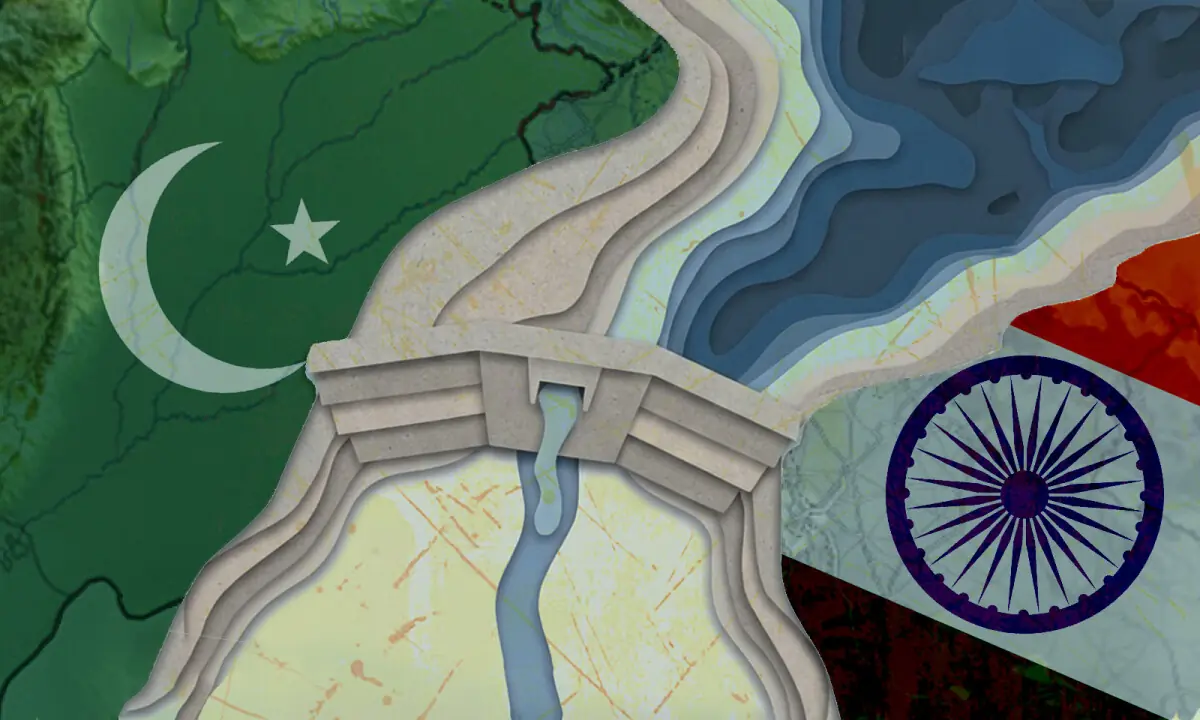
I did not expect to leave Islamabad thinking about the future of international law. I went to speak. I came home with something harder to shake: a conviction that what is happening on the Indus river is not just a bilateral water dispute between two nuclear-armed neighbours. It is a test of whether the global architecture of treaty-based cooperation can survive the moment we are living in.
On June 30, I had the honour of speaking at the Institute of Regional Studies seminar on the Indus Waters Treaty, held at the Jinnah Convention Centre in Islamabad. The high-level gathering brought together scholars, practitioners, diplomats, and policymakers from Pakistan and around the world. The expertise assembled in the room was formidable, and the sense of urgency surrounding the issue was unmistakable.
My panel was asked to examine treaty-based conflict prevention, specifically, how the institutional mechanisms embedded in international river agreements keep water from becoming a cause of war. I came to that question as a policy and diplomacy strategist, not a water lawyer. But sometimes an outside eye sees the architecture most clearly.
And what I saw, looking across the Danube, the Mekong and the Nile before turning to the Indus, was an alarming pattern. Across those basins, water does not cause conflict. The absence of institutions does. That is not a rhetorical flourish. It is what the empirical record shows.

(Data) sharing is caring
The International Commission for the Protection of the Danube River spans 15 nations, including former Cold War adversaries. Its formal dispute settlement mechanism has never once had to be invoked because its technical working groups meet regularly, share data and resolve differences before they climb to the political level.

The Mekong River Commission’s experience offers the inverse lesson. Scholars have found explicitly that withholding hydrological data can itself incite regional conflict. Control information, and you control the conditions for crisis.
The Indus Waters Treaty reflects that lesson. Signed in 1960 after years of World Bank-mediated negotiations, it gave India and Pakistan not just a water allocation framework but an institution, the Permanent Indus Commission, staffed by senior engineers with diplomatic standing, mandated to meet regularly, empowered to conduct joint inspections, and backed by a tiered dispute resolution ladder running from Commission to Neutral Expert to the Permanent Court of Arbitration.

That architecture has survived three wars. It has outlasted governments, generals, and crises that should by any measure have broken it. It is, by global standards, one of the most stress-tested bilateral water institutions ever built which is precisely why what is happening now is so serious. India’s declaration in April 2025 that it was placing the Treaty in abeyance, following the Pahalgam terror attack, has no basis in international water law.
The 1997 UN Watercourses Convention, which codifies customary international law binding on all states regardless of signature, is unambiguous. Treaties governing shared watercourses carry obligations of equitable use, prior notification, data exchange, and good faith performance that do not dissolve on unilateral announcement.
The Permanent Court of Arbitration confirmed this in its June 2025 Supplemental Award, finding that India’s declaration does not deprive the tribunal of jurisdiction. An arbitral award does not disappear because a party calls it illegal.
In good faith
Beyond the Indus, pacta sunt servanda — treaties must be performed in good faith — is not a polite aspiration. It is the load-bearing wall of the entire international legal order. When it is eroded in one place, the damage radiates outward. Every shared river basin in the world, and there are 310 of them, is watching.
Yet what moved me most in Islamabad was not the legal argument, though it is airtight. It was the people making it. The Pakistani participants in that seminar included scholars who have spent careers on this; practitioners who understand what reduced water flows mean at the village level, policymakers who are navigating an impossible situation with discipline and rigour.
They brought a quality of commitment to that room that I have rarely encountered. They are not arguing from grievance but from law, from evidence, and from the knowledge that 240 million people’s livelihoods depend on getting this right.
That is why the international community needs to be in that room with them, figuratively if not literally. The Permanent Indus Commission must be allowed to meet. Data on flow variations must be shared. The arbitral process must be respected.
These are not diplomatic requests. They are legal obligations that underpin a framework the world spent decades building.
I came to Islamabad to speak about institutional mechanisms. I left understanding, more deeply than before, why those mechanisms exist. They exist because human beings, at their best, decided that some things were too important to be left to the politics of the moment. Water is one of them.
The Indus Waters Treaty must not be allowed to fail. Not for Pakistan alone, though the stakes for Pakistan are existential, but for every nation that has ever signed an agreement and expected the other party to honour it.


