



• With University Road choked by traffic, other access roads are also plagued by excavation work, bottlenecks
• Neighbourhood streets are marked by broken surfaces, persistent dust and years of neglect
KARACHI: Three major roads provide access to Gulistan-i-Jauhar, yet hardly any of them can now be described as a fully functional artery.
Although the locality is regarded as one of Karachi’s relatively upper-middle-class neighbourhoods and continues to expand with new residential and commercial development, many of its blocks, which have been fully developed for well over a decade, present a striking picture of neglect.
Instead of reflecting the area’s continued growth, many of its main roads and internal streets remain scarred by broken surfaces, deep potholes and years of neglect, turning even routine journeys into an exhausting experience for residents.

For several years, residents of Gulistan-i-Jauhar have endured severe traffic congestion on University Road owing to the construction of the Bus Rapid Transit (BRT) Red Line project. Rather than easing commuters’ difficulties, the prolonged construction has only compounded their daily hardships.

With University Road already choked by traffic, commuters increasingly rely on neighbourhoods’ other access roads. However, these routes are themselves plagued by excavation work, damaged carriageways and bottlenecks, making travel to and from the locality equally frustrating.
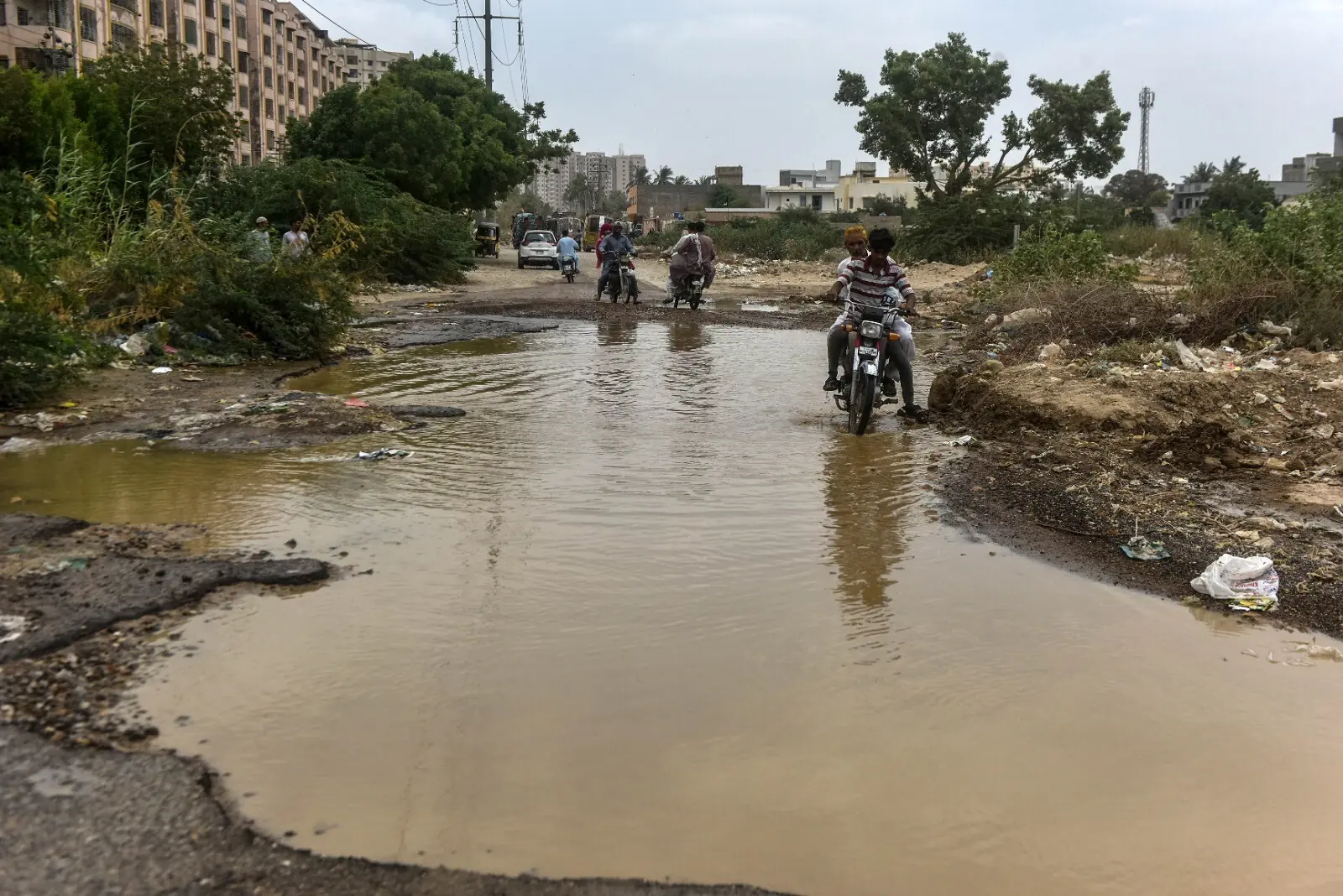
Pehlwan Goth Road

One of the locality’s principal access routes is Pehlwan Goth Road, which serves as a gateway for thousands of residents. Yet travelling along this road has become an arduous experience.
Commuters travelling from Sharea Faisal or Jinnah International Airport towards Blocks 7, 8, 9, 11 and 12 often see what should be a 10-minute journey stretch to between 30 and 40 minutes because of the road’s deteriorated condition. During rush hours, navigating this route can become a slow and time-consuming exercise. A visit to the road by Dawn found that the left-hand side of the dual carriageway between Habib University and Race Course Road has been excavated over a considerable distance for the installation of sewerage and water supply pipelines, significantly reducing the width of the road.
Further ahead, where a graveyard is located, the carriageway becomes narrow to such an extent that only one vehicle can pass at a time.
The situation remains the same up to the Gulistan-i-Jauhar police station. Beyond that point, however, motorists encounter an entirely different set of challenges. The road surface is so badly damaged that vehicles are forced to crawl over a succession of potholes and uneven patches. Unless motorists reduce their speed to around five kilometres per hour, passengers are subjected to continuous jolts throughout the journey.
Outside the PSO filling station, one stretch of the road has become completely impassable after being damaged by large potholes, excavation work for a new sewer line and stagnant water. Pools of dirty water, thick mud and a badly broken carriageway have rendered the section virtually unusable, forcing motorists to manoeuvre carefully around the damaged stretch.
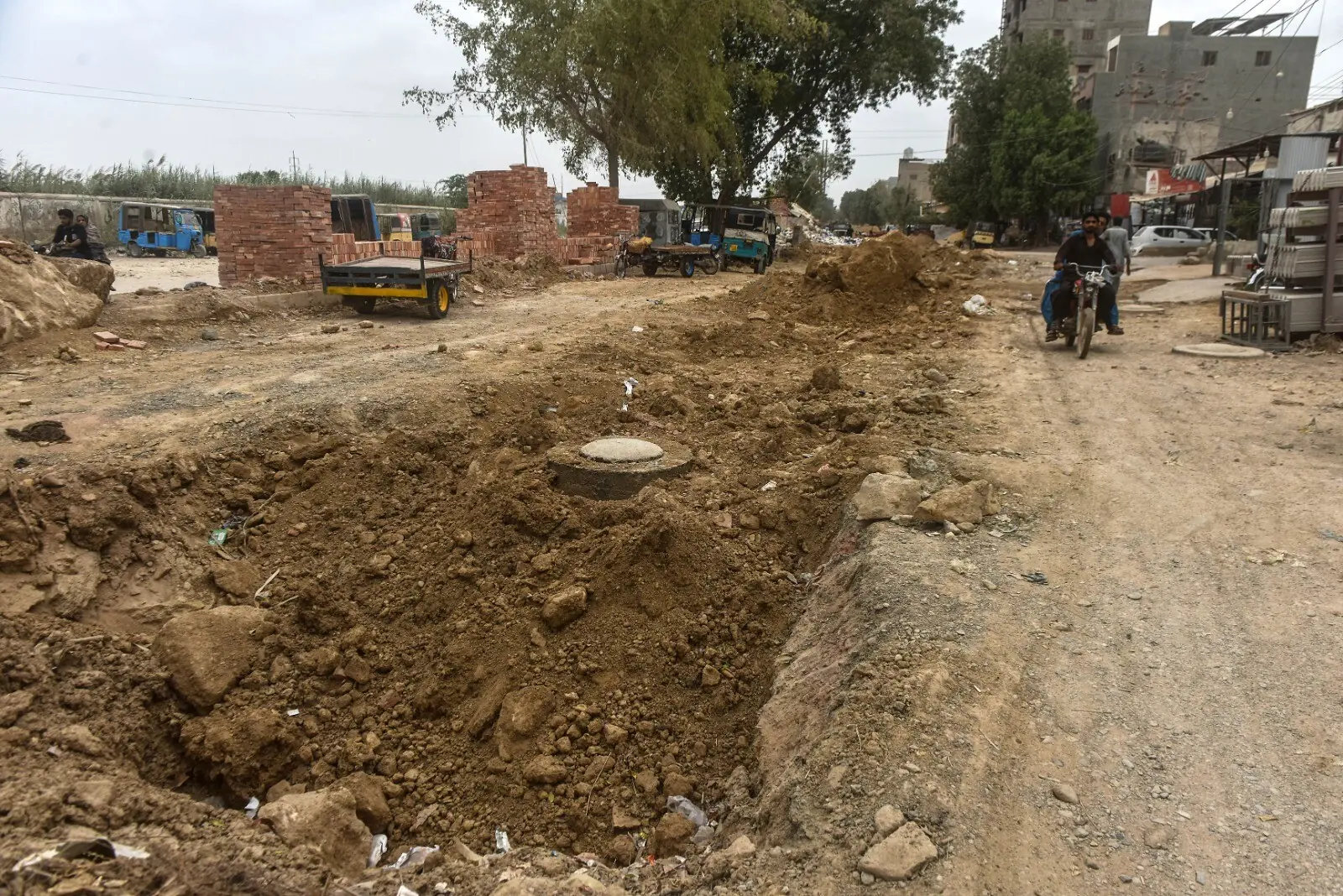
Speaking to Dawn, a motorcyclist recalled that only a few days earlier he had been travelling home through Pehlwan Goth Road at night when his motorcycle plunged into a deep pothole.
“The pothole was completely hidden beneath stagnant water,” he said. “I had no idea it was there until my motorcycle suddenly went into it.”
During its visit, Dawn also observed a rickshaw driver struggling to negotiate one particularly damaged section. Reluctant to move forward because of the deep potholes and accumulated water, he proceeded only after carefully assessing the road ahead. Even then, it took him several minutes to cross the short stretch, driving with extreme caution to protect both his vehicle and the passengers on board.
Johar Chowrangi Road
Johar Chowrangi Road, another major access route into Gulistan-i-Jauhar, is in equally poor condition.
Motorists travelling from Sharea Faisal towards Johar Blocks 2 and 3 are required to pass through Johar Chowrangi Road and then either Munawar Chowrangi or Kamran Chowrangi. However, construction of the underpass there has left this route badly damaged as well.
The stretch from Darul Sehat Hospital to Afnan Duplex is riddled with broken patches and uneven surfaces, forcing motorists to slow down considerably.
Nevertheless, commuters continue to use it out of necessity, as the only practical alternative is University Road, whose traffic woes require little introduction.
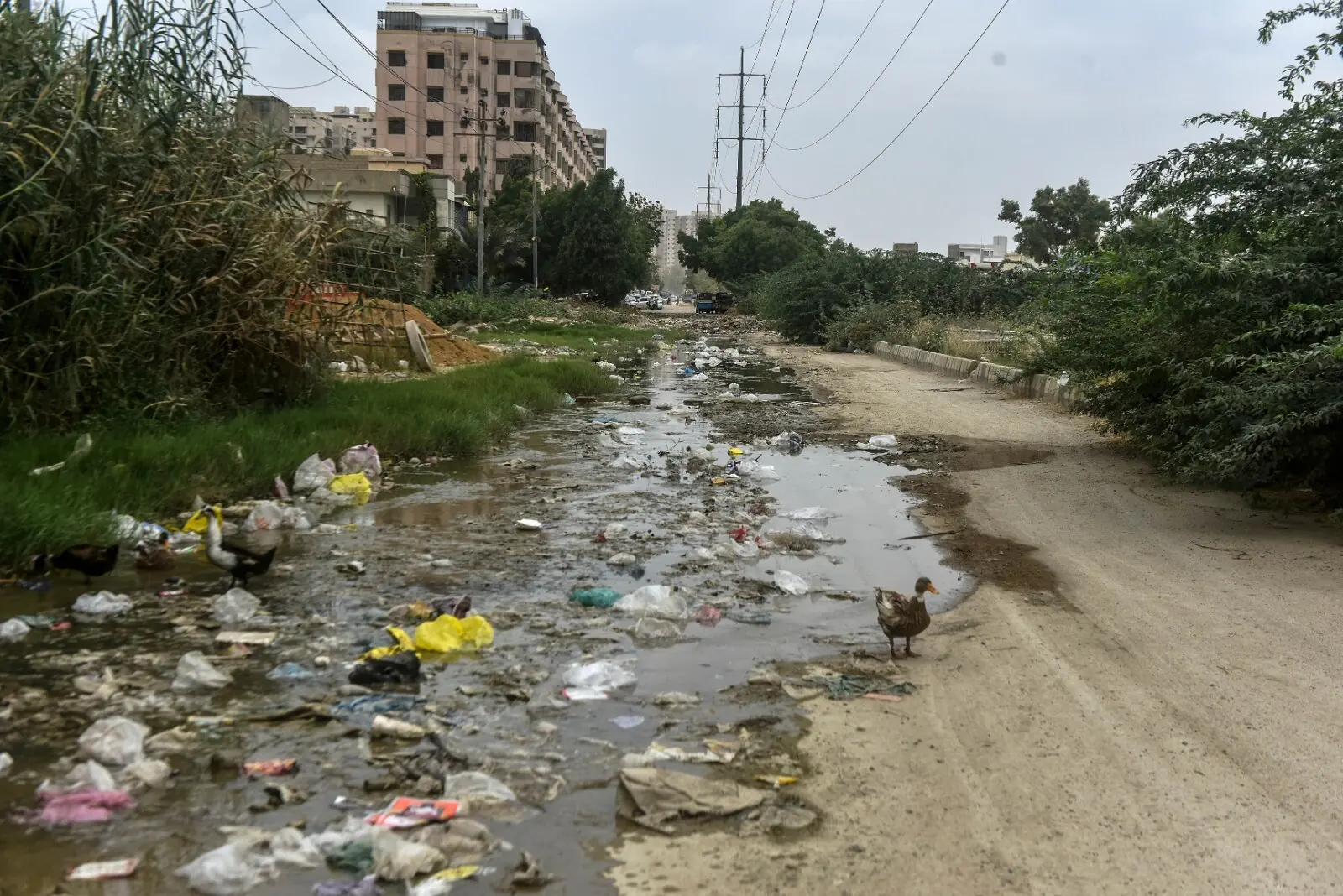
Internal streets
The poor condition of the main roads is mirrored within the neighbourhood itself. A visit to Blocks 1, 2, 3 and 3-A showed that many internal streets have also fallen into disrepair, making even short journeys unnecessarily slow and uncomfortable.
Ibrahim Street, which links Johar Hill View Street with Block 1 and ascends from the lower ground towards the hillside, is badly damaged from about the halfway point. Vehicles climbing towards Hill View are forced to slow sharply upon reaching the broken section.
Further uphill, Hill Top Street, which connects with Siddiqui Street, is also in an advanced state of deterioration, making even short journeys unnecessarily difficult.
Similarly, Siddiqui Street, situated between Blocks 2 and 3, is riddled with potholes and uneven surfaces. Residents who use the road daily are compelled to negotiate its rough carriageway at slow speeds.
In Block 3-A, most of the streets surrounding Steep Hill Drive and the locality around Anwar-i-Attar Mosque are also riddled with potholes and broken surfaces, forcing motorists to drive cautiously at slow speeds.
Dust adds to commuters’ misery
Apart from the damaged roads, commuters face another persistent problem: dust. A common feature shared by all three principal roads is the persistent dust and loose soil generated by the ongoing construction and damaged road surfaces.
While those travelling in private cars can have some protection, motorcyclists and rickshaw passengers are left covered in dust within minutes, often finding it difficult to breathe comfortably during the journey.
Residents speak out
Residents say that while repair work has finally begun on some roads, the journey remains a source of frustration.
Outside Al-Safa Super Market, a young resident said that after years of waiting, work on the road had finally begun.
“I only hope it is completed by 2027 or 2028,” he remarked.
An overseas Pakistani residing in Block 3-A said that when he returned to Pakistan a year ago, the street outside his home had already been broken.
“A year has passed,” he said, “yet there is still no visible sign that repairs are imminent”.
Residents also pointed out that although the inauguration of the Pehlwan Goth Road rehabilitation and repair project took place in March, they will continue to endure daily hardship until construction is completed.
They urged the authorities to expedite not only work on Pehlwan Goth Road but also the ongoing construction along the routes leading through Munawar Chowrangi and Kamran Chowrangi, arguing that any further delays continue to impose an unnecessary burden on thousands of commuters.
Published in Dawn, July 27th, 2026
