

At OIC moot on women, Azam Tarar says men’s ‘active engagement’ needed to promote equality – Pakistan



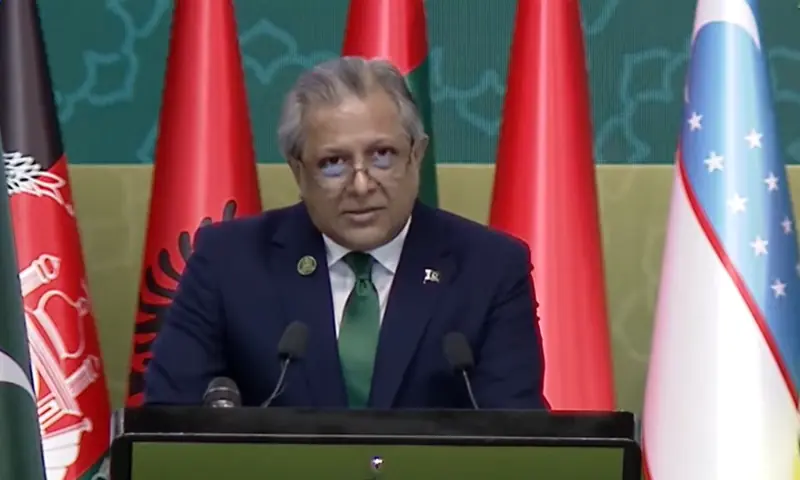
Law and Human Rights Minister Azam Nazeer Tarar on Monday stressed that “active engagement” of men and boys was needed to promote equality as he addressed a conference on women’s empowerment in Islamabad.
Tarar was speaking on the second and final day of the Organisation of Islamic Cooperation’s (OIC) 9th Ministerial Conference on Women, which Pakistan is hosting. Delegates from 57 OIC member states gathered on Sunday to hold technical-level meetings.
Addressing the moot as the chair on Monday, Tarar affirmed that Pakistan continued to strengthen its legal policy and institutional framework to “advance the rights, opportunities and leadership of women”.
He added, “Lasting progress cannot be achieved by women alone; real and sustainable change requires the active engagement of men and boys as partners in promoting equality, respect and shared responsibility.”
The minister stressed that building inclusive societies was a “collective endeavour that demands the commitment of every institution and every citizen”.

“For Pakistan, empowerment of women is not simply a policy objective; it is a national priority enshrined in our Constitution, inspired by our faith and essential to our future,” he said.
Tarar said Pakistan was “expanding women’s leadership, promoting financial inclusion and entrepreneurship, bridging the digital divide, strengthening access to justice, and creating safe, more inclusive workplaces” through the National Gender Policy Framework, Vision 2025 and the Prime Minister’s Women Empowerment Package.

Speaking about Pakistan’s role as the chair for the OIC conference, he said Islamabad does not regard it as a position of prestige but rather as a “responsibility to listen carefully, build consensus and help transform our shared aspirations into practical action that improves the lives of women across the Islamic world”.
He observed that the true success of the conference would not be measured by the declarations adopted but by the “opportunities we create after we return home”.
The minister noted that women across the OIC countries were transforming economies, advancing scientific progress, strengthening institutions, leading businesses, serving in public offices and contributing to peace and humanitarian efforts.
“Their achievements continue to shape stronger families, more resilient communities and more prosperous nations,” he said.
“Yet, we also recognise that millions of women and girls continue to face barriers that restrict their opportunities and limit their ability to contribute fully to national development,” Tarar added.
He emphasised, “Our responsibility is not simply to acknowledge these realities. It is to change them.”
He further said that no nation could “fully realise its potential while half of its population is denied equal opportunity to learn, work, innovate and lead”.
“Our responsibility is not to define their potential. It is to remove the barriers that prevent it from being realised,” the rights minister said.
He also stressed that the digital future must be a bridge to inclusion, and not a barrier for women.
On collaboration among the OIC states, Tarar said the countries could accelerate their progress by learning from one another, sharing successful experiences and strengthening institutional partnership.
“OIC provides a unique platform to translate these aspirations into collective action,” he remarked.
More to follow
