



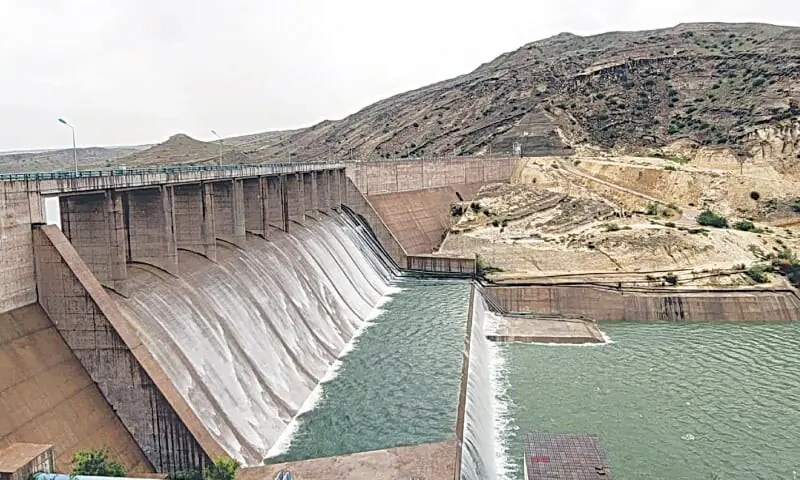
• Water, hydropower projects may get only Rs179bn in PSDP
• Officials say at least Rs500bn is needed; warn low allocation may slow major dam, power projects
• Ex-Wapda official fears Diamer-Bhasha, Dasu may miss timelines
• Wapda says eight mega projects are under construction, expected to double hydel generation by 2030
THE country’s persistent failure to invest adequately in water storage and hydropower infrastructure has once again come into focus, as the government is expected to earmark only Rs179 billion under the proposed Public Sector Development Programme (PSDP) 2026-27 for a sector considered critical to the nation’s water, food and energy security.
The proposed allocation has raised concerns over the pace of work on major ongoing hydropower projects, reservoirs and flood mitigation schemes at a time when the country is struggling with recurring floods, shrinking per capita water availability and high electricity costs.
Officials and experts say accelerated investment in water infrastructure is essential for managing the impact of climate change and producing clean, reliable and low-cost electricity needed for sustainable economic growth.

They argue that the country needs at least Rs500bn to speed up four major ongoing hydropower projects and start civil work on new water storage projects, especially in view of concerns over upstream water developments by India.

“At a time when our country faces mounting water scarcity and growing need for affordable and clean energy, the water and power sectors appear to have received less attention in public investment priorities, with development allocations falling short of the resources required for the timely completion of critical ongoing projects and the launch of new water infrastructure schemes,” a senior official of the Water and Power Development Authority (Wapda) said.
The official, who requested anonymity, said the proposed allocation of Rs179bn would be insufficient for multibillion-dollar dams and hydropower projects already losing their required fast-track pace due to meagre funding of around Rs106bn under the PSDP 2025-26.

“What will we do with this limited allocation for such major ongoing projects?” the official asked, adding that the government should place the water and power sector at the top of its budget priorities by allocating at least Rs500bn.
“With just Rs179bn, we may not be able to start work on new dams, including the Chiniot Dam on the Chenab, which is currently at an advanced stage ahead of its launch,” the official said.
Pakistan urgently needs additional reservoirs, hydropower projects and flood mitigation infrastructure to enhance water security, reduce the impact of floods and droughts, adapt to climate change and provide affordable electricity to consumers.
The challenge has assumed greater significance amid growing concerns over upstream developments on the western rivers, particularly the Chenab, where Indian plans for additional water infrastructure have heightened calls for accelerating domestic investments in water storage and river management capacity.
Analysts warn that delays in expanding the country’s water infrastructure could deepen existing water and energy challenges and limit Pakistan’s ability to respond effectively to emerging regional and climate-related pressures.
Projects at risk
At present, Wapda is executing several major water and hydropower projects, including Mohmand Dam, Tarbela 5th Extension, Diamer-Bhasha Dam, Dasu Hydropower Project and the K-IV Greater Karachi Bulk Water Supply Scheme.
The Mohmand Dam Project is being constructed on the Swat River. It is designed to store 1.29 million acre feet (MAF) of water, generate 800MW of low-cost and environment-friendly electricity and provide 300 million gallons per day of water to Peshawar for municipal use.
The Tarbela 5th Extension project is also under construction, with work progressing on the intake structure, connecting tunnel, penstock, low-level outlet, powerhouse, tailrace culvert, tailrace canal and switchyard.
The project has an installed generation capacity of 1,530MW. The World Bank and the Asian Infrastructure Investment Bank are providing $390m and $300m, respectively, for its construction. After completion, Tarbela’s installed power generation capacity will increase from 4,888MW to 6,418MW.
The Diamer-Bhasha Dam is considered one of the most vital projects for Pakistan’s water, food and energy security. It is being constructed across the Indus River to store 8.1 MAF of water and generate 4,500MW of clean and affordable electricity. On completion, the project is expected to irrigate an additional 1.2m acres of land and contribute 18bn units of low-cost electricity to the national grid every year.
The 4,320MW Dasu Hydropower Project is also under way and planned to be completed in two stages. Wapda is currently constructing Stage-I, with an installed capacity of 2,160MW and annual generation of 12bn units of low-cost and environment-friendly electricity. The World Bank is providing financial assistance worth $1.57bn for Stage-I, which is expected to start electricity generation in December 2027.
Work on the K-IV Project, or Greater Karachi Bulk Water Supply Scheme Phase-I, is also in progress.
These projects are scheduled to be completed in phases from 2026 to 2030, targeting a combined increase of 9.7 MAF in water storage and over 9,000MW in clean hydropower. However, funding availability and local coordination remain the primary factors determining whether these timelines can be met.
Chenab storage concerns
The need for new water storage projects is particularly urgent on the Chenab River, which is vital for Pakistan’s agriculture under the Indus Waters Treaty.
“As far as new dam projects are concerned, the Chenab is very important because we have no dam to store its water,” another Wapda official said.
The planned water reservoir projects on the Chenab include Chiniot, Shah Jeewna, Mid Ranjha and Wazirabad dams. However, officials say work on Chiniot Dam should begin immediately.
The proposed Chiniot Dam site is located on the Chenab River about five kilometres from Chiniot city and around 100 metres upstream of the existing railway bridge. The project has a gross storage capacity of 0.9 MAF, including 0.85 MAF of live storage, and is also expected to generate 80MW of electricity.
Inadequate allocations are expected to delay these projects and lead to further cost escalation.
The Wapda official said Pakistan had last year asked India to refrain from any unilateral manipulation of river flows and fulfil its obligations under the Indus Waters Treaty after fluctuations were observed in Chenab flows from Dec 9 to 18.
According to the official, the river’s upstream control is handled by Indian authorities through various run-of-the-river hydropower projects. He said that sudden flushing of water from upstream structures without informing Pakistani authorities could sharply increase flows downstream in Pakistan, while holding water for days could massively reduce flows.
Neelum-Jhelum delay
Officials and experts also point to the Neelum-Jhelum Hydropower Project as an example of how delays in repair work, funding and accountability can deprive the country of vital hydropower generation.
Although the project’s first unit was commissioned in 2018, the contractors reportedly failed to complete pending works, fulfil contractual obligations and supply spare parts needed for smooth operation.
The Auditor General of Pakistan, in its performance audit report for 2022-23 submitted to parliament last year, raised questions about the quality and design of the project after a major collapse in the tailrace tunnel of the powerhouse a few years after construction.
The 969MW project has remained shut since the collapse in the tailrace tunnel, while repair work has yet to be launched despite the passage of several years.
“This project has been closed for the last three years due to delay in repair work at the affected portion. Until when will we continue holding inquiries and fixing responsibilities in the wake of this 969MW project?” asked Jawaid Latif, a former member (water) of Wapda.
Talking to Dawn, Mr Latif said he was not against accountability, but the government should have provided funds to Wapda to launch repair work, including concrete lining of the tunnel, alongside conducting inquiries and fixing responsibility.
“Had this been done earlier, hydel power generation from this vital project would have resumed well on time,” he said, adding that he had heard the repair project was currently passing through the award process.
Mr Latif also criticised meagre PSDP allocations for the water and power sector, saying the government lacked an effective policy framework under which strategic projects were given priority with adequate funding and work on a war-footing basis.
“I am not seeing Bhasha or Dasu Dam and other projects being completed on time, as the government seems to be giving less attention to the water and power sector despite knowing about water aggression and violations of the Indus Waters Treaty by India,” he said.
He said water and power sector projects should be given top priority among projects of national interest, while the country should also keep a close watch on upstream activities by India.
When contacted, a Wapda spokesperson said the authority had been playing a pivotal role in national development since its inception in 1958.
In a statement, he said Wapda was committed to Pakistan’s water, food and energy security and was implementing its largest development portfolio, comprising eight mega projects in the water and hydropower sectors.
These projects, he said, were destined to “revolutionise the economic landscape of Pakistan” by providing much-needed water and affordable hydel electricity for a green and bright Pakistan.
Published in Dawn, June 7th, 2026


