


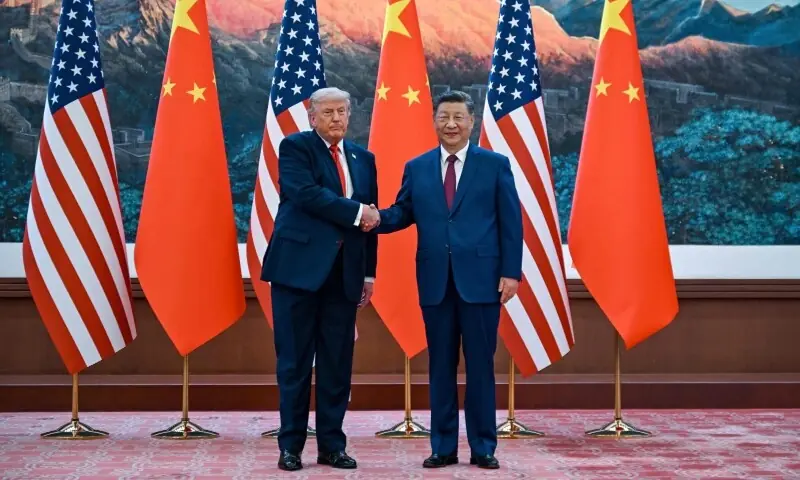
DONALD Trump’s arrival in Beijing marks the first China visit by a sitting US president in almost a decade. That alone makes the summit significant. But the timing has given it even greater weight. Originally planned for April but delayed because of the US-Israeli war on Iran, the talks now unfold under the shadow of conflict, economic strain and renewed tariff tensions, alongside growing debate over whether American global dominance is beginning to fade as China’s influence expands.
Trade will dominate much of the discussion. Mr Trump has long viewed tariffs as both economic leverage and political messaging, and his administration is reportedly seeking expanded Chinese purchases of American goods, relief for US companies operating in China and safeguards against another damaging tariff spiral. Businesses and markets will watch the summit closely. Years of tariff battles, export controls and supply-chain disruptions have already imposed heavy costs on the global economy. Even limited progress could calm unsettled investors.
Yet the summit is about far more than commerce. Looming over the talks is the widening Middle East conflict and the pressure it is placing on American strategy. The US finds itself increasingly drawn into crises beyond Asia, with the Iran war consuming diplomatic attention and military resources. Washington reportedly wants Beijing to pressure Tehran to avoid further disruption in the Strait of Hormuz, through which much of the world’s oil supplies pass. Whether China chooses to play that role may shape future American decisions on sanctions, military deployments and escalation in the region.
This is where the larger significance of the summit becomes clearer. China is no longer just a rising economic power. It increasingly acts like a rival centre of global influence with the ability to shape conflicts, markets and diplomatic outcomes far beyond its region. Beijing now dominates key manufacturing sectors and commands enormous economic leverage at a time when the US appears increasingly overstretched by wars abroad and divisions at home.

None of this means China has overtaken the US. America remains militarily dominant and continues to wield unmatched global influence. China still faces slowing growth, demographic decline and distrust from several neighbours. But unlike earlier Trump-Xi meetings, Beijing now enters the summit projecting greater confidence that the global balance is gradually shifting in its favour.

Taiwan remains the most dangerous flashpoint, and neither side is likely to back down on issues it considers vital. But both understand the dangers of allowing tensions to spiral into direct conflict. Ultimately, the summit is less about friendship than management. Whether Washington and Beijing can place guardrails around an increasingly volatile relationship may shape not only trade and tariffs, but also future conflicts and the emerging international order.
Published in Dawn, May 14th, 2026